Masai Mara · Sectors · Talek

The Talek Sector

The Masai Mara’s leopard country — and the most tightly restricted ground in the Reserve. Almost all of it is High Use Zone, where off-road driving is prohibited under all circumstances and there is no big-cat exception. This is why, and this is what the Management Plan says about it.

The zoning · The riverine forest · The predators · The hard edge · The honest verdict
High UseThe zone almost all of it sits in
0Circumstances in which off-road is legal here
Riverine forestThe habitat the camps are built in
“Hard edge”The Plan’s own phrase for what this is becoming
The short answer

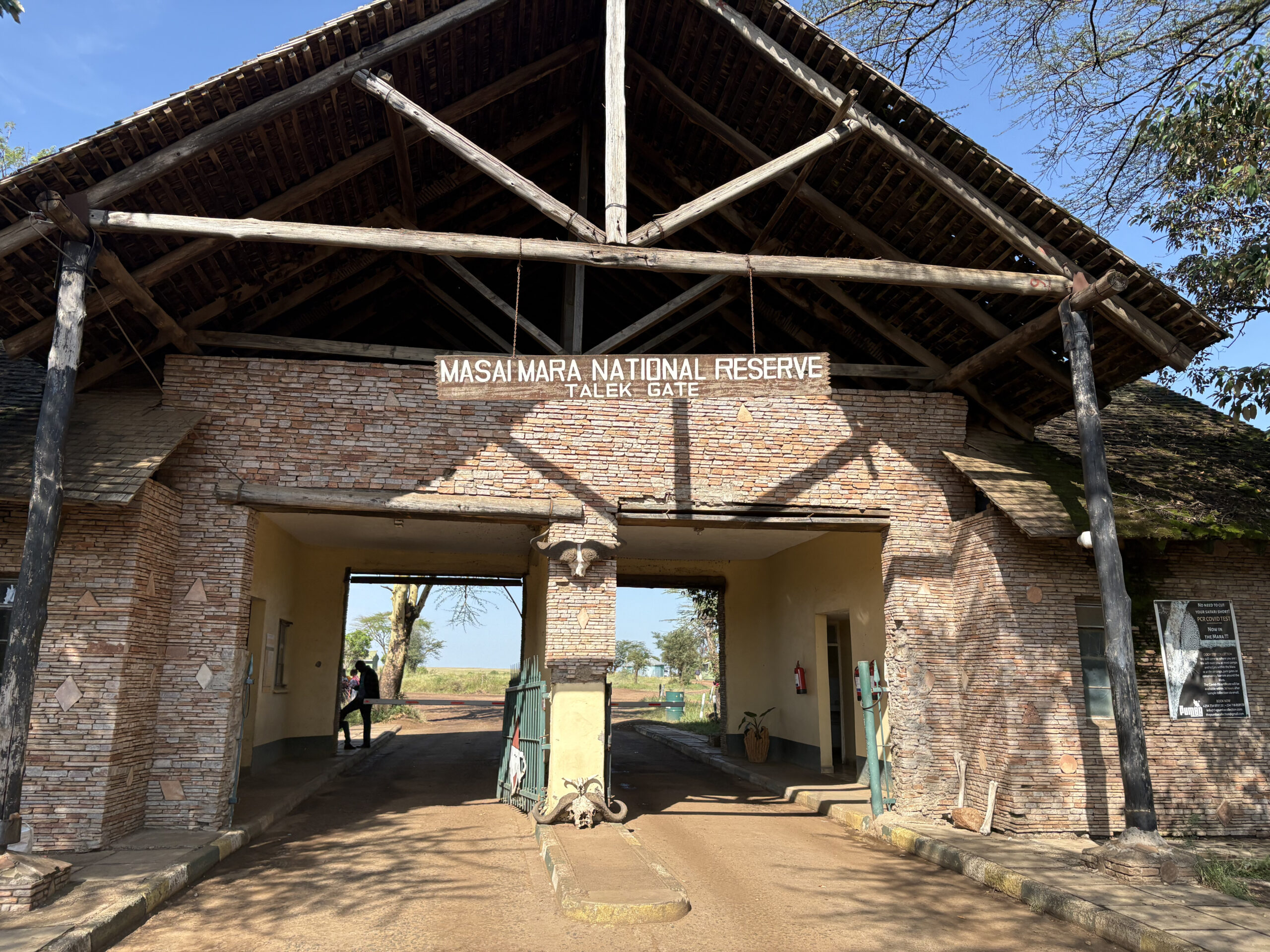
The Talek sector is the central-eastern quarter of the Masai Mara National Reserve, gathered around the Talek River and reached through Talek Gate. It holds the Reserve’s best leopard habitat, its densest big-cat driving and — according to the Reserve’s own gazetted management plan — it is almost entirely High Use Zone, where off-road driving is “prohibited under all circumstances.”1 No exception for a leopard. No exception for a kill. None.

That is not an arbitrary restriction. It is a management response to the fact that this is the most heavily used country in the Masai Mara, ringed by the densest cluster of camps on the entire Reserve boundary — camps that, as the Plan puts it without naming them, “occupy important wildlife habitats (such as riverine forest).”1

Riverine forest is the leopard’s habitat. That sentence is the whole story of this sector, and everything below is an elaboration of it.

Part of the sectors cluster

This is the Talek entry in our sector-by-sector series. The parent — Masai Mara Sectors & Zones — explains the three different ways the Reserve is divided and why they don’t line up. The barrier and the town are covered separately at Talek Gate & Talek Town.

Key takeaways — what a Mara guide would actually tell you

01

You are in the strictest zone in the Reserve. High Use Zone means off-road is banned outright — not “discouraged,” not “for big cats only.” Banned.

02

The rule does not flip at the gate. It flips further west, past the Ntiakitiak River. At Talek Gate, both banks of the Talek are High Use.

03

Leopards live in the riverine forest — and so do the camps. The Management Plan says tourism facilities here “occupy important wildlife habitats (such as riverine forest).” That is not a coincidence. It’s the same trees.

04

Topi Plains and Ol Kiombo are the country you actually drive. Open plains, hyena dens, cheetah, and the highest vehicle density in the Mara.

05

The Plan warns of a “hard edge” of back-to-back camps blocking wildlife movement. Stand at the Talek and look north-east along the boundary. That is what it is describing.

06

If you want off-road, night drives or walking — go 20 minutes north. The conservancies allow all three. The Reserve allows none of them, anywhere.

Definition

What is the Talek sector?

The Talek sector is the country gathered around the Talek River in the central-eastern Masai Mara — the ground you reach through Talek Gate, running west from the Reserve boundary toward the Mara River. Like every “sector” in the Mara it has no legal existence: the word does not appear in the Reserve’s management plan, and the boundaries you will see drawn for it vary from map to map.

What is definite is the geography. The sector is organised by four rivers, and three of them are also legal lines:

  • The Talek River — runs west from the gate through the middle of the sector. Riverine forest. Leopards. And, west of the Ntiakitiak, the boundary between two management zones
  • The Ntiakitiak River — flows south into the Talek. It is the eastern edge of the Low Use Zone
  • The Olare Orok River — the Ntiakitiak’s neighbour, and named alongside it in the Plan’s zone boundary
  • The Mara River — far to the west, and its own protected zone entirely

Which means the Talek sector is not a place so much as a set of intersecting lines with lions in it. And the lines matter, because they determine what your driver is allowed to do.

The Management Plan · the core of this page

What does the Management Plan say about the Talek sector’s zoning?

It places almost all of the Talek sector in the High Use Zone — the Reserve’s most restricted category — and it draws the boundary of that zone along the Talek and Ntiakitiak rivers. Here is the Plan’s own language, and it is worth reading slowly because most people who drive this sector have never seen it:1

From the gazetted plan · High Use Zone, Central Mara

“In the north, the zone covers the area east of the Ntiakitiak and Olare Orok Rivers to their confluence with the Talek River. From here the zone boundary follows the Talek River west until it reaches the Mara River Ecological Zone.”

And on the Low Use Zone

“The Talek River then forms the LUZ’s southern boundary, while the Ntiakitiak River separates it from the High Use Zone to the east.”

Read those two sentences together and the map falls out of them. We have drawn it below — schematically, from the Plan’s text and its Figure 4.

OUTSIDE THE RESERVE Community land · conservancies 2 km BUFFER ZONE (outside) TALEK GATE Talek town · outside the boundary Talek River Ntiakitiak Olare Orok Mara River LOW USE ZONE Off-road: big cats only Max 5 vehicles · 15 min · 25 m HIGH USE ZONE Off-road PROHIBITED under all circumstances Most of the Talek sector sits here HIGH USE — both banks, east of the Ntiakitiak Topi Plains Ol Kiombo toward Rhino Ridge & Musiara 1.5 km strip · all off-road banned
High Use Zone Low Use Zone Mara River Ecological Zone Buffer Zone (outside) Reserve boundary
Schematic — not to scale, and not a navigational map. Drawn by MasaiMara.ke from the zone boundary descriptions and Figure 4 of the Maasai Mara National Reserve Management Plan 2023–32.1 For the authoritative map, see Figure 4 of the Plan itself.
A correction to our own guide

Our Talek Gate page states that the driving rules change as you cross the Talek River. That is true — but it is not true at the gate, and we are correcting it here. Because the High Use Zone extends east of the Ntiakitiak, the country on both banks of the Talek at Talek Gate is High Use Zone. The zone boundary only starts running along the river some way west of the gate, past the Ntiakitiak confluence. So if you enter at Talek and immediately cross north of the river, you have not entered the Low Use Zone — you are still somewhere off-road driving is banned outright. We had it nearly right, and nearly right is how people get fined.

The MasaiMara.ke take

Nobody hands you this map. Not the gate, not the camp, not the brochure. You are expected to enter a legal regime you have never been shown, in a vehicle driven by someone whose incentive is to give you a good sighting.

So carry one fact: in the Talek sector, “we can just pop off the track for a second” is not a grey area. It is prohibited under all circumstances. The KES 50,000 fine is the least of it.

The Sekenani Tour Guides Association

The full three-map framework — sections, zones and sectors, and why they don’t line up — is on the parent pillar, Masai Mara sectors & zones.

The rule, and the reason

Why is off-road driving banned outright in the Talek sector?

Because the High Use Zone is defined as the country “presently used by the majority of Reserve visitors” — and the management response to that is not to relax the rules but to tighten them.1

This is worth sitting with, because it is the opposite of what most visitors assume. People arrive believing the busy sectors will be the permissive ones and the remote sectors the strict ones. The Plan does exactly the reverse. In the Low Use Zone — the quieter country north of the Talek and west of the Ntiakitiak — off-road driving is permitted, but only to approach big cats, and only under hard limits. In the High Use Zone, where you are, it is “prohibited under all circumstances.”1

The logic is straightforward once you see it. Where there are five vehicles, off-road damage is containable. Where there are fifty, it is not. So the crowded country gets the absolute rule and the empty country gets the conditional one.

Where you areOff-roadConditions
Talek sector — south of the Talek, and east of the NtiakitiakProhibited under all circumstancesNone. There is no big-cat exception here
North of the Talek, west of the Ntiakitiak (Low Use)Permitted — big cats onlyMax 5 vehicles · max 15 min · min 25 m · no 2WD off transit routes · no vehicles seating >12
Within 1.5 km of the Mara RiverAll off-road prohibitedNo bush dinners either
Anywhere in the ReserveNo night drives. No walking. No horseback. Earth-coloured vehicles only

Illegal off-road driving carries a fine of around KES 50,000. The Plan also provides for Ticket Inspection Units patrolling inside the Reserve.1

The MasaiMara.ke take

Here is the uncomfortable part, and it is about us, not you. Most off-road driving in the Talek sector is done by drivers — our colleagues — on behalf of guests who asked nicely, or who simply did not object.

You have more power in that vehicle than you think. “Please stay on the track” ends the conversation instantly; no driver overrules a paying client on a rule he was already breaking. Saying nothing is, in practice, saying yes.

And if you want the sighting where the vehicle can leave the track legally — that exists. It is twenty minutes north, in the conservancies. Book a night there.

The Sekenani Tour Guides Association · policing our own trade
The ground

What is the country actually like?

Two habitats, pressed against each other, and the contrast between them is the whole reason this sector produces the sightings it does.

The riverine forest

A continuous green corridor of tall trees along the Talek’s banks — sycamore fig (Ficus sycomorus), African ebony (Diospyros mespiliformis), Croton dichogamus, wild date palm, leleshwa. The figs fruit on staggered cycles all year, feeding baboon troops, vervet monkeys and green pigeons; the canopy and root tangles give a leopard both a daytime bed and an ambush position; the deep pools hold hippo (Hippopotamus amphibius) and crocodile through the dry.

This strip is why the Talek sector is leopard country. It is also — and this is the sector’s tragedy in one sentence — exactly where the camps are built.

The open plains

South and east of the river the country opens into short-grass plains: Topi Plains, the Ol Kiombo country. Long sightlines, red oat grass, scattered Balanites and acacia. This is cheetah ground, because a cheetah (Acinonyx jubatus) needs to see and to run. It is also lion ground, hyena ground, and the ground where every vehicle in the sector goes at dawn.

Wildebeest and zebra on the plains of the Masai Mara during the Great Migration
The Talek River is a migration crossing point in its own right — smaller, shallower and far less photographed than the Mara River, and for that reason often far more watchable.
Why the two habitats matter together:
Plains → prey·Forest → cover·Edge → predators

Predator density peaks where open hunting ground meets dense cover. The Talek sector is a long ribbon of exactly that edge. It is not lucky. It is structural.

The animals

What lives in the Talek sector?

The Mara’s most reliable leopards, resident lion prides that patrol the river, cheetah on the plains, and the densest hyena activity in the eastern Reserve. Here is what the sector is actually good for — and what it is not.

SpeciesWhere, in this sectorHow good is it, honestly
Leopard (Panthera pardus)The Talek riverine forest; the Ol Kiombo treesThe sector’s signature. Canopy, root cover, baboon prey and permanent water in one strip. As good as the Mara gets
Lion (Panthera leo)Topi Plains; prides patrolling the river lineVery good. Resident prides work the riverine prey routes. Expect company at a sighting
Cheetah (Acinonyx jubatus)Topi Plains, the Ol Kiombo open groundGood — and the most vehicle-sensitive animal here. See the research below
Spotted hyena (Crocuta crocuta)Dens on Topi Plains; the town edge at nightExcellent, and worth more of your attention than it gets. Watch them return to dens at dawn
Elephant (Loxodonta africana)The Double Crossing area; the river woodlandReliable. Large herds move along the river corridor
Hippo & Nile crocodileTalek pools, Fig Tree Bridge, Talek BridgeGuaranteed. The Talek holds both year-round
Black rhino (Diceros bicornis)Not here. The Mara Triangle is your realistic chance. We are not going to pretend otherwise
Mara River crossingsNot here. Those are the Mara River, west. The Talek has its own smaller crossings — different thing

Species-by-species detail lives in our wildlife guides. This table is about where in this sector, not about the animals themselves.

The MasaiMara.ke take

If you have one morning in the Talek sector, do not spend it chasing a lion. Lions you will get. Spend it slowly, along the river, looking up.

Leopard is the animal this country is built for, and it is the one that rewards patience over kilometres. Most vehicles blast west to Topi Plains at first light and drive past three leopards to reach a lion pride that has already eaten.

The Sekenani Tour Guides Association
The ground you cover

Where do you actually drive in the Talek sector?

Four named pieces of country, all reachable from Talek Gate within an hour — and all of them, note, in the High Use Zone. Each has its own guide; these are the summaries.

A note on the “Talek full-day game drive”

The full-day itinerary most operators sell out of Talek Gate — Topi Plains, then Paradise Plains, then Lookout Hill — takes you out of the Talek sector entirely. Paradise Plains is Musiara country; Lookout Hill is south. That is not a criticism: it is a good drive. But you should know that you are paying for a lot of driving, and that the zone rules change under you while you do it. If your priority is leopard, the honest advice is to stay in the Talek riverine belt and go slowly.

Conservation · the crisis in this sector

What is the “hard edge”, and why is the Talek sector it?

The Management Plan warns that in places, back-to-back tourism camps along the Reserve’s border have formed a “hard edge” that physically blocks wildlife movement — and that elsewhere those camps sit inside important wildlife habitats, “such as riverine forest.” It does not name the Talek sector. It does not have to.

From the gazetted plan · the threats chapter

“Very high levels of visitor use, especially the harassing/crowding of wildlife and off-road driving in unsuitable conditions and locations, as well as rapidly expanding tourism accommodation developments in the greater ecosystem, are all having a severe impact… In some places back-to-back tourism facilities have created a ‘hard edge’ along the Reserve’s border, preventing wildlife movements, while in others they occupy important wildlife habitats (such as riverine forest) or potentially reduce wildlife migratory and dispersal areas.”1

Put the two halves of that sentence side by side and look at where you are standing.

Half one — the hard edge. The Talek River camp strip is the densest continuous run of tourism accommodation on the whole Reserve boundary. Wildlife that has moved between the Reserve and the northern rangelands for millennia now meets a wall of fences, staff quarters, kitchens and generators.

Half two — the riverine forest. The camps are on the river because guests want to hear hippos from bed. The leopards are on the river because it is the only cover in a grassland. They are competing for the same trees, and only one of them signed a lease.

Maasai community members on the rangelands bordering the Masai Mara National Reserve in Narok County
The land immediately north of the Talek sector is Maasai land, not Reserve. The “hard edge” is the line between the two — and it is being built on from the outside in.
The pressureWhat the evidence shows
Camp density on the boundaryA nine-year Mara study found the highest lion densities where there were no tourist camps at all, with density falling as camp density rose3
Vehicle crowding at sightingsCheetah mothers in high-tourist areas raised roughly one cub or fewer to independence, against more than two where vehicles were fewer2
Waste from tourist facilitiesAn audit found 58% of Mara tourist facilities with improper waste management and 55% without an EIA licence. Solid waste draws hyenas, baboons and marabou storks in to feed — changing behaviour and driving conflict4
The river itselfThe Talek’s pollution has reached Tanzania. In 2022 a foul-smelling, blackened Mara River — traced upstream to the Talek — triggered a government investigation and a temporary ban on water use in four villages5
The wider collapseResident wildebeest down ~97%, zebra ~75%, and impala, warthog, giraffe, hartebeest and topi all down more than 70% against early-1980s baselines — driven by land-use change outside the Reserve6
The MasaiMara.ke take · the one question that matters here

We are a local guides’ association and our own guests sleep in this sector. So take this as a confession as much as an argument.

The zoning is the Reserve doing what it can with the land it controls. But the Reserve does not control the boundary strip, and the boundary strip is where the damage is being done. No zonation rule reaches a camp built in a leopard’s forest.

What does reach it is you. Before you book any camp on the Talek — ours, theirs, anyone’s — send one email: “Please send me your EIA licence and your waste-disposal arrangement.” The majority of audited facilities could not produce one. A camp that answers in a day is doing the work. A camp that goes quiet has told you everything you need to know.

It costs you nothing, it takes ninety seconds, and it is worth more than any amount of choosing a lodge from photographs.

The Sekenani Tour Guides Association · ask us the same question. We expect it.

The town’s waste and water crisis is covered in full on Talek Gate & Talek Town. The wider conservation picture is on our conservation hub.

The evidence

What does the science say about driving this sector?

That the rules you are asked to follow here were written from body counts, not from bureaucratic caution. Two studies matter most, and both were done in this ecosystem.

On the record · Broekhuis (2018), Ecology and Evolution

Femke Broekhuis’s Mara study found that cheetah (Acinonyx jubatus) mothers in high-tourist areas raised roughly one cub or fewer to independence — against more than two where vehicles were fewer. Crucially, lion and hyena abundance did not explain the difference. The vehicles did. Read the study.2

Why it matters here: Topi Plains and the Ol Kiombo open ground are cheetah country and the highest-vehicle country in the eastern Mara. Those two facts are pointed straight at each other. The five-vehicle and twenty-five-metre limits came from this.

On the record · Mogensen et al. (2025), Conservation Science and Practice

A nine-year study across 2,363 km² of the Mara found the highest lion (Panthera leo) densities in areas with no tourist camps at all, with density falling as camp density rose — and new camps followed by rapid local decline. The authors’ conclusion is not “fewer tourists.” It is spread, planned tourism: the harm lies in the concentration. Read the study.3

Why it matters here: the Talek River strip is the most concentrated camp cluster on the Reserve boundary. This is the study’s argument made physical.

The MasaiMara.ke take

Notice what neither study concludes. Neither says stop coming. Broekhuis’s finding is about vehicles at a sighting; Mogensen’s is about camps in a cluster. Both are arguments about how, not whether.

Which is the only good news on this page: the fix is not fewer visitors, it is better-behaved ones. Fewer vehicles per cat. Camps spread instead of stacked. Rubbish carried out. Drivers on the track.

The Mara does not need you to stay home. It needs you to be a nuisance about the right things.

The Sekenani Tour Guides Association
The decision

Where should you stay in the Talek sector?

You have three real options here, and they are not just price tiers — they are three different relationships with the land.

Inside the Reserve, near Ol Kiombo. You wake up already in the country, skip the gate queue, and pay for the privilege. The Plan permits no new accommodation and no expansion of existing bed capacity inside the Reserve for the life of this plan1 — so what exists is what there will be.

On the Talek River, outside the boundary. The classic Talek camp: hippos from bed, minutes from the gate, and — as this page has argued at length — built in the riverine forest that the leopards need. Cheaper. Louder. This is the “hard edge.”

In a conservancy, twenty minutes north. Naboisho, Ol Kinyei, Olare Motorogi. Roughly 0.5–0.6 visitors per km² against Central Mara’s high-season two to three.1 Night drives, walking safaris and legal off-road access — all three of which the Reserve prohibits everywhere. More expensive per bed, and the money goes to Maasai landowners as lease payments.

In-ReserveTalek River stripConservancy
Gate queueNoneDailyNone (own land)
Night drivesNoNoYes
Walking safariNoNoYes
Legal off-roadNo (High Use)No (High Use)Generally yes
Vehicles at sightingsManyMostFewest
Bed costHighLowestHigh
Where the money goesReserve leaseMixedMaasai landowners
Remember

A conservancy stay does not include Reserve entry, and a Reserve ticket does not admit you to a conservancy. They are separate places with separate fees. Many good Talek itineraries do both.

Tiers, camps and honest pricing are in our accommodation guide. The conservancies have their own pillar at Mara conservancies.

Timing

When should you visit the Talek sector?

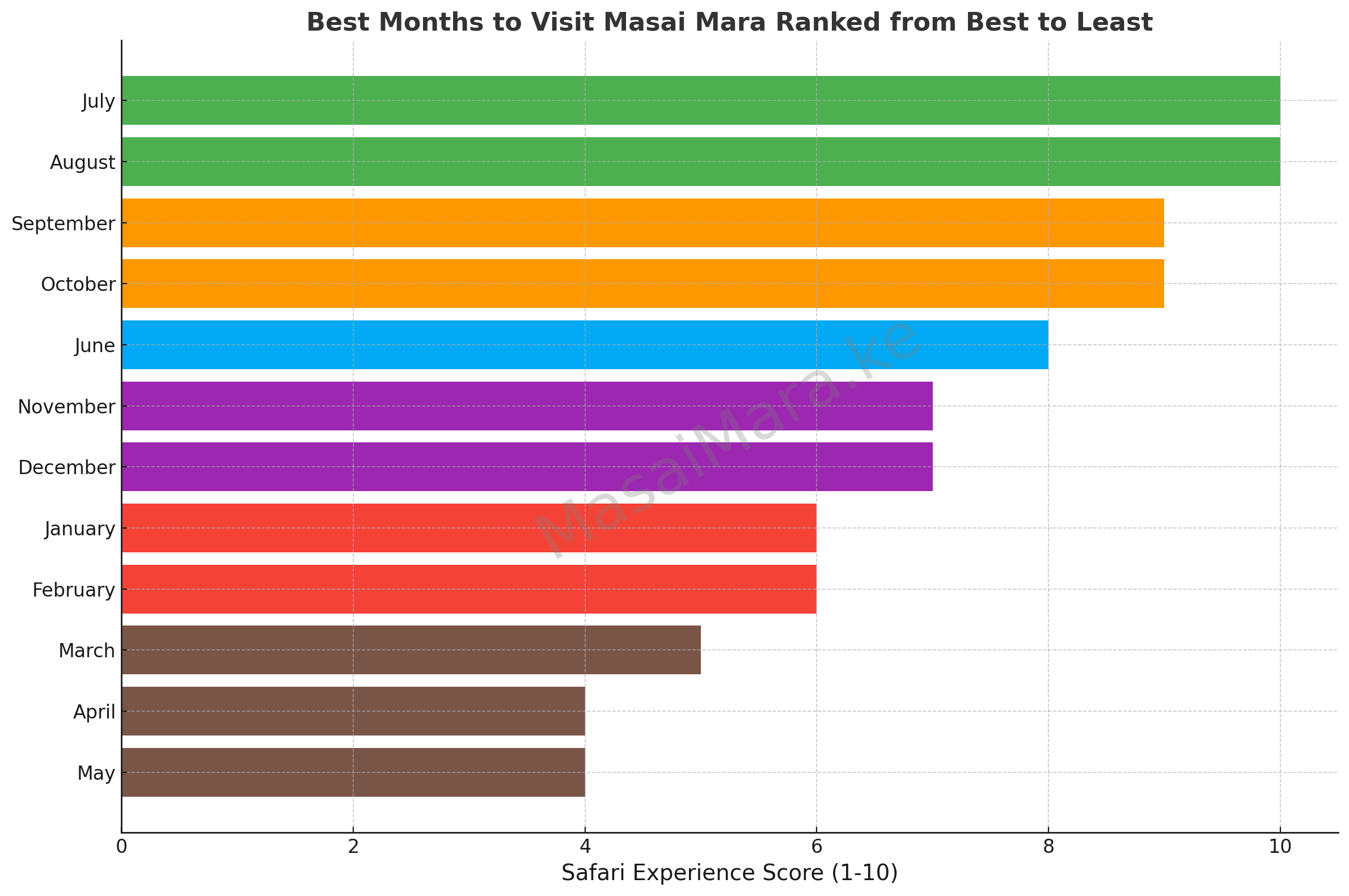
June to October for predators and the migration; January to March for space, price and cubs; April, May and November only with a plan for water. The Talek sector’s timing is not the Mara’s generic timing, because this sector’s access road and its river both fail in heavy rain.

SeasonThe sectorWhat a guide would say
Jul–Oct — dry, peakMigration herds in the eastern Mara; game concentrates on the riverBest predator action, worst crowding, USD 200/day park fee. The Talek’s own crossings happen here — smaller and far less mobbed than the Mara River’s
Jan–Mar — dry, lowResident game, big-cat cubs, wide open countryOur pick. Half the park fee, a fraction of the vehicles, and the leopards are exactly where they always are. The migration is not the Mara
Jun — shoulderHerds arriving from the southExcellent value. Still USD 100/day until 30 June — the single best-value week in the calendar is the last one in June
Apr–May, Nov — wetGreen, empty, beautiful — and the road and the bridge are at riskThe Talek road failed outright in the May 2024 floods. Come, but ask your camp what its plan is if the river rises4
The MasaiMara.ke take

The Talek sector in February is one of the great underrated experiences in East Africa, and we will lose money telling you so.

No migration, no queue, half the fee, and a riverine forest full of leopards that never left. You will sit at a sighting with two other vehicles instead of eleven — which, if you have read the rest of this page, you now know is not just pleasanter. It is measurably better for the animal.

The Sekenani Tour Guides Association

Month-by-month detail is on best time to visit, and the herds’ movements on the Great Migration.

The sibling question

Talek, Sekenani or Musiara?

TalekSekenaniMusiara
The countryRiverine forest + plainsOpen plains, widest sightlinesPermanent marsh
Signature animalLeopardCheetahLion — the Marsh Pride
ZoneHigh Use — off-road bannedHigh Use — off-road bannedMixed; Low Use in places
Access22 km of dirt past SekenaniTarmac to the barrierMusiara Gate; often flown
AirstripOl KiomboKeekorokMusiara
CrowdingHighHighestModerate
Wet seasonRoad and bridge at riskLower risk — sealed roadSwampy going; Land Cruiser
The MasaiMara.ke take

Choose Talek if you want leopard and you are willing to trade solitude for it. Choose Sekenani if it is your first Mara and the sealed road matters. Choose Musiara if you are here for lions and you have a Land Cruiser under you.

And choose a conservancy night whichever you pick. It is the only way to see this ecosystem under rules that let a vehicle behave properly.

The Sekenani Tour Guides Association

Each sector has its own guide: Sekenani, Musiara, the Mara Triangle, Oloolaimutia & the south. The framework that holds them together is the sectors & zones pillar.

Questions we get asked

Talek sector FAQs

Can you drive off-road in the Talek sector?

No — not under any circumstances. Almost all of the Talek sector sits in the Reserve’s High Use Zone, where the gazetted management plan states off-road driving is “prohibited under all circumstances.” There is no big-cat exception here — that exception exists only in the Low Use Zone, north of the Talek River and west of the Ntiakitiak. The fine is around KES 50,000.

Do the driving rules change when you cross the Talek River?

Yes — but not at the gate. This is a subtlety we got wrong ourselves and are correcting. The High Use Zone extends east of the Ntiakitiak River, which means the country on both banks of the Talek at Talek Gate is High Use. The zone boundary only begins running along the river some way west of the gate, past the Ntiakitiak confluence. Cross the river near the gate and you have not changed zone.

What is the Talek sector best for?

Leopard (Panthera pardus), unambiguously. The Talek’s riverine forest — sycamore fig, African ebony, dense root cover, permanent water and resident baboon troops — is the best leopard habitat in the eastern Reserve. It is also strong for resident lion prides, cheetah on Topi Plains, hyena, elephant, hippo and crocodile. It is not where you will see black rhino, and it is not where the Mara River crossings happen.

Where is the Talek sector in the Masai Mara?

The central-eastern Reserve, gathered around the Talek River and entered through Talek Gate. It runs west from the Reserve boundary toward the Mara River, and is bounded by the Talek, Ntiakitiak and Olare Orok rivers. The conservancies — Naboisho, Ol Kinyei, Olare Motorogi — lie immediately north of it, outside the Reserve.

Which airstrip serves the Talek sector?

Ol Kiombo, inside the Reserve, roughly 20–30 minutes from Talek Gate. It is the closest airstrip to the eastern camps and about 45 minutes’ flight from Wilson Airport in Nairobi. If you are sleeping outside the Reserve and flying out from Ol Kiombo, ask at the gate for the two-hour transit ticket — it lets you cross without buying a full day’s entry, and it is not offered unless you ask.

Are there Mara River crossings in the Talek sector?

No. The famous crossings are on the Mara River, well to the west — mostly in the Mara Triangle and the Musiara sector. The Talek River has its own crossings, which are real but smaller, shallower and far less photographed. Many guides consider them more watchable for exactly that reason: fewer vehicles, closer views.

Can you self-drive in the Talek sector?

You need a safari-standard 4×4 with a pop-up roof, and vehicles are physically inspected at Talek Gate — 2WD cars are turned away. Beyond that, the position is genuinely contested: some sources state that private vehicles have been banned from self-driving in the Talek and Sekenani sectors since 2024 and that a licensed guide or ranger escort is now required; others say no such requirement exists. Do not plan a self-drive around a rule you read on a blog. Phone the gate or your camp in the week you travel.

Why are there so many camps on the Talek River?

Because guests want to hear hippos from bed — and because, until recently, nothing stopped it. The Management Plan is blunt about the consequence: back-to-back tourism facilities have created a “hard edge” along the Reserve’s border that prevents wildlife movement, and in places they “occupy important wildlife habitats (such as riverine forest)”. Riverine forest is the leopard’s habitat. The camps and the cats are competing for the same trees.

Are night drives or walking safaris allowed in the Talek sector?

No — and not anywhere else in the National Reserve either. Night drives, walking safaris and horseback safaris are prohibited Reserve-wide. This is deliberate: the Management Plan says the ban exists so surrounding community conservancies can capitalise on those niche markets. If you want a night drive or a walking safari, the conservancies begin twenty minutes north of Talek Gate.

Is the Talek sector worth it in the green season?

The country is at its best and emptiest — but the access road and the Talek Bridge are the sector’s weak point. In the floods of 1 May 2024, the Talek River burst its banks, camps were submerged, Narok County deployed two helicopters to evacuate tourists, and the Talek road became impassable. Come in April, May or November by all means — but ask your camp, before you pay a deposit, what its plan is if the road goes.

Travel that protects

Try our tours — explore & learn the Mara firsthand

We guide this sector. We will keep the vehicle on the track, tell you which zone you are in, take you slowly along the river where the leopards actually are — and show you our EIA before you ask.

To start planning, use the quick booking form below. ↓

Book your Masai Mara safari

Tell us your dates and what matters to you, and our team will tailor a conservation-minded safari — and tell you exactly which sector, gate and zone you will be in.

[ Booking form goes here ]
In WordPress, add a separate Shortcode block directly below this Custom HTML block and paste:
[chbs_booking_form booking_form_id="23598"]
Shortcodes do not execute inside a Custom HTML block.
Sources & further reading 1. Maasai Mara National Reserve Management Plan 2023–32 — High Use / Low Use Zone boundary descriptions and Figure 4 (the zone map), off-road prescriptions, Reserve-wide rules, the “hard edge” and riverine-forest passages, the accommodation moratorium, and conservancy visitor densities: Narok County (PDF).   2. Broekhuis, F. (2018). Natural and anthropogenic drivers of cub recruitment in a large carnivore. Ecology and Evolution 8(13): 6748–6755: doi:10.1002/ece3.4180.   3. Mogensen, N. et al. (2025). Tourism camp density and lion density in the Maasai Mara. Conservation Science and Practice: doi:10.1111/csp2.70210.   4. The May 2024 Talek floods and the environmental audit finding 58% of tourist facilities with improper waste management and 55% without an EIA licence: The Star.   5. Tanzania’s temporary ban on Mara River water use and the pollution investigation traced upstream to the Talek: The Water Diplomat.   6. Ogutu, J.O. et al. (2011). Continuing wildlife population declines and range contraction in the Mara region of Kenya. Journal of Zoology: doi:10.1111/j.1469-7998.2011.00818.x.   The zone schematic on this page is our own drawing from the Plan’s boundary text and Figure 4; it is not to scale and is not a navigational map. Where sources conflict, we have said so on the page rather than picking a side.
[chbs_booking_form booking_form_id="23598"]
Scroll to Top