
Predators of the Masai Mara
Lions, leopards, cheetahs, hyenas, wild dogs and a host of smaller hunters — one of the last complete large-predator communities left on Earth. How they share the plains, what the latest research reveals, and the pressures closing in.
This guide sits within our Mammals of the Masai Mara overview, in the Wildlife & Animals pillar, and is the companion to our herbivores & plains game guide — the prey that makes all these hunters possible. Each major predator also has its own in-depth profile, linked below.
The Masai Mara holds one of the last intact large-predator guilds on the planet — lion, leopard, cheetah, spotted hyena and (just) wild dog still living side by side, alongside servals, jackals, foxes and mongooses.2 It is also Kenya’s most closely studied predator landscape, home to long-running science that reveals how these hunters coexist and what threatens them.1 This guide names the species, explains the order behind the apparent chaos, and shares what the research shows.
Below, the Mara’s predators by group (English name, then scientific name), the ecology of the guild, the latest findings, and the conservation picture.
Why is the Masai Mara a global predator stronghold?
Because almost nowhere else still has the whole cast. Researchers describe the Mara’s as one of the last intact large-predator guilds globally — a complete community of big carnivores whose interactions still shape how the ecosystem works.2 That completeness rests on the Mara’s extraordinary prey base: the herds of plains game and the 1.3-million-strong Great Migration feed what is often called the densest concentration of large predators on Earth.
It also makes the Mara a natural laboratory. Through the Mara Predator Conservation Programme and partner studies, this is Kenya’s most closely monitored lion and cheetah landscape, with some of the most robust predator-density estimates anywhere in Africa.1
The Mara’s predators, group by group
Here are the Mara’s carnivores, with the species you’re most likely to see (English name, then scientific name). The headline hunters each have their own in-depth guide.
The big cats
The headlinersThree of the world’s great cats share these plains — a combination few places can still offer. Tap through for each one’s full profile.
The other large predators
Pack hunters & scavengersBeyond the cats, the Mara’s larger carnivores include the abundant spotted hyena and the Endangered wild dog — one common, one clinging on.
- Spotted Hyena (Crocuta crocuta)
- African Wild Dog (Lycaon pictus)EN
- Striped Hyena (Hyaena hyaena)
- Aardwolf (Proteles cristata)
The smaller carnivores
Cats, dogs, mongooses & moreThe Mara’s “mesopredators” — the smaller hunters that thin out rodents, insects and birds, and are best found on conservancy night drives.
- Serval (Leptailurus serval)
- Caracal (Caracal caracal)
- Black-backed Jackal (Lupulella mesomelas)
- Side-striped Jackal (Canis adustus)
- Bat-eared Fox (Otocyon megalotis)
- Honey Badger (Mellivora capensis)
- African Civet (Civettictis civetta)
- Large-spotted Genet (Genetta maculata)
- Banded Mongoose (Mungos mungo)
- Dwarf Mongoose (Helogale parvula)
EN Endangered (IUCN Red List). These lists are a representative selection of the Mara’s carnivores.
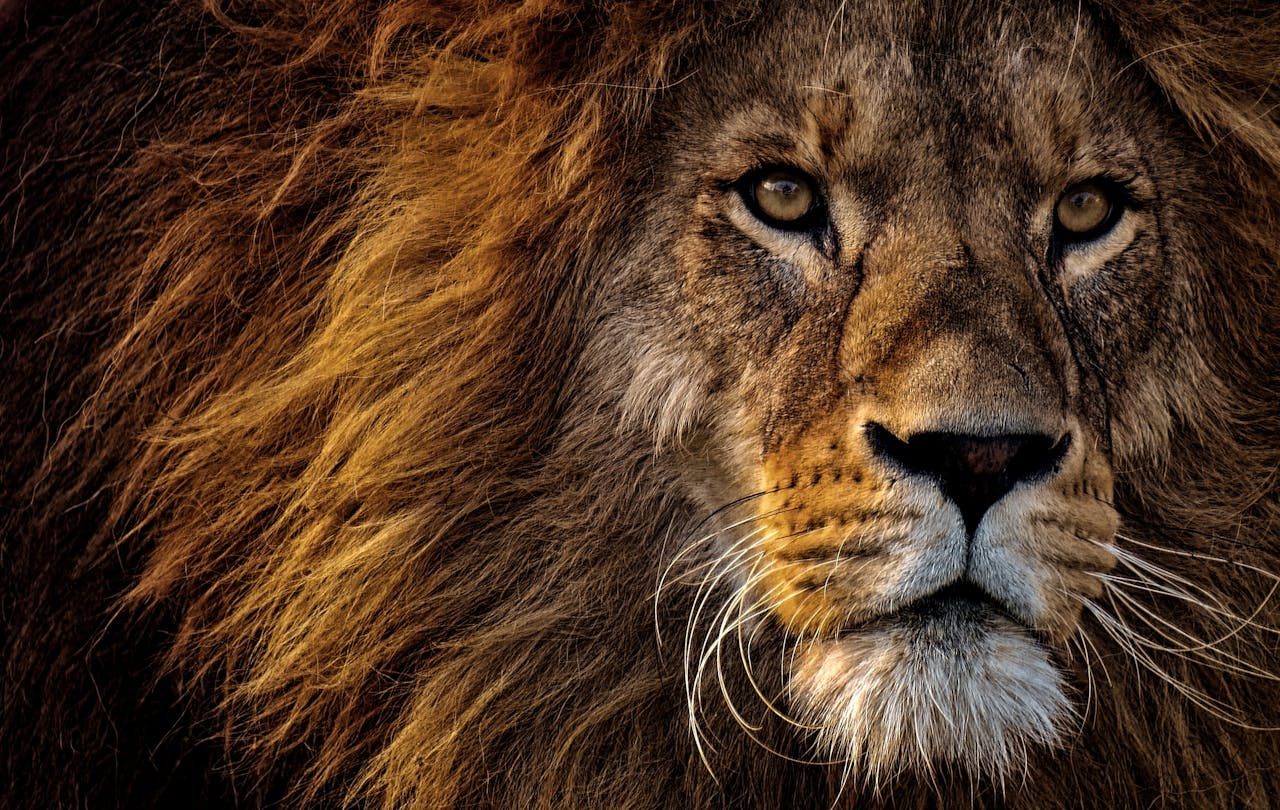
How do so many predators coexist in the Mara?
By dividing the day, the habitat and the prey — and by deferring to a strict pecking order. Lions dominate, taking the best kills and killing rivals’ young; spotted hyenas counter with sheer numbers; leopards turn solitary, nocturnal and arboreal to stay clear of both; and cheetahs sidestep the lot by hunting in broad daylight. This avoidance is measurable: recent camera-trap research in the Mara found that the presence of competitors helps shape where leopards occur across the ecosystem.2
These interactions aren’t mere drama — they are how an intact guild keeps working, each species pushed into its own niche. It’s also why losing any one of them would ripple through the whole system, from prey behaviour down to the vegetation.
| Predator | Active | How it avoids competition |
|---|---|---|
| Lion | Mainly night | Dominates — takes the best kills by force |
| Spotted Hyena | Night & day | Hunts in clans; out-numbers rivals at kills |
| Leopard | Night | Solitary; hoists kills into trees, away from lions |
| Cheetah | Day | Hunts in daylight, when the others rest |
| Smaller carnivores | Mostly night | Take different, smaller prey in different niches |
What does the latest research show?
The Mara is one of the best-studied predator systems in Africa, led by the Mara Predator Conservation Programme (MPCP), run by the Kenya Wildlife Trust, which focuses on lions, cheetahs and wild dogs.1 Its long-term, camera-trap and spatial-modelling work has produced unusually precise pictures of how the Mara’s predators are doing.
MPCP’s monitoring estimates roughly 459 resident lions (over a year old) within the Mara’s protected areas, and its fine-scale “density heatmaps” show that lion numbers peak at the core of each conservancy — underlining how vital well-protected cores are to healthy populations.1
Using a spatially explicit method developed in the Mara, researchers estimated cheetah density at about 1.27 adults per 100 km² in the study area — modest in absolute terms, but higher than in many parts of Africa, marking the Greater Mara as a key refuge for the species.4
A 2025 camera-trap study estimated leopard density across the Maasai Mara and tested how lions and hyenas affect where leopards live — direct evidence that, in this intact guild, competitors shape one another’s distribution, not just their behaviour.2
Together, this research does something rare: it turns a famous safari spectacle into hard numbers that can guide how the Mara is managed — and it is increasingly flagging a problem few visitors think about.

What threatens the Mara’s predators?
The same forces, layered together. Retaliatory killing — herders poisoning or spearing predators that take livestock — is a leading cause of death, and the poison often kills vultures and other wildlife too.1 Prey decline erodes the food base from below, as the resident plains game shrink, and habitat loss and fences cut the ranges these wide-roaming animals need.
Research now adds a fourth pressure the Mara feels acutely: tourism itself. A 2025 study using a decade of Mara lion data found the highest lion densities in areas without tourist camps, with density falling significantly as camp density rose — an effect independent of prey or vegetation.3 Earlier work likewise linked heavy vehicle crowding to reduced cheetah cub survival.3 In one of the world’s busiest reserves, how — and how much — we visit is now a conservation variable in its own right (see overtourism).
We love watching predators — but the data say our footprint has a cost: lions thinner on the ground where camps cluster, cheetah cubs less likely to survive where vehicles crowd. Watching well is no longer optional; it’s measurable.
How are the Mara’s predators being protected?
The response pairs science with community. The Mara Predator Conservation Programme tracks individual lions, cheetahs and wild dogs — through ID databases, collaring and camera traps — so managers know exactly how populations are faring and where they need help.1 That evidence feeds straight into the conservancy model, whose well-protected cores hold the Mara’s densest predator populations.
On the ground, predator-proof bomas (livestock enclosures) and conflict-mitigation work cut the livestock losses that drive retaliatory killing, while protecting the prey base and capping vehicle numbers at sightings address the subtler pressures the research has exposed. Protecting predators, it turns out, means protecting people’s livelihoods and the whole web beneath them. See the full effort in our conservation hub.
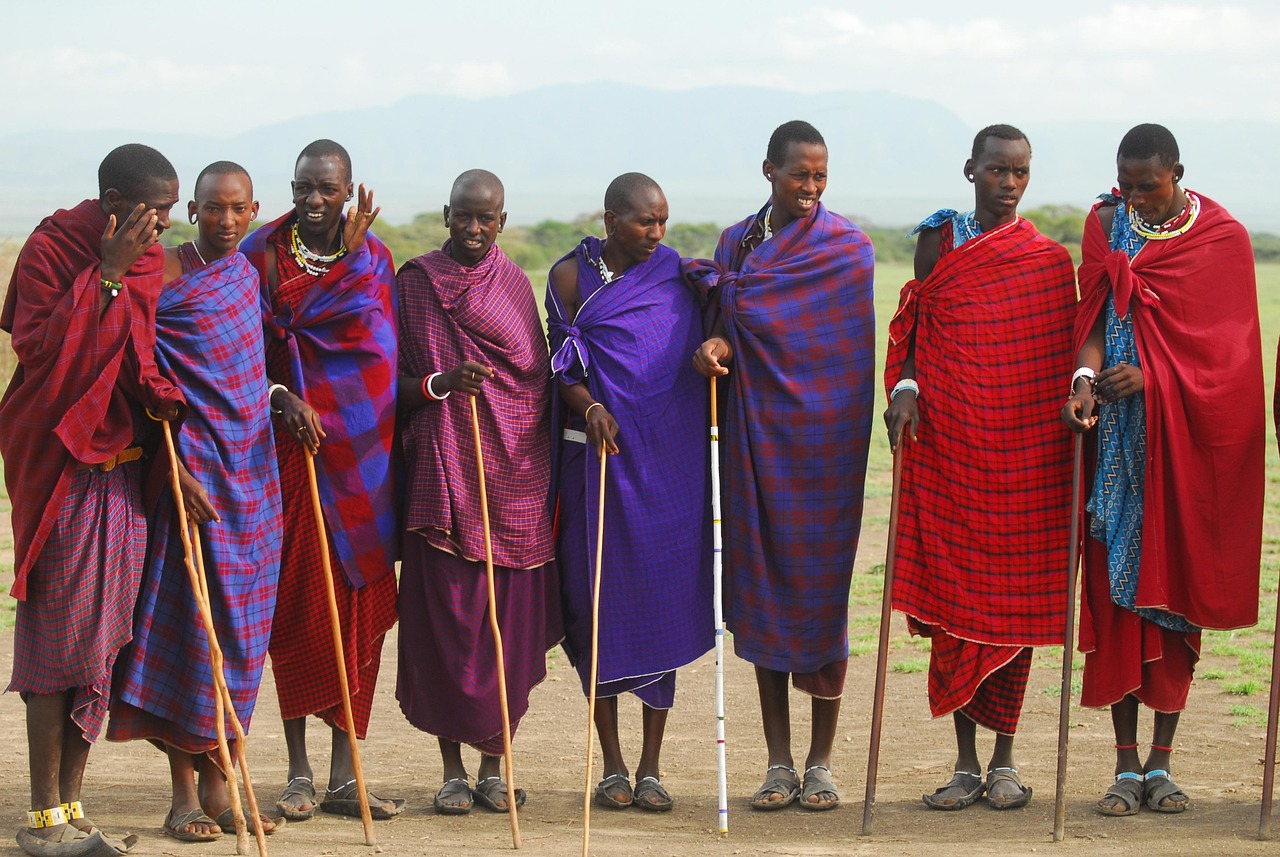
How do you watch predators responsibly?
The research makes the rules concrete: keep your distance, never crowd or surround a predator, don’t block a hunt or a kill, and give cats with cubs a very wide berth — especially cheetahs, whose daytime hunts and cub survival are measurably harmed by vehicle crowding. If a sighting is mobbed by vehicles, the kindest thing is to leave. Choose conservancies that cap vehicle numbers and guides who put the animal first.
And let your visit fund the science and the coexistence work that keep these predators alive — that’s the single most useful thing a traveller can do. The full picture, including the pressures of overtourism, is in our conservation hub.
When we find a cheetah hunting, we hang well back and switch off — and if a crowd builds, we move on. A photo is never worth a failed hunt or a stressed cub. The best predator sightings are the quiet, patient ones.
Mara predators — FAQ
What predators live in the Masai Mara?
Lion, leopard, cheetah and spotted hyena are the headliners, plus the rare wild dog and smaller hunters like serval, caracal, jackals, bat-eared fox and mongooses.
Which predator is at the top in the Mara?
The lion dominates the guild, taking the best kills and displacing rivals; large hyena clans are its main challenger.
How many lions are in the Masai Mara?
Monitoring estimates around 459 resident lions (over a year old) within the Mara’s protected areas — Kenya’s most closely studied lion population.
How do so many predators live together?
They divide the time, habitat and prey and defer to a pecking order — lions by night, cheetahs by day, leopards in the trees — so they rarely compete head-on.
Are there wild dogs in the Mara?
The Endangered African wild dog (Lycaon pictus) is now scarce in the Mara, though occasionally seen — a focus species for the Mara Predator Conservation Programme.
Does tourism harm the Mara’s predators?
Research shows it can: lion densities are lower where tourist camps cluster, and heavy vehicle crowding reduces cheetah cub survival. More →
What is the Mara Predator Conservation Programme?
A Kenya Wildlife Trust research project that monitors the Mara’s lions, cheetahs and wild dogs and works with communities to protect them.
Where can you best see predators?
The open plains for lions and cheetahs by day, riverine bush for leopards, and conservancy night drives for the smaller, nocturnal hunters.
Try our tours — explore & learn the Mara firsthand
Let our local guides find the Mara’s predators — and show you how to watch them the right way, as the science demands. Travel that explores the park, supports the conservancies and the research, and helps keep one of Earth’s last intact predator communities alive.
To start planning, use the quick booking form below. ↓
Book your Masai Mara safari
Tell us your dates and what you’d like to see, and our team will put together a tailored, conservation-minded safari. Quick and no obligation.
Replace this box with your booking form embed.