
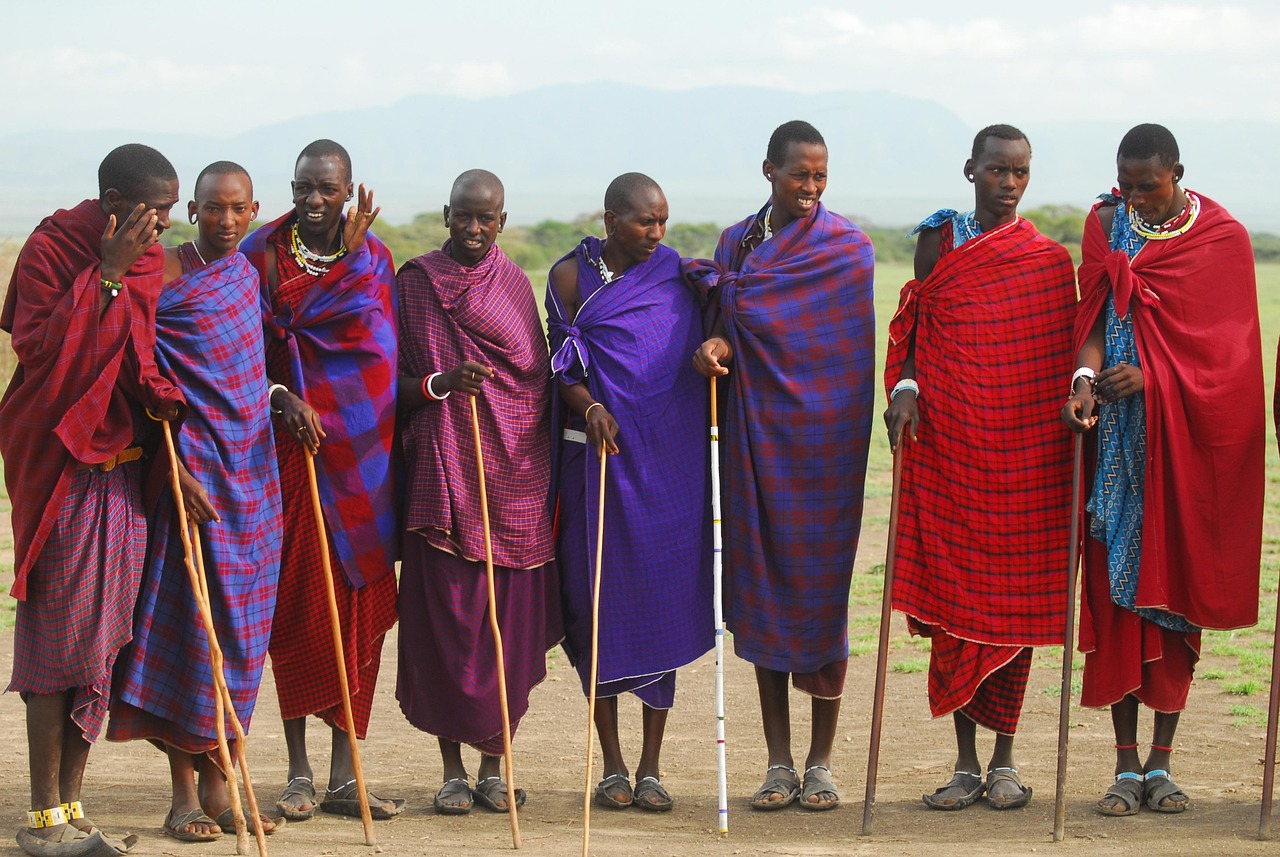
The Maasai Mara National Reserve is known worldwide for its wildlife, but it also sits within a lived cultural landscape shaped for generations by the Maasai—the pastoral community whose lands, knowledge, and history are inseparable from this ecosystem. To visit the Mara is not only to enter one of Africa’s great wildlife arenas, but also to move through the homeland of a society that has long managed uncertainty in climate, pasture, and politics through mobility, social institutions, and deep ecological knowledge.
The Maasai are among the most recognized pastoral peoples of East Africa, yet also among the most persistently misunderstood. In popular imagery they are often reduced to visual symbols—red shúkà cloth, beadwork, spears, and the iconic jumping dance.
In reality, the Maasai of the Mara and the wider Rift Valley represent a historically dynamic society whose social institutions, land-use systems, and moral world have been shaped by migration, ecological risk, colonial intervention, conservation policy, and global tourism. This is not a “frozen” tradition, but a living pastoral culture—rooted in cattle, land, and community, and continuously adapting to profound change.
Maasai People Overview:
- Identity: The Maasai (Masai) are a Maa-speaking Eastern Nilotic pastoralist ethnic group of East Africa.
- Location: They live mainly in southern Kenya and northern Tanzania, especially around the Maasai Mara, Loita Hills, Trans Mara, Amboseli, and the Serengeti ecosystem.
- Population: Estimated at roughly 900,000 to over 1 million people across Kenya and Tanzania.
- Language: Their primary language is Maa (Nilo-Saharan family); most also speak Swahili, and many speak English.
- Livelihoods: Traditionally cattle pastoralists, today many combine herding with farming, tourism, business, wage work, and education.
- Social system: Society is organized around a formal age-set and age-grade system that structures authority, labor, and life stages.
- Governance: Political authority is traditionally exercised through councils of elders rather than centralized rulers.
- Spiritual beliefs: Centered on Enkai (Engai), associated with rain, fertility, and moral order, alongside widespread Christianity today.
- Cattle: Livestock are the economic, social, and ritual core of Maasai life, shaping marriage, status, and security.
- Settlement: Traditionally live in enkang (manyatta) homesteads of mud, sticks, and dung, enclosed by thorn fences for livestock protection.
- Dress & adornment: Known for the shúkà and beadwork, which communicate age, gender, marital status, and social identity through color and pattern.
- Origins: Part of the Eastern Nilotic migrations from the Nile Valley region, established across the Rift Valley by the 18th–19th centuries.
- Colonial impact: Lost large areas of grazing land through colonial dispossession, reserve creation, and later land subdivision, reshaping pastoral systems.
- Conservation context: Many wildlife areas, including the Maasai Mara and Serengeti, were historically Maasai lands; today many Maasai are active in conservancies and tourism.
- Contemporary challenges: Include land fragmentation, climate change, drought, population growth, and livelihood diversification.
- Cultural continuity: Maasai culture is dynamic and adaptive, not disappearing, combining strong pastoral foundations with modern social and economic change.
Who the Maasai Are
The Maasai (also spelled Masai) are Maa-speaking pastoralists belonging to the Eastern Nilotic branch of Nilotic peoples. They live primarily in southern Kenya and northern Tanzania, with major communities in and around the Maasai Mara, Loita Hills, Trans Mara, Narok, and across the border into the Serengeti ecosystem. Within the broader Maasai identity exist multiple sections (iloshon), such as the Purko, Loita, and Siria, each with its own local histories and territories, but sharing a common language, pastoral tradition, and social institutions.
Maa remains a central language of daily life, ritual, and moral teaching, even as Swahili and English are increasingly used in schools, markets, and administration. Oral tradition—through stories, songs, proverbs, and praise poetry—continues to transmit historical memory, ethical values, and ecological knowledge across generations.
Origins and Historical Change
Linguistic and oral historical evidence places the Maasai among Eastern Nilotic peoples who migrated southward over centuries from regions further north in the Nile Valley. By the eighteenth and nineteenth centuries, Maasai-speaking groups had established themselves across much of the Rift Valley, building a powerful pastoral economy based on cattle, seasonal mobility, and flexible access to grazing.
The late nineteenth century brought devastating shocks: rinderpest epidemics that killed vast numbers of cattle, smallpox outbreaks, and severe droughts. These crises sharply reduced Maasai populations and weakened their political and military power. Colonial rule then reshaped Maasai life even more profoundly. Large areas of grazing land were alienated for settler agriculture and later designated as wildlife reserves and protected areas, including what became the Maasai Mara. After independence, the subdivision of group ranches into individual plots further transformed land tenure, grazing systems, and social relations, accelerating the shift from open rangelands to fragmented landscapes.
Social Organization: Age, Authority, and Community
Maasai society is organized around a sophisticated age-set and age-grade system that structures political authority, labor, and moral responsibility across the life course. Boys initiated around the same period form an age-set that progresses together from youth to warriorhood (ilmoran) and eventually into elderhood. Elders hold primary authority in community decision-making, particularly in matters of land use, conflict resolution, ritual, and relations with outsiders. Leadership is exercised through councils of elders rather than centralized rulers, emphasizing deliberation and consensus.
Spiritual authority has traditionally been associated with the laibon, a ritual specialist and healer whose role included blessing, divination, and mediation between people and the spiritual world. While the political influence of laibons has changed over time, ritual knowledge and spiritual legitimacy remain important in Maasai life.
The basic social and domestic unit is the enkang (manyatta), a homestead housing extended families and their livestock within a thorn-fenced enclosure. These are not just settlements, but moral and economic spaces where gendered labor, childcare, food production, and herding responsibilities are organized.
Pastoralism and the Centrality of Cattle
Cattle are at the heart of Maasai social, economic, and moral life. They are not only sources of milk, meat, and wealth, but also the foundation of marriage exchanges, ritual obligations, and social status. Livestock ownership has long been a measure of prosperity and security.
Traditional Maasai pastoralism depended on mobility, detailed ecological knowledge, and negotiated access to grazing and water. Seasonal movement between wet- and dry-season pastures allowed herders to cope with drought, disease, and highly variable rainfall. This system was sustained by communal land tenure rather than fixed boundaries.
Today, while livestock remain central, many Maasai households combine herding with farming, wage labor, tourism-related work, and small businesses. These changes reflect both economic necessity and the growing constraints on mobility caused by land subdivision, conservation areas, and settlement.
Masai People Facts
Here are key facts about the Maasai people:
| Fact | Description |
|---|---|
| Location | The Maasai live in southern Kenya and northern Tanzania, near many of East Africa’s national parks and reserves like Masai Mara, Amboseli, and Serengeti. |
| Population | The Maasai population is estimated to be around 900,000 people. |
| Language | The Maasai speak the Maa language, part of the Nilo-Saharan language group, related to Dinka and Nuer. They also speak Swahili and English as official languages of Kenya and Tanzania. |
| Semi-nomadic Lifestyle | The Maasai are traditionally semi-nomadic pastoralists, focusing on livestock herding. Despite modern pressures, many still maintain this lifestyle, practicing rotational grazing to preserve the land. |
| Traditional Housing (Inkajijik) | The Maasai live in temporary houses called Inkajijik, built from mud, sticks, and grass. The houses are designed for their nomadic lifestyle. Their villages are enclosed by Enkang, a protective fence made by the men to keep cattle safe from predators at night. |
| Patriarchal Society | The Maasai society is patriarchal, with elder men holding decision-making power. Their social structure revolves around age-sets, where groups move through stages of life (warrior, elder) together. |
| Religion | The Maasai are monotheistic, worshipping a god named Engai (or Enkai), believed to inhabit all of nature. |
| Cattle and Wealth | Cattle are central to Maasai life, both as a food source and a measure of wealth. Wealth is counted in terms of the number of cattle and children a man has, with a Maasai belief that God gave them all the cattle on earth. |
| Traditional Dress | The Maasai wear bright Shúkà (a cloth wrapped around the body), often in red, blue, and checkered patterns. Young men wear black after circumcision. Their clothing varies by age and gender, and their sandals are traditionally made from cowhide or tire rubber. Read how to wear Masai Shuka |
| Music and Dance | The Maasai music consists of harmonized singing led by an olaranyani (song leader). They use chants, rhythm, and call-and-response singing during ceremonies, especially Eunoto, the warrior graduation. |
| Resilience Against Modernization | Despite government efforts to encourage a more modern lifestyle, the Maasai continue to preserve their customs and traditions, resisting pressures to abandon their semi-nomadic way of life. |
| Rite of Passage | Circumcision is a key rite of passage for Maasai boys, marking the transition to warriorhood (Morani). Maasai warriors are renowned for their bravery and skill, historically famous for their ability to throw clubs called orinka from long distances. |
| Influence of Modernity | While many Maasai now hold roles in business or government, they often return to their villages and proudly wear their traditional clothing and continue cultural practices like tending cattle. |
| Traditional Diet | The Maasai diet mainly consists of meat, milk, and blood from their cattle. They avoid eating birds and game, reflecting their deep respect for wildlife. |
| History | According to oral tradition, the Maasai migrated from the Nile Valley and settled in East Africa in the 15th century. By the 19th century, their territory covered a large part of the Great Rift Valley. |
| Impact of Colonialism | In the early 1900s, Maasai lands were drastically reduced when British colonialists evicted them to create space for settler ranches. Similarly, in Tanzania, Maasai were displaced to establish national parks like Serengeti and Ngorongoro. |
| Connection to Wildlife Reserves | The Maasai have lived alongside wildlife for centuries. Many national parks and reserves, such as Masai Mara and Amboseli, were once Maasai lands. The Maasai now demand grazing rights in these areas, and many Maasai are involved in the tourism industry as guides or in cultural experiences. |
| Craftsmanship | Maasai artisans are known for their intricate beadwork, creating colorful jewelry that holds cultural significance, including bracelets, necklaces, and earrings, often used to represent social status or age-group. |
Where Do Maasai People Live In Respect to MMNR?
The Maasai do not live permanently inside the Maasai Mara National Reserve, which is a protected wildlife area without legal settlement. Instead, Maasai communities live around the Reserve in the surrounding rangelands that historically formed part of their pastoral territory.
Most Maasai settlements are found in:
- Narok County, especially in Trans Mara, Siana, Talek, Ololaimutia, Aitong, and Loita areas, which border the Reserve on the east, north, and west.
- The Greater Mara ecosystem, including community lands that now host wildlife conservancies such as Mara North, Olare Motorogi, Naboisho, Ol Kinyei, Lemek, Siana, and others.
- Loita Hills and the Loita Plains, to the east and northeast of the Reserve, which remain important Maasai grazing and cultural areas.
Historically, these lands were part of open Maasai rangelands used for seasonal grazing and livestock movement, long before the Maasai Mara was gazetted as a reserve. When the Reserve was created, permanent settlement and grazing were restricted inside its boundaries, effectively pushing Maasai residence to the surrounding community lands.
Today, many Maasai landowners lease portions of their land to community conservancies that border the Reserve. These conservancies function as buffers and wildlife corridors between the protected area and human settlements, while also providing income to Maasai households through tourism and conservation agreements.
In short: the Maasai live around the Maasai Mara, not inside it, in a mosaic of villages, group-ranch lands, and conservancies that together form the human landscape of the Greater Mara ecosystem.
Belief, Ritual, and the Sacred World
Maasai religious thought centers on Enkai (or Engai), a supreme deity associated with rain, fertility, and the moral order of the universe. The relationship between people, cattle, and land is deeply spiritual: prosperity and misfortune are often understood through a moral lens linking human behavior to divine favor or displeasure.
Ritual life marks the major transitions of the life cycle—birth, initiation, warriorhood, marriage, and elderhood. Ceremonies such as Eunoto, which marks the transition of warriors toward elder status, are not only social milestones but public reaffirmations of community, authority, and continuity.
Material Culture: Dress, Beadwork, and Meaning
Maasai material culture is highly visible and richly symbolic. Clothing—especially the shúkà—and elaborate beadwork communicate age, gender, marital status, and social identity. Colors carry specific meanings: red for bravery and unity, white for purity and milk, blue for the sky and rain. Bead patterns encode social information that is legible within the community.
Traditional weapons such as spears and clubs (rungu), once essential for herding and defense, today also function as markers of identity and heritage, particularly in ceremonial and cultural contexts. The manyatta itself reflects architectural adaptation to mobility, climate, and livestock-centered life.
The Maasai and the Maasai Mara: Land, Conservation, and Coexistence
The Maasai Mara is not only a world-famous wildlife reserve; it is also a pastoral landscape with a long history of grazing, settlement, and seasonal movement. For Maasai communities, conservation has brought both opportunities and deep tensions.
Community conservancies in the Greater Mara ecosystem are based on leasing land from Maasai landowners for wildlife conservation and tourism. In principle, these arrangements provide income while preserving open rangelands and wildlife corridors. In practice, they also reshape grazing rights, settlement patterns, and local power relations, and require constant negotiation between conservation priorities and pastoral livelihoods.
Human–wildlife conflict—especially livestock predation—remains a persistent challenge, rooted not only in ecology but also in historical dispossession, land tenure change, and competing visions for how the landscape should be used.
Tourism, Representation, and Cultural Politics
Tourism is now a major part of the Mara economy, providing jobs, markets for crafts, and revenue through conservancies and cultural visits. At the same time, it has produced a powerful global image of “the Maasai” that often freezes culture into timeless, simplified stereotypes.
Cultural villages and performances raise difficult questions about representation, authenticity, and benefit-sharing. For many Maasai, tourism is neither purely exploitative nor purely beneficial, but a negotiated space where livelihood, identity, and external expectations intersect.
Contemporary Life and Social Change
Today’s Maasai society is marked by diversification and debate. Education is increasingly important, opening new opportunities while reshaping generational expectations. Women are playing growing roles in education, business, beadwork cooperatives, and community development, even as gender relations remain contested and uneven.
Climate change, recurrent droughts, population growth, and land fragmentation place new pressures on pastoral systems that were historically resilient because of their mobility and flexibility. The central challenge is how to sustain viable livelihoods in landscapes that are more crowded, more regulated, and more economically differentiated than ever before.
A Living Society, Not a Museum Culture
The Maasai are not relics of the past, nor passive victims of change. They are active historical agents, continually reworking social institutions, economic strategies, and cultural meanings in response to shifting ecological, political, and global conditions.
To understand the Maasai of the Maasai Mara is to move beyond romantic images and simple narratives—and to recognize a complex pastoral society that has long lived with uncertainty, and has repeatedly shown a remarkable capacity for adaptation, negotiation, and continuity in one of Africa’s most famous and most contested landscapes.
Frequently Asked Questions About the Maasai People
Are the Maasai a “tribe” or an ethnic group?
Anthropologically, the Maasai are an ethnic group composed of multiple sections (iloshon) sharing a language (Maa), cultural institutions, and pastoral traditions. The word “tribe” is a colonial-era label and is increasingly avoided in academic and policy contexts.
How many Maasai are there today?
Estimates vary, but the Maasai population across Kenya and Tanzania is roughly 900,000 to over 1 million people, depending on census methods and definitions of identity.
Do all Maasai still live a nomadic or pastoral life?
No. While pastoralism remains culturally central, many Maasai today combine herding with farming, wage work, education, business, and tourism-related employment. Livelihoods are increasingly mixed and diversified.
Are the Maasai allowed to live inside the Maasai Mara National Reserve?
No. The Maasai Mara National Reserve is a protected area where permanent settlement is not permitted. However, Maasai communities live all around the Reserve, and many community lands now form conservancies that border and connect to it.
Do the Maasai hunt wildlife?
Traditionally, the Maasai were primarily pastoralists, not hunters. Wildlife was generally avoided as food, and hunting played a very limited role compared to herding. Today, hunting is illegal under Kenyan and Tanzanian law, and most Maasai are involved in conservation and tourism rather than wildlife exploitation.
Why do some Maasai have stretched earlobes?
Ear piercing and stretching is a cultural practice linked to aesthetics, identity, and age or status, especially in older generations. The practice is becoming less common among younger Maasai, reflecting changing tastes and influences.
Do Maasai still practice polygamy?
Yes, polygamy is still practiced in some households, especially in more rural areas, but it is not universal and is increasingly shaped by economic constraints, education, religion, and personal choice.
Are all Maasai Christians today?
No. Many Maasai are Christian, but religious life is mixed. Some combine Christianity with traditional beliefs centered on Enkai, while others maintain primarily indigenous religious practices. Religious identity varies widely by region and generation.
Why do Maasai often wear red?
Red is culturally associated with bravery, strength, unity, and protection. It is also highly visible in open savannah landscapes and has become a strong visual marker of Maasai identity, though other colors are widely used as well.
Are Maasai children required to go to school?
In both Kenya and Tanzania, formal schooling is legally required, and school attendance among Maasai children has increased significantly. However, access, costs, distance, and cultural expectations still shape who attends and for how long.
Do Maasai still practice cattle raiding?
Cattle raiding existed historically in some contexts, often linked to conflict and survival in times of scarcity. Today, it is illegal and widely discouraged, and most Maasai communities focus on livestock management, markets, and alternative livelihoods.
How do Maasai names work?
Maasai naming practices vary by region and family. Names often reflect birth circumstances, seasons, family history, or admired qualities. People may also use Christian or Swahili names alongside Maa names in formal settings.
Can visitors visit Maasai villages?
Yes, but visits should be ethical, respectful, and properly arranged, ideally through community-approved initiatives. Not all villages are open to visitors, and benefit-sharing, consent, and accurate representation are important considerations.
Do Maasai women own cattle or land?
Traditionally, livestock and land rights were held mainly by men, but this is changing. Today, some Maasai women own land, livestock, run businesses, and lead cooperatives, especially in areas linked to education, conservation, and tourism.
Are the Maasai opposed to conservation?
No. The relationship is complex, not oppositional. Many Maasai are deeply involved in conservancies and wildlife tourism. Tensions usually arise around land rights, grazing access, and decision-making power, not around wildlife itself.
Is Maasai culture disappearing?
Maasai culture is changing, not disappearing. Like all societies, it is adapting to new economic, political, and environmental realities. Some practices decline, others evolve, and new forms of Maasai identity continue to emerge.
Why are Maasai often described as “warriors”?
Historically, young men (ilmoran) were responsible for protecting herds, territory, and communities in a challenging environment. The “warrior” identity was about defense, discipline, and responsibility, not constant warfare. Today it is mainly a cultural and age-set identity, not a military role.
Do Maasai still hunt lions?
No. Lion hunting is illegal and no longer practiced as a rite of passage. In the past, it occurred in specific historical contexts linked to bravery and protection of herds. Today, most Maasai communities are involved in lion conservation and conflict-mitigation programs.
Why do some Maasai carry sticks or clubs (rungu)?
The rungu is a traditional multipurpose tool and symbol—used historically for herding, protection, and as a marker of status or authority. Today it is often carried as a cultural identifier rather than a weapon.
What do Maasai eat today?
Diet varies widely. While milk and meat remain culturally important, many Maasai now also eat maize meal (ugali), vegetables, tea, rice, and store-bought foods. Diet has diversified significantly due to markets, farming, and schooling.
Do Maasai people farm crops?
Traditionally, Maasai relied almost entirely on livestock. Today, many households practice small-scale farming, especially maize and vegetables, as a supplement to herding, particularly where land sizes are smaller and rainfall allows.
Why do some Maasai shave their heads and others grow long hair?
Hairstyles are linked to age, gender, and life stage. Warriors traditionally wore longer, ochre-styled hair, while elders and women often keep shorter or shaved styles. These practices are changing, especially among younger generations.
Are Maasai allowed to graze cattle in wildlife areas?
This depends on legal status and location. Grazing is not allowed inside the Maasai Mara National Reserve, but in many community conservancies and surrounding lands, controlled grazing is part of negotiated land-use systems.
Do Maasai pay bridewealth?
Yes. Bridewealth (usually in cattle) is a key part of marriage, symbolizing the alliance between families and the value placed on both livestock and social relationships. The number and form vary by family and circumstances.
Are Maasai communities involved in politics?
Yes. Maasai individuals and leaders participate in county, national, and regional politics in both Kenya and Tanzania. Land rights, conservation, and development policy are major political issues in Maasailand.
Why do some Maasai live in towns and cities?
Education, employment, business, and government work have led many Maasai to live part-time or full-time in urban areas. This does not mean they stop being Maasai; many maintain strong ties to rural homes and community life.
Do Maasai use modern technology?
Yes. Mobile phones, mobile money, solar power, motorcycles, and social media are widely used in many Maasai areas. Technology has become part of herding, business, education, and family life.
Are Maasai communities the same everywhere?
No. While they share language and core institutions, Maasai communities differ by region, history, access to markets, land tenure, education, and conservation arrangements. Life in Loita, Narok, Trans Mara, or near the Serengeti can look quite different.
Why are Maasai often featured in documentaries and advertising?
The Maasai have become a global symbol of “African tradition”, often because of their distinctive dress and pastoral lifestyle. This visibility brings attention but also risks stereotyping and oversimplification.
Can non-Maasai people become Maasai?
Identity is generally inherited and community-based, not something one simply adopts. However, marriage, long-term residence, and social integration can create complex identities, especially in border and urban areas.
Do Maasai still use traditional medicine?
Yes, alongside modern healthcare. Herbal knowledge and ritual healing are still practiced in some contexts, especially for livestock and certain illnesses, though clinics and hospitals are increasingly used.
Why is land such a sensitive issue for the Maasai?
Because pastoral livelihoods depend on space, mobility, and access to grazing and water. Colonial dispossession, post-independence land subdivision, conservation areas, and private investment have all made land scarcer and more contested.
Are Maasai children raised differently from other Kenyan or Tanzanian children?
In many ways yes, especially in early responsibilities with livestock, household work, and community life. At the same time, schooling, media, and urban connections are making childhood experiences more similar across society.
Do Maasai still practice traditional ceremonies?
Yes, though timing, scale, and form have changed. Some ceremonies are less frequent or more private, while others are adapted to modern schedules, schooling, and economic constraints.
Is it respectful to photograph Maasai people?
Only with permission and respect. People are not tourist attractions, and some communities or individuals may not want to be photographed. Ethical tourism emphasizes consent and fair representation.
