
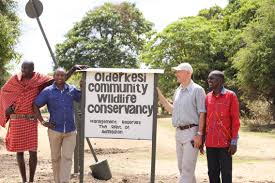
Olderkesi Community Wildlife Conservancy occupies the southernmost boundary of the Masai Mara National Reserve (MMNR) and lies directly along the Kenya–Tanzania border, forming one of the most strategically important edge landscapes in the greater Serengeti–Mara ecosystem.
For travelers planning a Masai Mara safari, focusing your visit on the southern side of the reserve—with Olderkesi as your base—offers a set of distinct advantages that differ meaningfully from the core MMNR experience.
Why Consider Olderkesi for your Masai Mara Visit:
- Lower vehicle density: Operates as a community conservancy with strict land-use and tourism controls, resulting in far fewer vehicles than the central and northern sectors of MMNR, especially during peak season.
- Higher-quality wildlife encounters: Fewer vehicles mean more time at sightings and calmer animal behavior, particularly for lions, cheetahs, and leopards that regularly move between Olderkesi and the southern Mara plains.
- Critical corridor location: Forms part of a major wildlife movement corridor linking the Masai Mara, the Serengeti, and the Loita rangelands, supporting seasonal movement of elephants and wildebeest.
- Ecological significance: Includes the Poleleti Plains, an important wildebeest calving area within the wider Serengeti–Mara ecosystem.
- Broader range of activities: Conservancy regulations allow experiences typically not permitted inside MMNR, including guided walking safaris, regulated night drives, and conservation-focused activities.
- Flexible safari planning: Easy access to MMNR enables targeted reserve game drives when desired, while retaining a quieter, low-impact base outside the reserve.
- Diverse landscapes: A mosaic of open grasslands, woodlands, and spring-fed refuges supports excellent wildlife viewing throughout the year without crowd pressure.
- Ideal for discerning travelers: Especially well suited to photographers, repeat Mara visitors, families, and conservation-minded guests seeking depth rather than volume.
- Values-driven experience: Prioritizes privacy, ecological integrity, and direct community benefit, while remaining fully connected to the iconic wildlife spectacle of the Masai Mara ecosystem.
Quick Overview of Olderkesi Community Wildlife Conservancy:
- Name: Olderkesi Community Wildlife Conservancy
- Location: South-eastern edge of the Masai Mara National Reserve, near the Serengeti and Loita Hills interface
- Conservancy Type: Community-owned, land-lease conservancy managed through a local wildlife conservation trust. This conservancy is the southernmost of all Masai Mara Conservancies and the neigbouring conservancies include Olpua Conservancy to the East and Mara Ripoi, Isaaten, and Siana Conservancy to the North.
- Size: Core conservancy ~7,000–7,608 acres within a much larger group ranch landscape
- Ecological Role: Critical wildlife corridor and dispersal zone linking the Mara ecosystem with surrounding rangelands
- Key Landscape Feature: Poleleti (Pololeti) Plains, known for wildebeest calving activity
- Habitats: Open grasslands, woodlands, hills, springs, and dry-season refuges
- Wildlife: Lions, cheetahs, leopards, spotted hyenas, elephants, buffalo, wildebeest, zebra, eland, Maasai giraffe
- Migration Context: Not a river-crossing area; important for calving, movement, and seasonal grazing
- Tourism Style: Low vehicle density, quiet sightings, conservation-led safari experience
- Activities (regulated): Day and night game drives, guided walks, cultural and conservation interpretation
- Conservation Challenges: Human–wildlife conflict, overgrazing pressure during droughts, poaching risk, land fragmentation. Read about conservation efforts in Masai Mara.
- Community Benefits: Lease payments, ranger employment, education support, health and water infrastructure funded through tourism and conservation fees
- Access: By light aircraft to nearby Mara airstrips with road transfer, or full-day road transfer from Nairobi
- Accommodation: Strongly associated with the Cottar’s Safaris properties (heritage camp, private villa, conservation camp)
- Best For: Privacy-focused safaris, conservation-minded travelers, families and groups, and guests combining conservancy stays with targeted MMNR game drives
Where Olderkesi is located (and why it matters)
Olderkesi lies directly adjacent to MMNR’s south-eastern boundary, close to the Tanzania / Serengeti side of the ecosystem. This positions it as a strategic edge landscape, where wildlife moves seasonally between protected areas and community land.
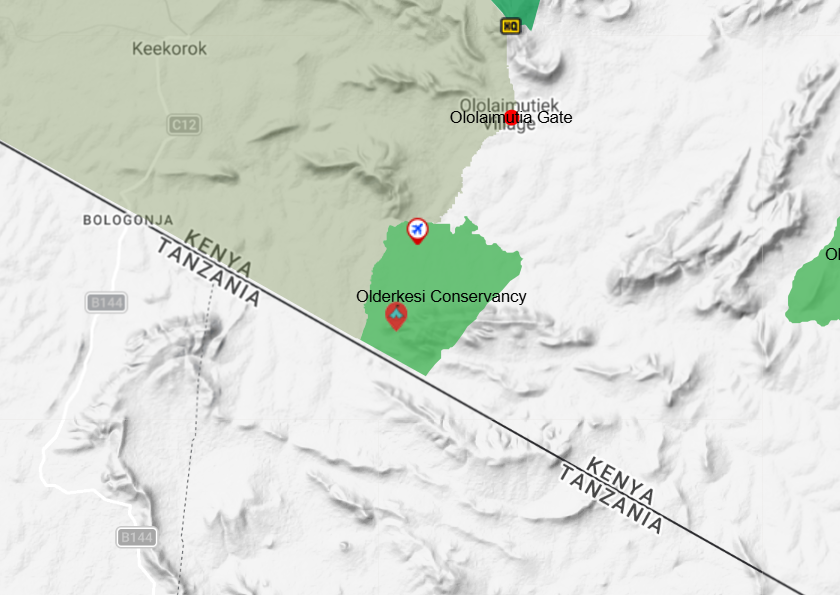
Below are more details on Olderkesi Conservancy Location:
- Geographic Position: Located on the south-eastern edge of the Masai Mara National Reserve, forming part of the outer Greater Mara ecosystem rather than the reserve core.
- Ecosystem Interface: Sits at a critical ecological junction linking the Mara plains with the Loita Hills and the wider Serengeti–Mara rangelands, making it a true edge and transition landscape.
- Corridor Function: Functions as a seasonal wildlife corridor, enabling movement of elephants, wildebeest, and other large mammals between protected areas and community grazing lands.
- Poleleti (Pololeti) Plains: Encompasses or borders the Poleleti Plains, an open grassland zone recognized for wildebeest calving within the broader Serengeti–Mara system.
- Terrain Diversity: Characterized by a mix of open savannah grasslands, acacia woodlands, rolling hills, and spring-fed areas, supporting both grazing and browsing species.
- Hydrology & Refugia: Presence of natural springs and wooded pockets provides dry-season refuges for wildlife when conditions inside the reserve or on surrounding rangelands become harsh.
- Boundary Dynamics: Unfenced landscape with fluid wildlife movement across conservancy–reserve boundaries, reflecting natural ecological processes rather than fixed park limits.
- Strategic Conservation Value: Its south-eastern location makes Olderkesi especially important for maintaining landscape connectivity and reducing ecological isolation of the Masai Mara National
Olderkesi Community Wildlife Conservancy vs Masai Mara National Reserve (MMNR)
| Topic | Olderkesi Community Wildlife Conservancy | Masai Mara National Reserve (MMNR) |
|---|---|---|
| Legal & management type | Community conservancy on Maasai-owned land; governed through a dual-trust model (community landowners’ trust + conservation management trust) under a negotiated conservancy plan | County-managed national reserve under Narok County governance, with statutory conservation and tourism regulations |
| Ecosystem position | South-eastern edge of MMNR, bordering Tanzania / Serengeti, functioning as an edge and corridor landscape | Core protected area of the Mara ecosystem, anchoring wildlife populations but reliant on surrounding dispersal areas |
| Size (statistical contrast) | Commonly cited core conservancy area of ~7,000–7,608 acres (≈28–31 km²), within a much larger group ranch | Approximately 1,510 km², making it one of Africa’s largest unfenced savannah reserves |
| Land ownership | Community-owned land leased collectively by thousands of Maasai landowners | Public land; not parcel-owned by private landowners |
| Year formalized | Operationalized as a formal conservancy at scale around 2015–2016 | Protected area origins date back to 1948, with later expansion and county management structures |
| Governance complexity | Single conservancy governance framework focused on one contiguous lease block | Split operational history (Mara Triangle and Central Mara), now coordinated under broader county management planning |
| Tourism development controls | Tourism is intentionally low-volume and tightly controlled through conservancy agreements | Reserve management plans explicitly limit new accommodation development and bed expansion to address density pressures |
| Accommodation density (unique stat) | No large “bed-capacity system”; tourism structured around very limited, partner-based camps | Inventory data records 30+ lodges/camps with 1,300+ beds inside the reserve (historically increasing before controls were introduced) |
| Visitor density management | Managed implicitly through conservancy rules, partner limits, and access controls | Reserve-wide planning identifies optimal visitor density targets and acknowledges sectoral crowding during peak seasons |
| Ecological signature | Poleleti (Pololeti) Plains — a recognized wildebeest calving landscape and key corridor zone | Iconic Mara landscapes including extensive plains, river systems, and broad habitat representation |
| Wildlife movement dynamics | Emphasizes connectivity: elephants and wildebeest move seasonally between Mara, Serengeti, and Loita rangelands | Emphasizes concentration: high densities of wildlife year-round, especially during migration peaks |
| Operational focus | Corridor protection, predator coexistence, land-use zoning, and community benefit delivery | Landscape-scale protection, tourism revenue generation, and reserve-wide conservation enforcement |
| Best-fit traveler profile | Travelers seeking privacy, calm sightings, corridor ecology, and conservation storytelling | Travelers seeking maximum geographic coverage, iconic Mara scenery, and classic high-density wildlife spectacle |
Why this location is ecologically important
- Olderkesi keeps open a wildlife corridor used by wildebeest and elephants, enabling movement between major habitats and seasonal resources.
- It includes the Poleleti (Pololeti) Plains, recognized as wildebeest calving areas, a high-value ecological function that depends on maintaining open grassland and limiting disturbance.
Foundation of Olderkesi Community Conservancy:
- Founding driver and early catalyst: In September 2006, Cottar’s 1920 Camp initiated Cottar’s Wildlife Conservation Trust (CWCT) as a charitable conservation trust to support wildlife conservation and community development, and CWCT began working with Olderkesi’s community structures toward a formal conservancy pilot.
- Core community institution (landowners’ entity): The landowners are represented through a registered community/landowners trust (described as Olderkesi Community Wildlife Trust / Olderkesi Wildlife Conservation Trust in different documents), bringing together ~6,650 community members/landowners on the adjudication list.
- Formal management structure: Olderkesi is consistently described as managed by two trusts—the landowners’ trust (community owners) and CWCT (the contracted/partner conservation trust)—working together under a negotiated management plan and land-use zoning.
- Conservancy “opening/establishment” date: Public conservation reporting frequently states the conservancy was established/opened in 2016, tied to the implementation of the land-use zoning and lease model at operational scale.
- Negotiation period (how it came into being): The lease-based conservancy is described as the result of more than a decade of negotiations to overcome cultural/political resistance and persuade the community to keep a single block intact rather than subdividing it for farming/livestock.
- Landholding Context: The wider Olderkesi group ranch covers a very large communal landscape; a core block of ~7,000–7,608 acres was secured under a single conservation lease to form the conservancy as per Masai Mara Wildlife Conservancies.
- Landowners: Thousands of Maasai landowners are represented at group-ranch level, with the core leased block managed collectively rather than as subdivided parcels.
- Lease Model: Land remains community-owned but is leased for conservation and tourism, with strict zoning that limits settlement, cultivation, and unrestricted grazing in core wildlife areas.
- Lease Payments: The lease program is designed to be competitive with alternative land uses (livestock and farming), providing regular, predictable cash income to the community.
- Reported Lease Scale: Public conservation case studies describe monthly lease payments in the region of USD 10,000 for the core conservancy block during early implementation phases.
- Payment Safeguards: Lease payments are performance-linked, with deductions applied for breaches (e.g., poaching or illegal land use), enforced through community oversight mechanisms.
- Grazing Rules: Controlled or seasonal grazing is permitted only under agreed conditions, reinforcing conservation outcomes while acknowledging pastoral livelihoods.
- Management & Operations: Day-to-day conservation management includes ranger deployment, wildlife monitoring, and land-use enforcement, funded through tourism and lease revenues.
- Community Benefits: Lease and tourism revenues have been directed toward education support, bursaries, schools, healthcare, water projects, and local employment.
- Strategic Significance: Olderkesi is widely cited as a model corridor conservancy, balancing wildlife connectivity, community income, and long-term land integrity on the south-eastern edge of the Masai Mara ecosystem.
- Employment and ranger operations (documented staffing): A conservation profile reports conservancy-linked employment including 29 rangers and 6 guards (with additional camp staff drawn from the community).
What Olderkesi is: community land + a formal lease conservancy model
Olderkesi operates through a community lease structure: land remains owned by the Maasai community but is leased for conservation and tourism under agreed rules.
Key elements of this model include:
- The conservancy is community-owned and leased to a conservation trust under clearly defined limits on settlement, farming, and grazing.
- The initiative is structured through a community wildlife conservation trust framework, spanning approximately 7,608 acres, designed to strengthen both conservation outcomes and local livelihoods.
Size and landowner participation (accurate framing)
Different descriptions of Olderkesi reflect different scales:
- The core leased conservancy unit, commonly cited at ~7,000–7,608 acres
- The wider Olderkesi group ranch, which is substantially larger, with a negotiated core block dedicated to conservation
Landowner participation is also described at different levels depending on scope:
- Thousands of households connected to the wider group ranch
- A smaller subset directly represented in the core conservancy lease
Landscapes and habitats
Olderkesi comprises more than open plains. Its habitat mosaic includes:
- Open grasslands and woodlands
- Hilly and forested areas, regularly used by buffalo and elephants
- Springs and wooded refuges, supporting wildlife persistence during dry periods
This diversity underpins both resident wildlife and seasonal corridor use.
Wildlife: what you can realistically expect
Olderkesi’s wildlife profile is shaped by resident species and transient corridor movement.
Big cats and predators
Olderkesi is widely regarded as strong for:
- Lions
- Cheetahs
- Leopards
- Spotted hyenas
Conservation management here is particularly important because predators face risks from retaliatory killing when livestock losses occur—one reason land-use zoning and conflict mitigation are central to the conservancy’s design.
Elephants and corridor species
Olderkesi forms part of a broader corridor linking the Mara with Loita and Nguruman landscapes. Elephant numbers fluctuate seasonally, reflecting natural movement rather than permanent residence.
Plains game and giraffes
Large numbers of transient grazers pass through Olderkesi, alongside a resident component of plains game and a permanent population of Maasai giraffe.
The Great Migration: Olderkesi’s role
Olderkesi is not positioned as a Mara River crossing area. Its migration value is better understood as:
- A corridor and dispersal landscape connected to the wider Serengeti–Mara system
- A calving landscape (Poleleti Plains) that plays an important ecological role even when river crossings are happening elsewhere
Planning guidance:
Base in Olderkesi for low-density predator viewing and corridor wildlife, and add targeted MMNR game drives if river crossings are a priority.
What you can do in Olderkesi (and how it differs from MMNR)
Subject to conservancy regulations and your operator, Olderkesi commonly supports:
- Night game drives (regulated)
- Guided walking safaris
- Conservation and community experiences, including ranger and cultural interpretation
A defining quality is the land-use zoning approach, which limits settlement, farming, and grazing in core areas to allow wildlife to roam and breed with minimal disturbance.
Conservation challenges
Key pressures affecting Olderkesi include:
- Overgrazing and drought stress, particularly during dry years when pastoral pressure increases
- Poaching risks and land fragmentation, including subdivision and fencing, which threaten wildlife corridors and predator safety
Addressing these pressures is central to the conservancy’s long-term strategy.
Community benefits and local impact
Olderkesi is widely regarded as a high-trust community conservancy model because tourism revenues are linked to tangible local benefits, including:
- Support for education (teacher remuneration, student sponsorships, school infrastructure)
- Health and water access improvements
- Community employment through ranger programs and conservancy operations
Landowners are involved in governance and decision-making, reinforcing long-term local commitment to conservation.
Fees logic: Olderkesi conservancy vs MMNR entry
Common booking question: Do I pay conservancy fees and park fees?
- Staying and game-driving within Olderkesi typically involves a conservancy/community fee, often bundled into accommodation packages.
- MMNR entry fees apply only on days you enter the national reserve.
Always confirm inclusions at booking, as fee structures vary by season and package.
How to Get to Olderkesi Community Wildlife Conservancy (Logistics Guide)
- Most direct by air: Fly from Nairobi (typically Wilson Airport) into the Cottar’s Airstrip (often referred to as the Olderkesi / Cottar’s private airstrip), then transfer by safari vehicle to camp. This is the fastest and cleanest routing for guests staying in the Olderkesi/Cottar’s area, because it minimizes road time inside the wider Mara circuit and avoids unnecessary detours.
- Nearby public/alternative MM airstrips (backup or depending on flight routing):
- Keekorok Airstrip – a common fall-back strip in the main reserve zone; transfer time to Olderkesi is longer and can be significantly affected by road conditions and gate formalities.
- Ol Kiombo Airstrip – often used for the eastern Mara / Talek side; can be a workable alternative but usually adds transfer time compared to Cottar’s.
- Mara Serena Airstrip – western/northern orientation; generally a longer transfer to Olderkesi.
Practical note: If your flight schedule lands at a non-Cottar’s strip, treat the onward drive as a game-drive transfer (time varies with wildlife stops, weather, and track conditions).
- Road access (most common driving route):
- Nairobi → Narok → Sekenani / Talek corridor → Ololamutia Gate (MMNR) → continue toward the south-eastern Mara / Olderkesi zone.
- Ololamutia Gate is the most relevant reserve access point to mention for Olderkesi overland routing because it sits on the south-eastern side of MMNR and is often the most direct entry corridor toward the Olderkesi landscape.
- Why Ololamutia is the key road reference:
- It positions you correctly for the south-eastern reserve boundary and reduces backtracking compared with entering farther north (e.g., through more central gates).
- It’s also the cleanest way to explain the route to guests: “enter via Ololamutia, then continue to Olderkesi.”
- Road travel time (expectation-setting):
- From Nairobi by road: typically 5.5–7.5 hours to the Mara region depending on traffic, weather, and stops, then additional time from the gate/entry corridor to Olderkesi. In rainy periods, some sections can slow significantly—set expectations that timings are condition-dependent.
- Best practice for guests (what to advise in your guide):
- If prioritizing maximum safari time and minimum fatigue, fly into Cottar’s Airstrip.
- If combining Olderkesi with another Mara sector, choose the airstrip that matches your overall circuit (e.g., Ol Kiombo for Talek-side combinations, Musiara/Mara Serena for northern-sector combinations).
- For overland arrivals, frame it as a scenic transfer and suggest an early departure from Nairobi.
Accommodation in Olderkesi Conservancy
Olderkesi is closely associated with a small cluster of safari properties aligned with its conservation model.
1) Cottar’s 1920s Safari Camp
A landmark, heritage-style tented camp within the Olderkesi landscape.
Key details:
- 9–11 tented suites (including family and honeymoon options), reflecting phased development
- En-suite bathrooms, shared lounge and dining areas, pool and spa
- Activities typically include day and night game drives, guided walks, and cultural experiences
Best for: couples, families, and travelers seeking classic safari atmosphere with strong guiding and conservation depth.
2) Cottar’s Bush Villa
An exclusive-use private villa within the Olderkesi landscape.
Best for: multi-generational families and private groups wanting privacy, flexibility, and curated guiding.
3) Cottar’s Conservancy Camp
A conservation-focused camp supporting research, volunteering, and immersive learning.
Best for: conservation-minded travelers, students, and guests seeking strong impact-travel alignment.
4) Other accommodation marketed in Olderkesi
Some properties are marketed as being located in Olderkesi and emphasize privacy, night drives, and guided walks. Best editorial practice is to describe these as marketed within Olderkesi and confirm exact location and fee structures at booking.
How to choose the best Olderkesi stay
- Classic “old-school safari” feel: heritage tented camp with strong guiding
- Private groups & families: exclusive-use villa
- Conservation-first focus: research-oriented conservancy camp
- Combining with MMNR: plan 1–2 targeted reserve days while keeping Olderkesi as a low-density base
Olderkesi Conservancy FAQ
Is Olderkesi inside Masai Mara National Reserve?
No. It is a community conservancy adjacent to MMNR, with its own zoning and fee structure.
How big is Olderkesi Conservancy?
The core conservancy is commonly cited at ~7,000–7,608 acres, within a much larger group ranch landscape.
What is Olderkesi best known for?
Quiet, private safaris; its role as a critical wildlife corridor; and the Poleleti Plains calving function for wildebeest.
Can I do night drives and guided walks?
Yes, these activities are commonly permitted within conservancy regulations and arranged through your operator.