
The Maasai Mara Conservancies represent one of Africa’s most successful and scalable community-based conservation models. Operating under the Maasai Mara Wildlife Conservancies Association (MMWCA), these conservancies cover thousands of hectares of wildlife-rich land surrounding the Maasai Mara National Reserve, contributing to the preservation of migratory routes, biodiversity corridors, and local livelihoods.
Each conservancy is formed through lease agreements with local Maasai landowners, who set aside their land for wildlife conservation in return for regular income from eco-tourism partners. This model provides ecological integrity, cultural preservation, and economic sustainability.
🔍 Key Features of the Conservancy Model
- Community-Owned Land: Land is leased from thousands of individual Maasai families.
- Low-Density Tourism: Strict caps on visitor and vehicle numbers maintain exclusivity and minimize habitat disturbance.
- Conservation Incentives: Landowners earn income through leases, employment, and community benefits.
- Integrated Livestock Management: Many conservancies allow regulated grazing in harmony with wildlife conservation.
- Ecological Corridors: Conservancies protect vital migration and dispersal routes for species like elephants, wildebeest, and big cats.
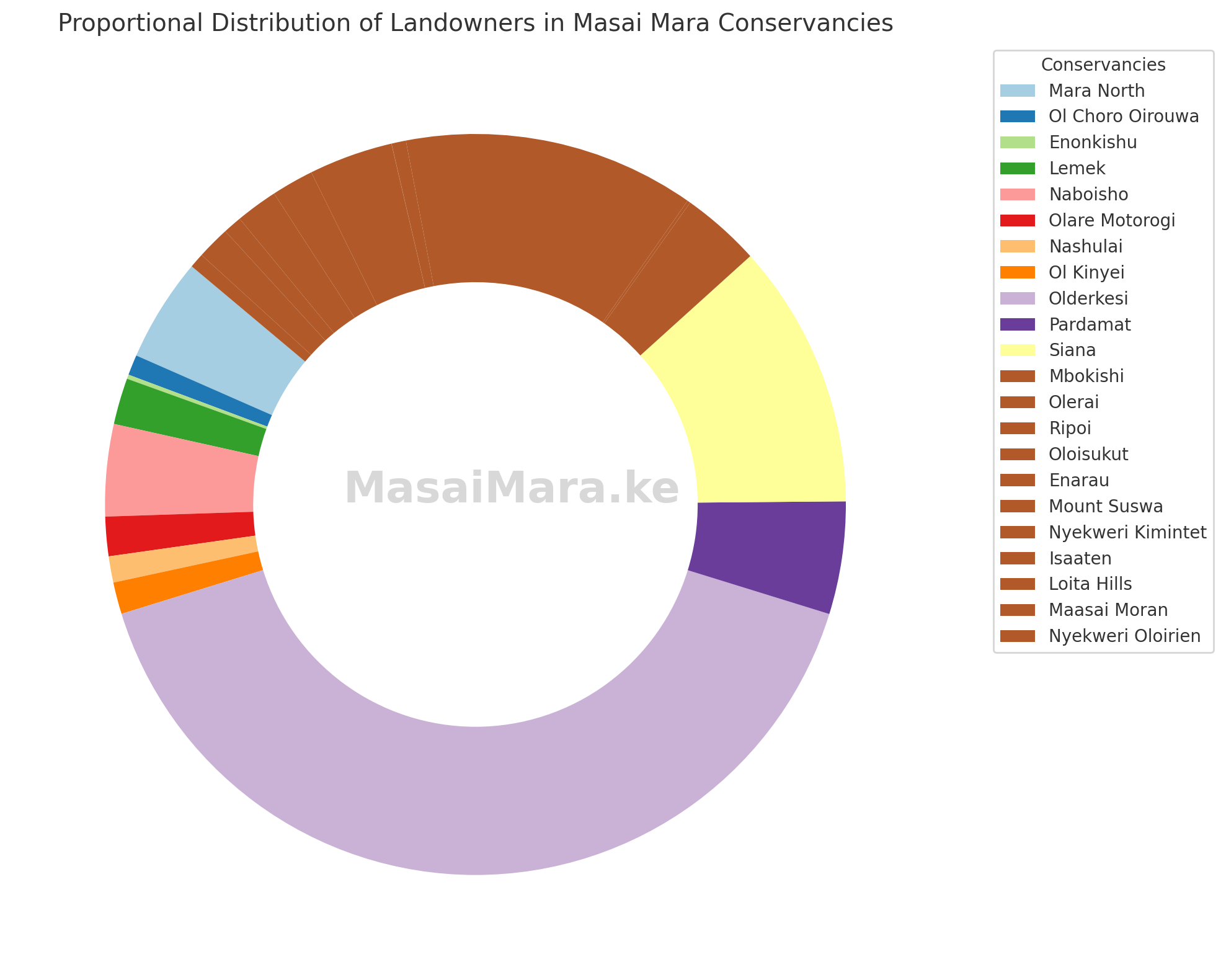
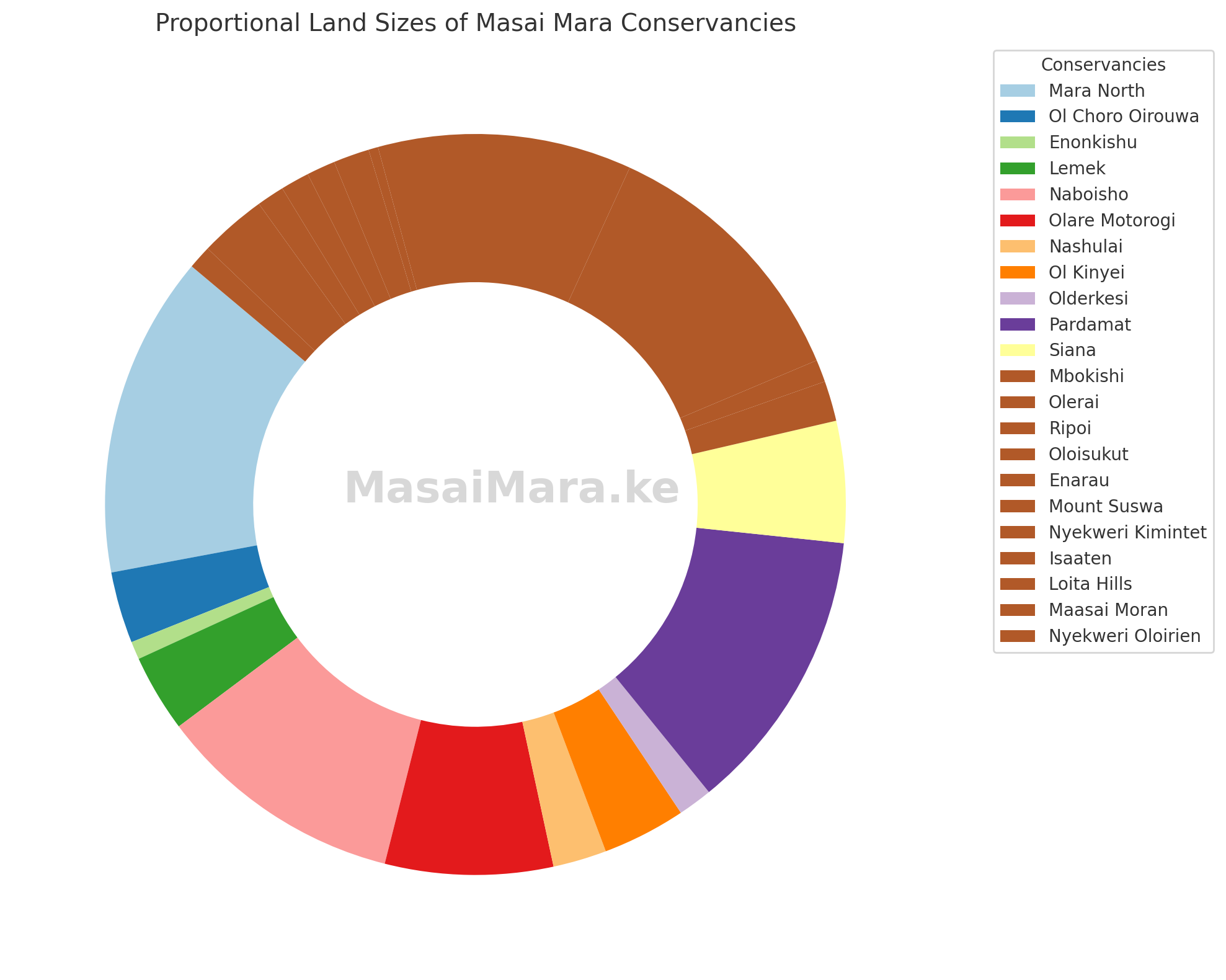
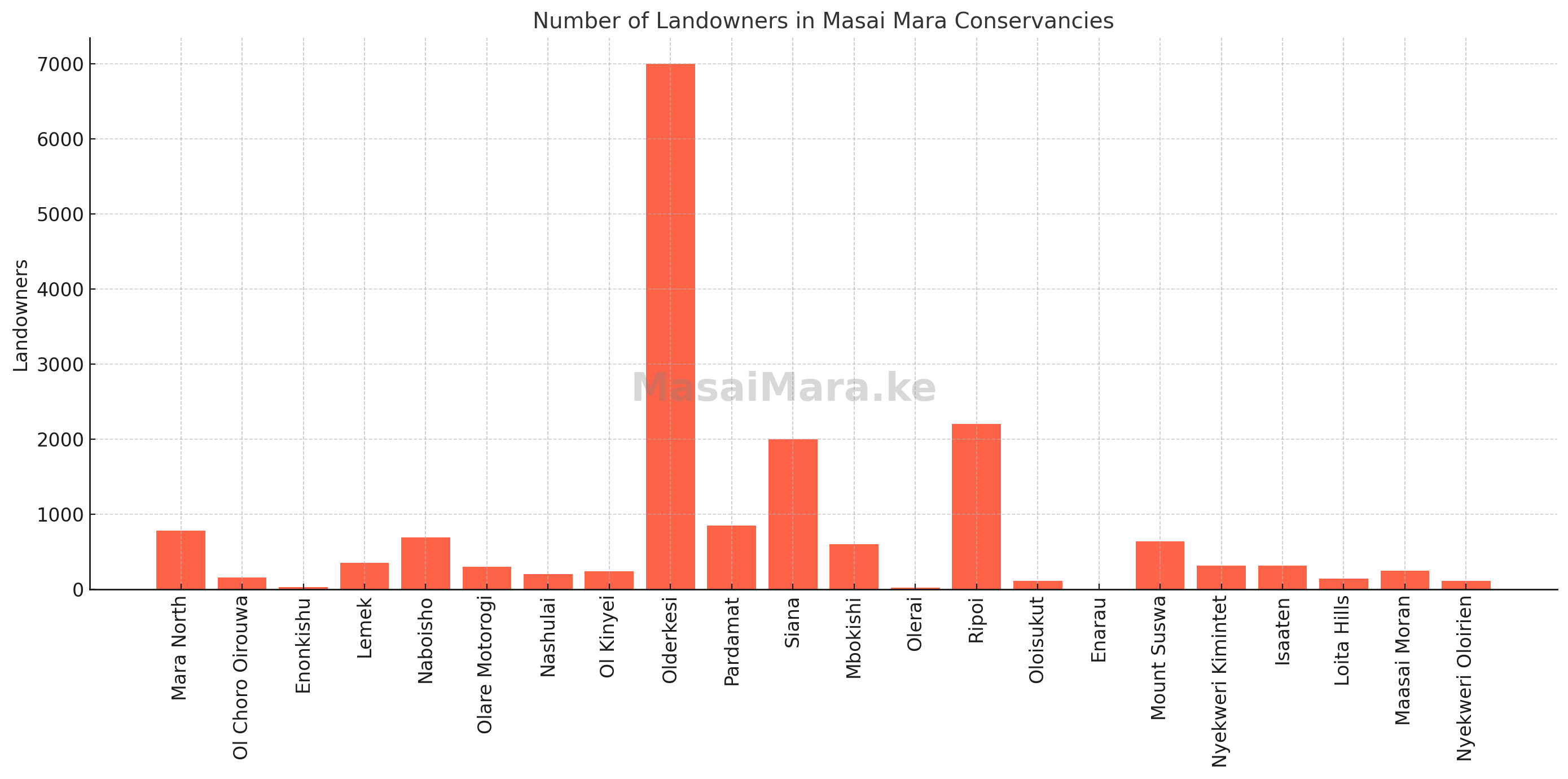
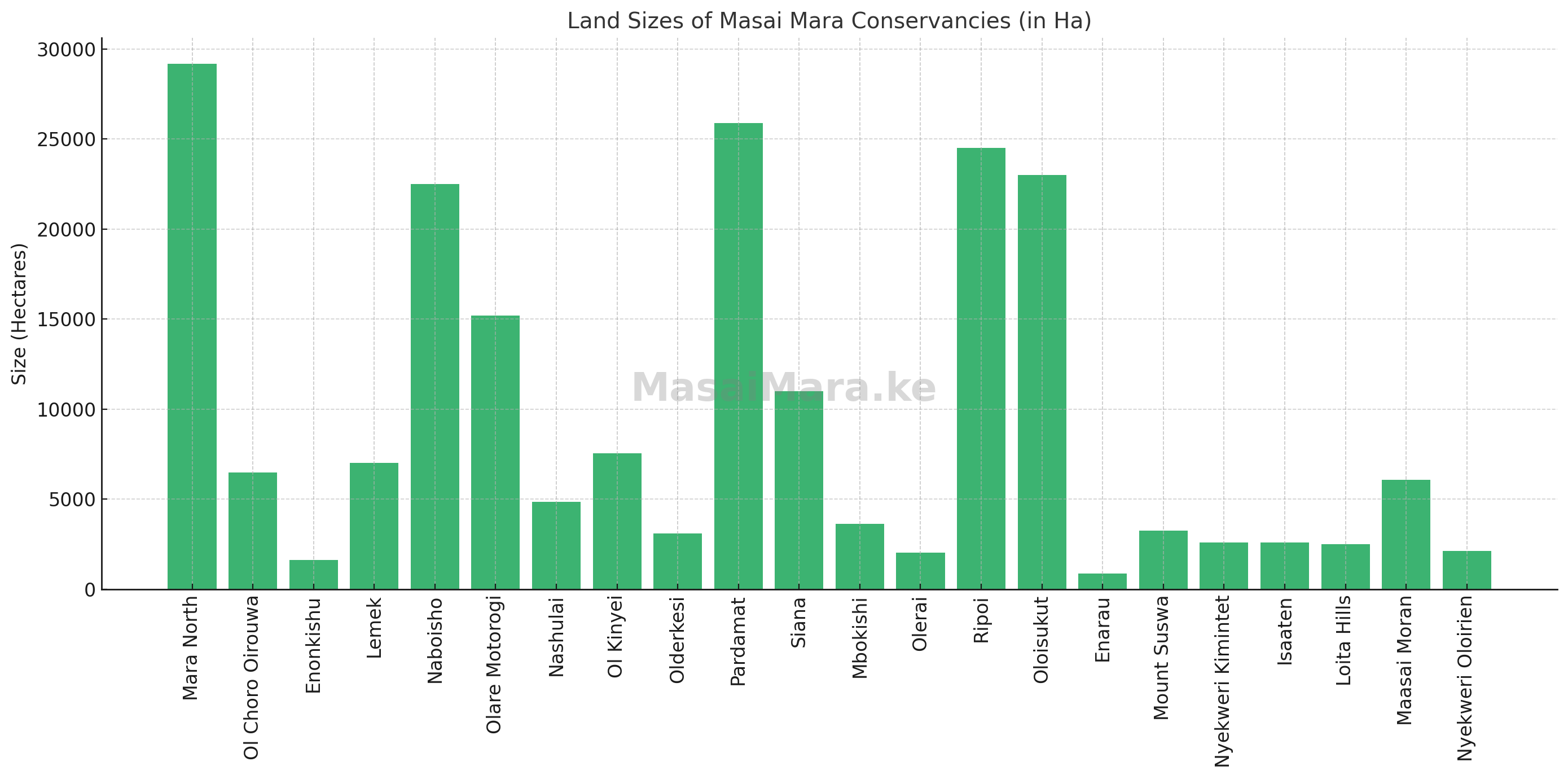
Size of Masai Mara Conservancies & Number of Masai Landowners:
The Maasai Mara’s network of community conservancies now spans an impressive 207,586 hectares of protected land—equivalent to over 513,000 acres—making it one of the largest and most impactful community-led conservation landscapes in Africa. This vast expanse of savannah, woodland, and riverine habitat surrounds the Maasai Mara National Reserve and forms a critical buffer zone for wildlife migration routes and dispersal areas.
| Conservancy Name | Land Size (Ha) | Land Size (Acres) | % of Total Land Size | Number of Landowners |
| Mara North | 29,170 | 72,090 | 14.05% | 783 |
| Ol Choro Oirouwa | 6,472 | 15,993 | 3.12% | 154 |
| Enonkishu | 1,624 | 4,013 | 0.78% | 32 |
| Lemek | 7,021 | 17,350 | 3.38% | 350 |
| Naboisho | 22,500 | 55,600 | 10.84% | 694 |
| Olare Motorogi | 15,200 | 37,560 | 7.32% | 297 |
| Nashulai | 4,856 | 12,002 | 2.34% | 198 |
| Ol Kinyei | 7,544 | 18,645 | 3.63% | 240 |
| Olderkesi | 3,108 | 7,683 | 1.50% | 7,000 |
| Pardamat | 25,900 | 63,985 | 12.48% | 850 |
| Siana | 11,000 | 27,182 | 5.30% | 2,000 |
| Mbokishi | 3,642 | 9,002 | 1.75% | 600 |
| Olerai | 2,020 | 4,990 | 0.97% | 23 |
| Ripoi | 24,500 | 60,541 | 11.81% | 2,200 |
| Oloisukut | 23,000 | 56,835 | 11.08% | 109 |
| Enarau | 866 | 2,140 | 0.42% | 1 |
| Mount Suswa | 3,259 | 8,052 | 1.57% | 634 |
| Nyekweri Kimintet | 2,600 | 6,425 | 1.25% | 318 |
| Isaaten | 2,600 | 6,425 | 1.25% | 318 |
| Loita Hills | 2,500 | 6,178 | 1.20% | 141 |
| Maasai Moran | 6,070 | 14,996 | 2.92% | 250 |
| Nyekweri Oloirien | 2,134 | 5,272 | 1.03% | 112 |
| Total | 207,586 | 512,947 | 100.00% | 17,304 |
The conservancies are co-managed by 17,304 individual Maasai landowners, whose participation has made this model globally recognized for balancing ecological integrity with community livelihoods.
Key contributors in terms of land area include Mara North (29,170 ha), Pardamat (25,900 ha), Mara Ripoi (24,500 ha), Oloisukut (23,000 ha), and Naboisho (22,500 ha), which together make up more than half the total conservancy land. These figures not only highlight the scale of grassroots conservation but also underscore the power of local stewardship in preserving Kenya’s iconic wildlife heritage.
23 Masai Mara Conservancies:
Here’s a comprehensive, region-by-region expert guide to the 23 Maasai Mara conservancies, summarizing each conservancy’s location, size, land ownership, wildlife highlights, conservation focus, and tourism model.
🧭 Northern Mara Conservancies
These conservancies form the upper edge of the Greater Mara Ecosystem and are essential for dispersal corridors, conservation-livestock integration, and community-led innovation.
1. Mara North Conservancy
- Size: 29,170 Ha | Landowners: 783
- Highlights: Predators, big cats, and migration corridor
- Tourism: 12 tourism partners (10 camps, 2 riding outfits)
- Focus: High-end, low-density safari with direct community benefits
- See website.
2. Lemek Conservancy
- Size: 7,021 Ha | Landowners: 350
- Highlights: Open plains, Mara River frontage, high wildlife density
- Known For: Big cats, elephants, and spectacular migration scenes
- History: Broke away from Koiyaki Lemek Trust in 2009
3. Ol Choro Oirouwa Conservancy
- Size: 6,472 Ha | Landowners: 154
- Unique Feature: Only conservancy in Mara with southern white rhinos
- Established: One of the earliest conservancies (1991–1993)
- Protection: Rhinos under 24/7 ranger and KWS surveillance
4. Enonkishu Conservancy
- Size: 1,624 Ha | Landowners: 32
- Focus: Conservation-livestock balance & grazing innovation
- Wildlife: Aardvark, wild dogs, giraffe, Colobus monkeys
- Landscape: Riverine forests, plateaus, and wooded savannah
5. Mbokishi Conservancy
- Size: 3,642 Ha | Landowners: 600+
- Role: Wildlife corridor for elephants and raptors
- Communities: Comprises 5 local communities
- Vision: Reduce conflict and promote sustainable development
6. Enarau Conservancy
- Size: 866 Ha (expanding to 3,140 Ha) | Landowners: 27
- Founded: 2022
- Goal: Restoration of degraded farmland & threatened habitats
- Partners: Linked to CERK (Center for Ecosystem Restoration Kenya)
🌿 Central Mara Conservancies
These conservancies sit adjacent to the Maasai Mara Reserve, forming buffer zones and critical migration habitats. Many are well-known for luxury eco-tourism.
7. Olare Motorogi Conservancy
- Size: 15,200 Ha | Landowners: 297
- Combo: Merged Olare Orok & Motorogi
- Wildlife: Rhinos, wild dogs, elephants, predators
- Model: High-end lodges, tightly managed tourism
- Camps/Lodges Located In Olare Motorogi: Mahali Mzuri, Olare Kempinski, Kicheche Bush Camp, Porini Lion Camp, Great Plains/Mara Plains Camp
- Website: https://olaremotorogiconservancy.com/
8. Mara Naboisho Conservancy
- Size: 22,500 Ha | Landowners: 694
- Lions: Among the highest lion densities in Africa
- Birds: Pygmy falcons, Von der Decken’s hornbill, bush pipits
- Tourism: Strict visitor limits = top-tier exclusivity
9. Ol Kinyei Conservancy
- Size & Ownership: ~7,544 ha; ~240 landowners
- Location: Eastern boundary of Masai Mara National Reserve
- Established: 2005 (one of the original Mara conservancies)
- Model: Community land-lease conservancy with strict low-density tourism, managed with Gamewatchers / Porini
- Wildlife: Lions, cheetahs, leopards, elephants, large plains game; strong predator hunting habitat
- Ecological Role: Key buffer and wildlife dispersal zone outside the reserve
- Tourism Style: Quiet, low-impact safaris; guided walks and night drives permitted (by rule)
- Camps Located in Ol Kinyei: Porini Cheetah Camp; Porini Mara Camp
- Best For: Privacy-focused safaris, photographers, repeat Mara visitors seeking uncrowded wildlife viewing
10. Nashulai Conservancy
- Size: 4,856 Ha | Landowners: 198
- Unique: Fully Maasai-run & founded
- Theme: Coexistence of people, livestock & wildlife
- Wildlife: Giraffes, lions, birds, and migratory species
11. Pardamat Conservation Area
- Size: 25,900 Ha | Landowners: 850
- Model: Mixed-use conservation + settlement zone
- Corridors: Connects Loita Plains to Mara Triangle
- Landscape: Hilly, forested, and open wildlife habitat
- See website.
12. Mara Ripoi Conservancy
- Size: 9,308 Ha | Landowners: 2,007
- Tourism: Two eco-friendly safari camps
- Focus: Low-impact conservation and local landowner empowerment
🐘 Eastern & Loita Region Conservancies
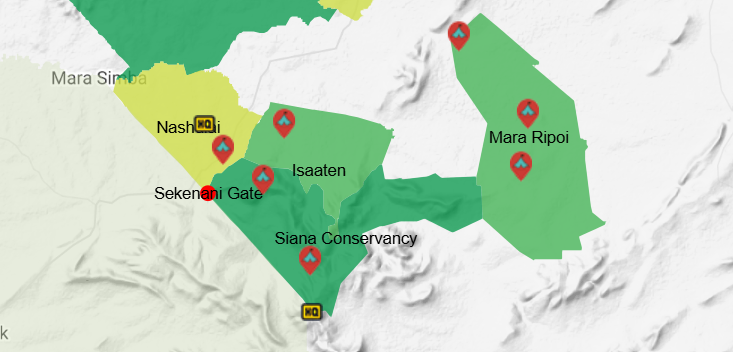
These areas are key for elephant migration, cultural preservation, and expanding community tourism beyond the main Mara circuit.
13. Isaaten Conservancy
- Size: 2,600 Ha | Landowners: 318
- Wildlife: Lions, cheetahs, elephants
- Habitat: Rich vegetation and scenic landscapes
- Significance: Important eastern Mara corridor
14. Loita Hills Community & Wildlife Conservancy
- Size: 2,500 Ha | Landowners: 141
- Established: 2023
- Activities: Hiking, cycling, safaris, hot springs
- Unique: Highest number of elephant corridors and maternity zones
🦓 Western Mara & Siria Escarpment Conservancies
These conservancies provide breathtaking escarpment views, rare species protection, and vital buffer zones between forests and open savannah.
15. Oloisukut Conservancy
- Size: 23,000 acres | Landowners: 109
- Biodiversity: Pangolins, giraffes, Mountain Reedbuck
- Elephant Corridor: Connects Mara North, Triangle & Nyakweri
- Partners: WWF, Basecamp Foundation, MMWCA
16. Nyekweri Kimintet Conservancy
- Size: 2,600 Ha | Landowners: 318
- Unique: Only known habitat of Giant Ground Pangolin in Kenya
- Support: WWF, Africa Foundation, Indigenous Networks
- Also Protects: Siria Plateau and Maasai culture
17. Nyekweri Oloirien Conservancy
- Size: 2,134 Ha | Landowners: 112
- Founded: 2020
- Wildlife: Rare birds, pangolins, small predators
- Location: Edge of Nyekweri Forest & Mara Triangle
18. Maasai Moran Conservancy
- Size: 6,070 Ha | Landowners: 250
- Projects: Beekeeping, giraffe research, eco-bandas
- Connectivity: Links to Mara Triangle, Nyekweri & Oloisukut
- Focus: Rangeland preservation and cultural heritage
🌋 Outer Ecosystem Conservancies
These conservancies play an essential role in expanding conservation beyond the immediate Mara, offering additional experiences for travelers and biodiversity corridors.
19. Mount Suswa Conservancy
- Size: 3,259 Ha | Landowners: 634
- Geography: Caldera, lava tubes, hot springs
- Wildlife: Baboons, hyenas, rock hyrax
- Activities: Hiking, cave exploration, cultural tours
20. The Olerai Conservancy
- Size: 2,020 Ha | Landowners: 23
- Habitat: Yellow barked acacia, horse safaris
- Conservation: Focuses on flora protection and habitat restoration
21. Olderkesi Conservancy
- Size: 15,000 acres | Landowners: 7,000+
- Partners: Cottar’s Wildlife Trust
- Location: Borders Serengeti and southeast Mara
- Protection: Critical wildlife corridor and elephant range
22. Mara Siana Conservancy
- Size: 11,000 Ha | Landowners: 2,000+
- Support: WWF-funded expansion
- Focus: Community empowerment, schools, ranger jobs
- Wildlife: Plains game, predators, and migratory species
23. Olare-Orok and Motorogi (Now Olare Motorogi)
- Combined & Covered Above
Masai mara Conservancies Comparison Table
| Conservancy / Conservation Area | Size (MMWCA) | Landowners (MMWCA) | Year Established (MMWCA text) | Management / Who Runs It (MMWCA text) |
|---|---|---|---|---|
| Mara North Conservancy | 28,487 ha (page headline) | 783 (described as partnership with 783; headline shows 767) | January 2009 | Not-for-profit entity; partnership with 12 tourism partner members (10 camps + 2 riding outfits) |
| Ol Choro Oirouwa Conservancy | 1,624 ha (most consistently presented block) | 32 | 1991 (as a wildlife trust) | Wildlife Trust model; rhino protection supported by ranger operations and KWS surveillance |
| Enonkishu Conservancy | 5,928 acres (≈2,399 ha) | 42 | Not stated | Community conservancy; focus on livestock improvement alongside conservation and tourism |
| Mara Lemek Conservancy | 17,350 acres (≈7,021 ha) | 350 | 1995 (trust established); 2009 (registered as conservancy) | Registered community conservancy split from Koiyaki Lemek Community Wildlife Trust |
| Mara Naboisho Conservancy | 22,500 ha (headline) | 694 (headline); text also references 636 contributors | Not stated | Community conservancy with strict controls on tourism density and grazing |
| Olare Motorogi Conservancy | 15,200 ha (headline) | 297 (headline); text references partnership with 288 | Not stated | Conservancy management working with landowners to relocate settlements and regulate grazing |
| Nashulai Maasai Conservancy | 4,856 ha (headline) | 195 (text); headline shows 198 | 2016 | Maasai-founded, directed, and run community-based conservancy |
| Ol Kinyei Conservancy | 7,544 ha (headline) | 240 (headline); text references 177 private landowners | 2005 | Partnership between landowners and GameWatchers Safaris / Porini Safari Camps |
| Olderkesi Community Wildlife Conservancy | 3,108 ha (headline; core conservancy) | 7,000 (headline figure, group ranch scale) | Not stated | Managed by Olderkesi Wildlife Community Trust together with Cottar’s Wildlife Conservation Trust |
| Pardamat Conservation Area | 25,900–26,000 ha | 850 | Not stated | Mixed conservation model; community legally registered land as a conservation area |
| Mara Siana Conservancy | ~11,000 ha | 812 (additional references to 1,450–2,000+ families under lease structures) | 2004 | Not-for-profit partnership between landowners and tourism operators |
| Mbokishi Mara Conservation Area | 3,642 ha | 150 | September 2021 | Community conservation area formed by multiple local communities committing land |
| The Olerai Conservancy | 2,020 ha | 118 | 2017 | Community land-lease conservancy; includes horse-riding tourism component |
| Mara Ripoi Conservancy | 9,308 ha | 2,007 (headline); text references up to 2,200 landowners | Not stated | Partnership model involving landowners and a limited number of tourism partners |
| Nyekweri Kimintet Conservancy | 1,121 ha | 27 | 2004 (formed); later formal registration milestones | Community Forest Conservation Trust (CBO → trust → company structure) |
| Nyekweri Oloirien Conservancy | 2,134 ha | 112 | 2020 (established); 2022 (registered as trust) | Conservancy Trust governed by a board of trustees |
| Isaaten Conservancy | 2,600 ha | 318 | Not stated | Community conservancy formed through land-lease agreements; identified as an important eastern wildlife corridor |
Masai Mara Conservancies Model
Background and Purpose
The Masai Mara Conservancies Model is one of Africa’s most influential community-based conservation frameworks, developed in response to accelerating land subdivision, habitat fragmentation, and mounting tourism pressure around the Masai Mara National Reserve. As traditional pastoral systems gave way to individually titled land and intensified land use, critical wildlife dispersal areas and migration corridors outside the reserve came under threat. The conservancy model reframed conservation from a state-led, protected-area approach into a community–private sector partnership that makes conservation a competitive and financially viable land use.
How the Model Works
At its core, the model is built on collective land-lease agreements:
- Maasai landowners pool their land into conservancies and commit it to conservation-compatible use.
- In return, they receive fixed, predictable lease payments that are not directly tied to tourist numbers.
- This creates a stable economic incentive to keep land open, unfenced, and undeveloped, protecting key buffer zones and dispersal areas beyond the reserve.
Tourism within conservancies is deliberately structured as low-density, high-value:
- Strict controls on bed numbers, vehicle density, and infrastructure footprint
- Emphasis on high-quality wildlife experiences with lower ecological pressure
- A shift from volume-driven tourism to conservation-financed land use
Local communities are embedded directly in the system:
- Income streams include lease payments, wages, and community project funding
- Employment spans ranger services, guiding, hospitality, and conservancy management
- Revenues support schools, clinics, water projects, and local infrastructure
- This converts conservation from an external restriction into a locally valued economic strategy
Ecological and Socio-Economic Impacts
Long-term research shows that conservancies have made a measurable contribution to:
- Habitat protection and recovery, with higher wildlife densities than heavily grazed or subdivided lands
- Biodiversity conservation, especially for large herbivores and apex predators
- Landscape connectivity, safeguarding migration routes and dispersal areas essential to the wider Mara–Serengeti ecosystem
Economically and socially, the model has:
- Diversified household incomes beyond livestock alone
- Increased local employment and skills development
- Strengthened community support for wildlife as a productive land use, not a competing one
The most important systemic contribution of the conservancies is not simply protection of parcels of land, but the maintenance of ecological functionality at the landscape scale.
Structural Challenges
Despite its success, the model faces persistent risks:
- Human–wildlife conflict, especially livestock predation
- Equity and governance challenges in benefit-sharing and representation
- Climate stress, particularly drought affecting both pasture and wildlife
- Over-reliance on tourism, exposed clearly during the COVID-19 collapse in travel
Strategic Outlook
Long-term resilience will depend on:
- Diversifying conservation finance (e.g., carbon markets, ecosystem service payments, blended finance)
- Strengthening governance and transparency within conservancy institutions
- Better integration of grazing, settlement, and conservation planning
- Ongoing ecological and socio-economic monitoring to support adaptive management
Why the Model Matters
The Masai Mara Conservancies Model demonstrates that large-scale conservation in working landscapes is most durable when landowners are central economic and governance partners, not passive beneficiaries. While not without vulnerabilities, it offers one of the clearest, real-world examples of how biodiversity conservation, tourism, and rural livelihoods can be structurally aligned at scale—and remains a globally relevant blueprint for community-based conservation beyond formal protected areas.
References
- Bedelian, C. (2014). Conservation, tourism, and pastoral livelihoods: Wildlife conservancies in the Maasai Mara, Kenya. Land Use Policy, 38, 209-218.
- Bhola, N., Ogutu, J. O., Said, M. Y., et al. (2012). Comparative changes in density and distribution of large herbivores in Maasai Mara Reserve and its surrounding ecosystem. Biological Conservation, 148(1), 115-126.
- Nelson, F. (2012). Natural conservationists? Evaluating the impact of pastoralist land use practices on Tanzania’s wildlife economy. Pastoralism, 2(1), 1-22.
- Ogutu, J. O., Piepho, H. P., Dublin, H. T., et al. (2011). Dynamics of Mara-Serengeti ungulates in relation to land use changes. Journal of Zoology, 285(2), 99-110.