
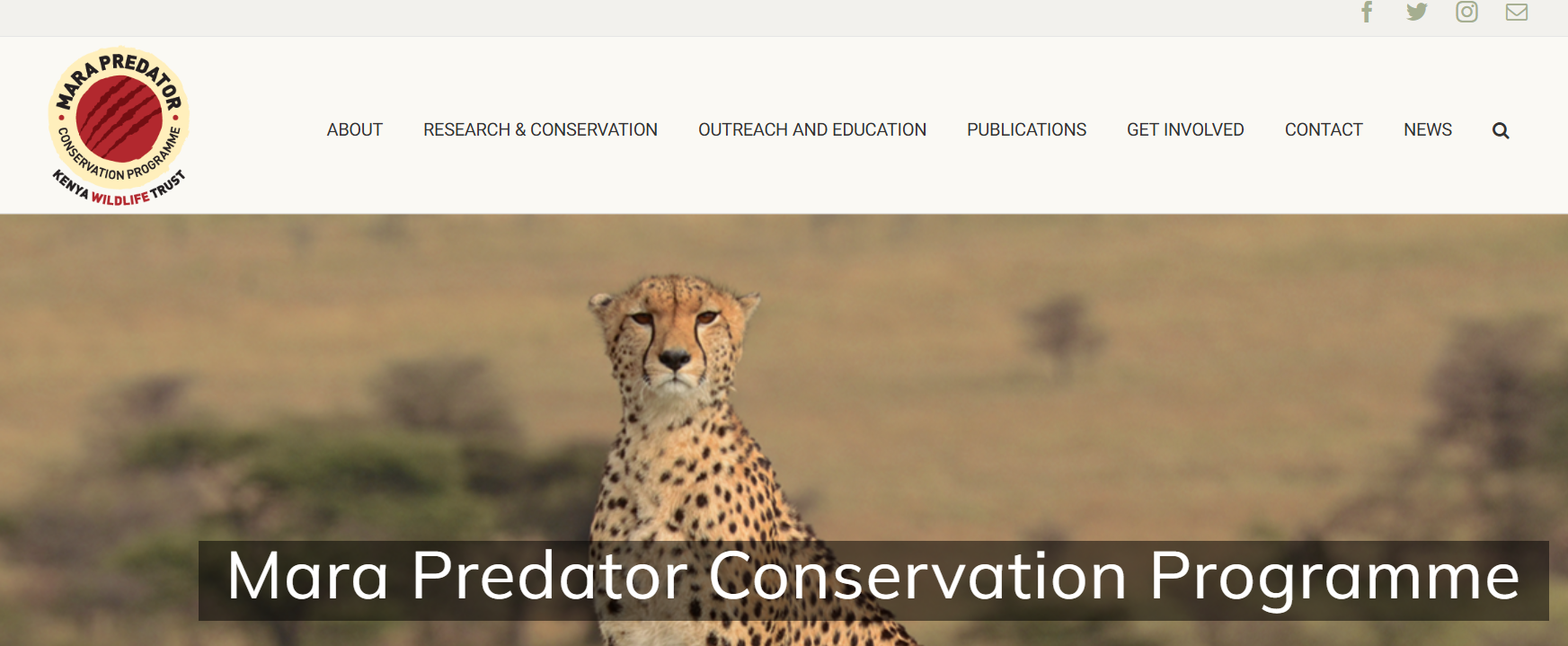
Among the major conservation initiatives in the Masai Mara is the Mara Predator Conservation Programme (MPCP), a long-term, landscape-scale effort dedicated to conserving large carnivores—particularly lions, cheetahs, and African wild dogs—through a combination of science, community engagement, and conflict mitigation.
The Mara Predator Conservation Programme (often “MPCP”) is one of the best-known long-term predator initiatives in the Greater Mara—built around a science-to-action model: rigorous field monitoring (especially of lions and cheetahs) combined with community coexistence tools that reduce retaliatory killing and keep dispersal areas functional. It is implemented under the umbrella of Kenya Wildlife Trust, which positions the work at the intersection of tourism, community rangelands, and applied predator ecology.
Official Website:https://www.marapredatorconservation.org/
Where MPCP works and why that geography matters
MPCP is a Greater Mara programme: its conservation logic extends beyond the reserve boundary into the conservancy and community-land matrix where conflict, displacement, and habitat fragmentation happen.
- The programme is based at the Tony Lapham Predator Hub in Olare Motorogi Conservancy.
- MPCP’s work footprint spans the Masai Mara and multiple neighbouring conservancies and community zones (the specific set varies by project and year).
- This reserve–conservancy–community mosaic is central to the model: predators spend a lot of time outside core protected areas, and the biggest controllable risks (livestock conflict, poisoning, persecution, disease spillover, and disturbance) often cluster along those edges.
What MPCP is trying to achieve (the programme’s mission in practice)
Across MPCP and KWT publications, the programme’s objectives are consistent and operational:
- Maintain stable predator populations (especially lions and cheetahs, with wild dogs as an important additional focus) by generating field evidence for conservation decisions.
- Understand threats and drivers of decline—habitat fragmentation, human disturbance, livestock conflict, and competitive interactions—using long-term monitoring and applied research.
- Reduce conflict and retaliatory killing through practical coexistence interventions (predator-proof bomas, deterrent lights, herder training, community monitoring networks).
This blend is the program’s defining signature: predator ecology + conflict mitigation + rangeland connectivity, implemented through partnerships rather than a “fortress conservation” posture.
Core species and why MPCP is multi-predator (not “lion-only”)
MPCP is designed around the reality that predator conservation is a guild problem: species interact, compete, share disease risks, and are exposed to the same human pressures.
- Lions (dominant apex predator; major conflict driver due to livestock depredation risk).
- Cheetahs (disturbance-sensitive; require low-pressure breeding space; highly exposed to tourism pressure and fragmentation).
- African wild dogs (highly vulnerable to disease spillover and persecution; recovery depends heavily on community tolerance and One Health actions).
MPCP Founding, origins, and how it evolved
Roots in two flagship monitoring projects (2013 → consolidation)
Published partner reporting describes how Kenya Wildlife Trust moved into direct project implementation in 2013, establishing lion and cheetah monitoring projects in the Maasai Mara, later consolidated as MPCP.
A key origin story also appears in external conservation partner documentation: the Mara Cheetah Project (now part of MPCP) is described as founded by Kenya Wildlife Trust and led (in its scientific leadership) by Dr Femke Broekhuis (University of Oxford / WildCRU).
Leadership named in published sources
Public-facing partner communications identify:
- Dr. Caroline Ng’weno as Programme Director (quoted in context of landscape-scale predator viability and community partnership).
- Niels Mogensen in a senior role (named as Chief Project Officer in a partner feature; also appears as an author in partner updates).
4) How MPCP operates: the conservation model
Think of MPCP as a linked system with four engines—monitoring, research, coexistence, and stakeholder practice change—all coordinated from a field hub.
A) Long-term monitoring (turning sightings into defensible evidence)
MPCP runs structured monitoring that typically includes:
- Individual identification and sighting histories
- Spatial tracking to understand where risk accumulates
- Repeatable reporting (quarterly and annual) to allow trend interpretation over time
Their public report library includes regular quarterly and annual reporting (e.g., 2020–2025 quarterly reports and annual reports through 2023), which is important because many predator programmes fail on continuity.
B) Applied research (why predators decline here, not in theory)
MPCP’s research emphasis is explicitly framed around understanding human-led changes and how they affect predator movement, behaviour, and viability—so interventions target the real drivers rather than symptoms.
C) Coexistence interventions (reducing retaliatory killing)
MPCP pairs monitoring with practical coexistence tools. A recurring, documented example is the programme’s focus on conflict hotspots and boma reinforcement support:
- The annual report describes identifying conflict-affected bomas via the Lion Ambassadors programme and targeting interventions by zones.
- Quarterly reporting documents provision of reinforcement materials (e.g., chain links) to reduce repeat attacks and retaliation risk.
D) Community networks that operationalize “early warning”
MPCP’s Lion Ambassadors model is repeatedly referenced in programme reporting: community-linked personnel who help detect conflict risk early, communicate with herders/households, and support rapid mitigation before situations escalate to poisoning or spearing.
E) Education and stakeholder behaviour change (especially guides/operators)
MPCP’s hub model also functions as an education and collaboration centre—used to align scientists, community members, and safari stakeholders around shared rules-of-the-road that reduce disturbance and conflict.
The Tony Lapham Predator Hub: why it’s central to the model
The Predator Hub is not a “visitor centre add-on”; it’s a field operating base designed to make long-term monitoring and coordination feasible.
- It’s described as launched in November 2013 and represents a commitment to predator research and monitoring to inform conservation strategies.
- MPCP’s own “Where we work” page notes the programme is based at this hub.
- Partner descriptions emphasize the hub as a convergence point for monitoring, education, and collaboration.
Partnerships and funders: how MPCP is sustained
MPCP operates in a landscape where conservation outcomes depend on cross-sector partnership: conservancies, tourism operators, philanthropic donors, and researchers.
- KWT explicitly frames its model as partnership-driven predator conservation in the Greater Mara.
- MPCP quarterly reporting acknowledges strategic support from partners (example: mentions partners such as AirKenya and photographer Venkat Iyer in 2025 reporting).
- External conservation funders describe supporting MPCP and its earlier cheetah stream, including investment in monitoring infrastructure and research capacity.
What “success” looks like for MPCP (how to interpret achievements correctly)
A credible way to assess MPCP progress is not a single headline number, but a set of measurable outputs and outcomes:
Programme outputs (you can directly observe in reports)
- Continuous reporting cadence (annual + quarterly) and evidence products for the ecosystem
- Documented coexistence interventions (targeted boma reinforcement support, hotspot identification, community engagement activities)
- Cross-stakeholder engagement through the hub model (education + collaboration)
Conservation outcomes (the harder, longer-term indicators)
- Reduced retaliatory killing and poisoning risk in conflict hotspots (often proxied through conflict incident patterns + intervention coverage)
- Stable or improving predator viability across the Greater Mara (typically evidenced through monitoring trends rather than a single “total population” claim)
Species scope and focal areas in the Greater Mara
Lions
Lions are positioned as a core focus, with partner material characterizing the Mara as supporting one of Kenya’s more stable lion populations and explaining how collars are used to identify conflict zones near community land.
Cheetahs
Cheetahs are consistently framed as more fragile than lions in the Mara context—sensitive to disturbance, fragmentation, and competition—hence the heavy emphasis on distribution, connectivity, and (historically) the Mara Cheetah Project research stream.
African wild dogs (expanding focus + disease interface)
Published partner reporting highlights wild dogs as a serious coexistence and recovery case (including reference to historical local extinction and tentative comeback).
In 2022, external reporting tied to MPCP activity records 18 confirmed wild dog sightings, conflict incident tracking, prevention of retaliatory attacks, and active community engagement.
The same reporting documents MPCP participation in a Northern Mara rabies vaccination campaign covering 2,677 domestic animals across 1,080 km²—a good example of “predator conservation” expanding into One Health disease risk management (rabies spillover can be catastrophic for wild dogs).
Founders, institutional home, and governance signals
Institutional founder/host: Kenya Wildlife Trust is repeatedly identified as the organization behind MPCP and is described (in partner material) as Kenya’s principal predator conservation trust, with MPCP as its flagship initiative in the Mara since 2013.
Scientific leadership lineage: The Mara cheetah workstream is explicitly described as led by Dr Femke Broekhuis (WildCRU/University of Oxford) in partner documentation, establishing a strong applied-research pedigree.
Funders, supporters, and partnership ecosystem
Because MPCP operates in a tourism landscape, a meaningful share of support appears to come through camp and foundation partnerships (funding + logistics + in-kind support):
- Governors’ Camp Collection is described as a long-term partner providing logistics support (complimentary aircraft seats) and funding for collars, predator-proof bomas, and a Lion Ambassador salary.
- The Safari Collection describes direct support mechanisms, including a “conservation car” that conducts daily monitoring in a specific sector, plus provisioning of GPS-enabled cameras and other monitoring equipment used by guides.
- Banovich Wildscapes Foundation is explicitly described as supporting the work since 2013 and funding collars plus Predator Hub information-centre improvements (in later years).
- Basecamp Explorer Foundation reports funding support linked to MPCP’s wild dog project and participation in vaccination activities, and provides contextual confirmation of KWT’s 2013 move into lion/cheetah monitoring projects consolidated as MPCP.
This funding pattern matters because it signals MPCP’s practical model: embed research in the operating safari landscape, use tourism logistics and guide networks as force multipliers, and invest donor money where it reduces conflict fastest (bomas/lights/ambassadors) while maintaining research continuity (collars/monitoring).
Key achievements and outputs (as evidenced in published reporting)
1) Sustained long-term monitoring infrastructure (core achievement)
- Multi-year lion and cheetah monitoring is repeatedly documented, including GPS collaring as a central tool and structured guide participation in geo-referenced ID monitoring.
2) Practical conflict reduction systems deployed at community level
- Predator-proof bomas, deterrent lights, and herder training are described as effective tools used by the program to prevent attacks and reduce incentives for retaliation.
3) Community monitoring and rapid mitigation capacity (“Lion Ambassadors”)
- The Lion Ambassador approach is explicitly described as a coexistence strategy: monitoring predator movements, warning communities, and supporting anti-poisoning / conflict de-escalation.
4) Wild dog recovery support and disease-risk actions
- 2022 reporting documents confirmed wild dog sightings, conflict incident recording, prevention of retaliatory attacks, and broad community outreach.
- The rabies vaccination participation (2,677 domestic animals; 1,080 km²) is a concrete example of building ecological resilience via disease prevention at the domestic–wildlife interface.
5) Regular reporting cadence and applied decision-support
- MPCP publishes technical and quarterly reporting (e.g., density heat maps and figures referenced in a 2025 technical report listing), consistent with an evidence-to-management approach.
Related: