
The Masai Mara conservancy model is globally celebrated as a community-based conservation success. Built on land-lease agreements, low-density tourism, and wildlife-first land management, Mara conservancies position themselves as alternatives to mass tourism inside the Masai Mara National Reserve. They emphasize sustainability, habitat protection, and premium conservation-aligned experiences.
Yet within this model lies a paradox.
Many conservancies—established explicitly to reduce ecological pressure—actively promote night game drives: engine-powered vehicle safaris conducted after dark using spotlights across predator territories and open plains.
From an ecology-first standpoint, this practice raises serious ethical and scientific questions. If conservancies exist to provide refuge from disturbance, what does it mean when they extend human intrusion into the last undisturbed temporal window of the ecosystem?
The Night as Ecological Infrastructure
The Mara ecosystem is structured not only spatially but temporally. Day and night partition ecological processes.
At night in the Mara:
- Lions and leopards conduct the majority of their hunting.
- Spotted hyenas travel long distances across territories.
- Herbivores adjust grazing patterns under lower heat stress.
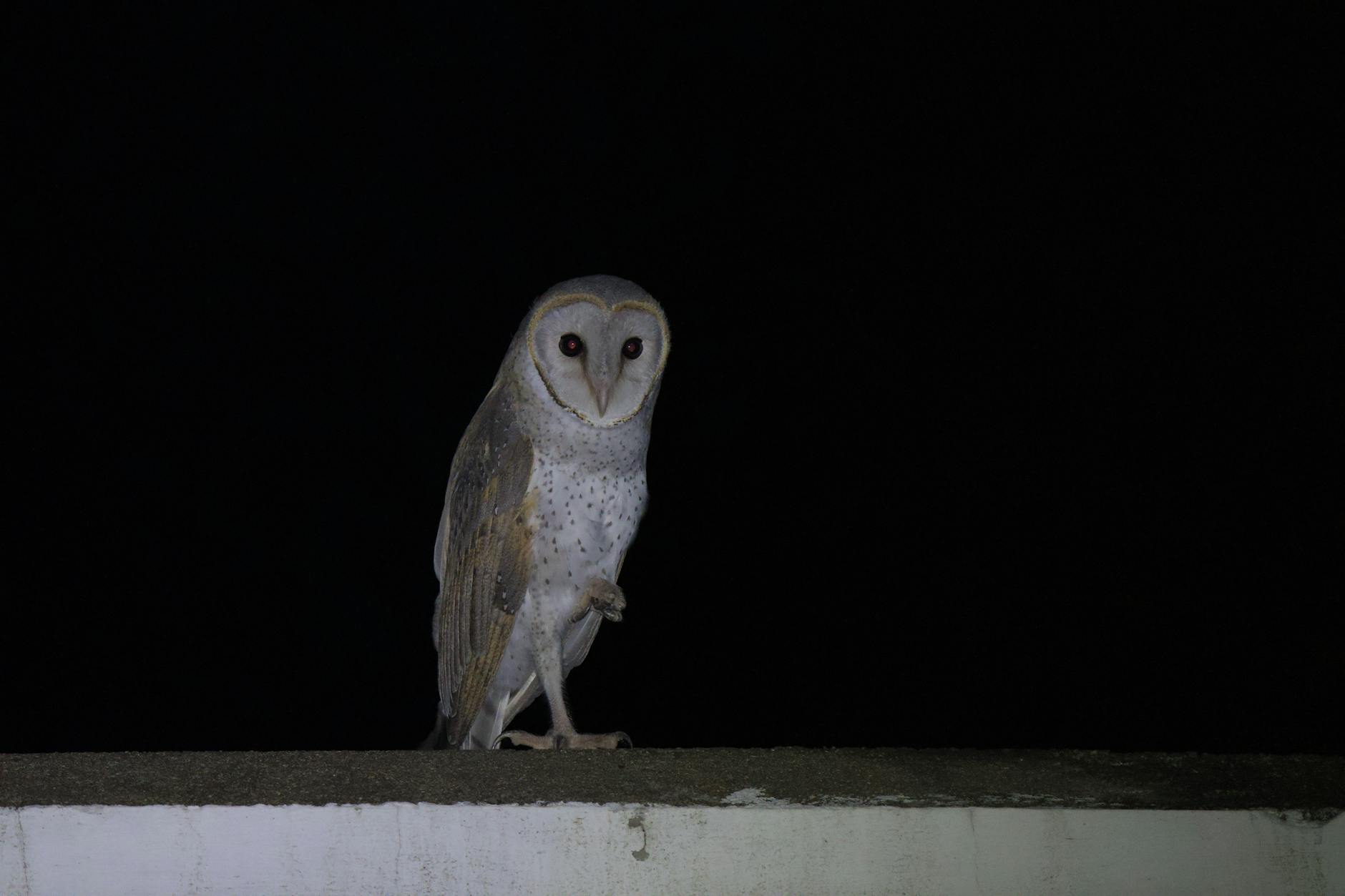
- Smaller nocturnal species—aardvarks, porcupines, bush babies—emerge.
- Acoustic communication intensifies.
Research in behavioral ecology consistently shows that large mammals modify activity patterns in response to human disturbance. Gaynor et al. (2018, Science) demonstrated that mammals globally become more nocturnal where human presence increases. In effect, darkness becomes a refuge from anthropogenic pressure.
In the Mara context, daytime already includes:
- Multiple safari vehicles
- Engine noise
- Off-road tracking in some conservancies
- Close approaches during sightings
If wildlife shifts toward nocturnality to avoid daytime disturbance, introducing vehicles at night removes that refuge entirely.
Engine Noise and Acoustic Disruption in Open Savanna
A 4,200 cc diesel Land Cruiser engine, even idling at low RPM, produces sustained mechanical noise and vibration. In open grassland systems like the Mara, sound propagation is efficient. Nighttime atmospheric conditions can even enhance sound transmission.
Shannon et al. (2016, Biological Reviews) identify anthropogenic noise as a chronic ecological stressor, altering:
- Vigilance behavior
- Predator-prey detection
- Reproductive signaling
- Stress hormone levels
For predators like lions and leopards, hunting success depends on stealth and acoustic sensitivity. For prey species—wildebeest, impala, zebra—night vigilance is a finely balanced tradeoff between feeding and survival.
Vehicle noise and spotlight use introduce unpredictable stimuli into this system.
Even when brief, repeated disturbance across seasons can accumulate into measurable behavioral shifts.
Spotlighting and the Disruption of Visual Ecology
Night drives depend on artificial lighting. Red filters are commonly used under the claim that they minimize disturbance. However, research in sensory ecology suggests that artificial light—even in reduced spectra—alters natural behavior.
Longcore and Rich (2004) define ecological light pollution as artificial light that disrupts natural cycles of light and dark. Impacts include:
- Altered circadian rhythms
- Reduced insect abundance
- Modified predator-prey dynamics
- Stress responses in mammals
Predators in the Mara rely on darkness as a functional hunting tool. Sudden light exposure may:
- Temporarily impair night vision
- Interrupt stalking sequences
- Alert prey species unnaturally
- Change energetic outcomes
The Mara is not an enclosed zoo environment. It is a functioning ecosystem where hunting success influences survival, cub rearing, and territorial stability.
Repeated spotlight interference during critical hunting hours is not ecologically neutral.
Energetics and Behavioral Displacement
Savanna ecosystems operate within tight energetic margins, especially during dry seasons when prey biomass declines.
Creel et al. (2002) demonstrated that wildlife exposed to repeated disturbance can exhibit elevated glucocorticoid stress responses. Chronic stress influences:
- Reproductive success
- Immune function
- Cub survival
- Body condition
In the Mara, where predator populations are closely monitored and often celebrated as conservation successes, even small shifts in hunting efficiency or stress levels can have cascading ecological effects.
Night drives often prioritize predator sightings. Vehicles following lions during hunts, even at regulated distances, risk altering outcomes.
If conservancies were created to reduce pressure, intensifying tourism into the night contradicts that logic.
The Irony of Conservation-Led Intrusion
Mara conservancies are marketed as:
- Low-density
- Conservation-first
- Community-benefiting
- Habitat-protecting
The irony lies in extending tourism into the only period historically free from routine vehicle presence.
Spatial refuges are well understood in conservation biology. Less discussed are temporal refuges—periods when wildlife is undisturbed.
By permitting night drives, conservancies eliminate temporal refuge in pursuit of premium experience differentiation.
This is a strategic contradiction:
Organizations founded to reduce ecological pressure expand tourism into biologically sensitive hours to justify higher nightly rates.
The model becomes conservation-branded intensification rather than genuine restraint.
The Revenue Argument—and Its Limits
Proponents of night drives often cite revenue.
Conservancies depend on high-value tourism to fund:
- Land lease payments to Maasai landowners
- Anti-poaching patrols
- Ranger salaries
- Community projects
This is a valid economic reality.
However, conservation economics cannot override ecological thresholds. If revenue generation progressively expands disturbance windows, the model risks eroding the very wildlife abundance that justifies its premium.
Short-term differentiation through night experiences may undermine long-term ecological stability.
Sustainable conservation models require boundaries.
Are Night Drives Necessary for Education?
Advocates argue that night drives educate visitors about nocturnal ecology.
Yet educational alternatives exist:
- Remote camera trap demonstrations
- Acoustic ecology interpretation sessions
- Thermal imaging from fixed hides
- Structured lectures on predator ecology
- Citizen science participation without active pursuit
Education does not require pursuit under headlights.
True ecological literacy includes understanding when not to intervene.
The Broader Mara Context
The greater Mara ecosystem is already under pressure from:
- Expanding settlement
- Road development
- Seasonal grazing conflicts
- Balloon safari noise
- Increasing vehicle density during migration
In such a landscape, restraint becomes more—not less—important.
Conservancies should represent ecological sanctuaries within this matrix.
Instead, some have positioned night drives as luxury differentiators.
This represents a philosophical shift:
From conservation-first to experience-maximization under a conservation brand.
Toward an Ecology-First Conservancy Model
An ecology-first approach to Mara tourism would include:
- Protecting darkness as ecological habitat.
- Limiting mechanical intrusion to daylight hours.
- Monitoring wildlife stress indicators in tourism zones.
- Investing in non-invasive interpretation.
- Treating temporal refuge as conservation infrastructure.
Conservation leadership requires saying no to certain profitable experiences.
Conclusion: If the Mara Is Sacred, Let It Sleep
The Masai Mara conservancy model is globally respected. It has protected habitat, supported communities, and maintained wildlife densities that rival any ecosystem on earth.
But conservation is not only about numbers.
It is about integrity.
Darkness in the Mara is not unused time. It is when lions hunt, when hyenas range, when herbivores recalibrate vigilance, when ecological processes unfold beyond human observation.
If conservancies truly exist to reduce pressure, then the most radical and scientifically aligned act may be restraint.
Let the Mara sleep.
Conservation credibility depends on it.
This article was written by Nathan Rotich, a conservation practitioner who works between Nairobi and the Masai Mara. Based in Nairobi, he operates Kambu Campers, a responsible tour operator specializing in low-impact safari experiences, and spends extended periods in the Mara managing Kambu Mara Camp, an eco-conscious tented camp designed around habitat protection and community partnership principles.
Beyond daily safari operations, Nathan leads several conservation-first digital platforms that engage policymakers, researchers, and tourism stakeholders in advancing ethical travel, ecosystem integrity, and evidence-based conservation strategy. His work bridges on-the-ground experience in both urban Nairobi and the Mara landscape, integrating sustainable tourism practice with long-term conservation advocacy to strengthen Kenya’s position as a leader in responsible, community-centered tourism.
Wildlife Disturbance & Nocturnality
Gaynor, K. M., Hojnowski, C. E., Carter, N. H., & Brashares, J. S. (2018).
The influence of human disturbance on wildlife nocturnality. Science, 360(6394), 1232–1235.
https://www.science.org/doi/10.1126/science.aar7121
This landmark global meta-analysis demonstrates that mammals increase nocturnal activity in response to human disturbance.
Noise Pollution & Wildlife
Shannon, G., McKenna, M. F., Angeloni, L. M., et al. (2016).
A synthesis of two decades of research documenting the effects of noise on wildlife. Biological Reviews, 91(4), 982–1005.
https://onlinelibrary.wiley.com/doi/10.1111/brv.12207
Comprehensive review of anthropogenic noise impacts on animal behavior, stress physiology, and ecological processes.
Light Pollution & Ecological Disruption
Longcore, T., & Rich, C. (2004).
Ecological light pollution. Frontiers in Ecology and the Environment, 2(4), 191–198.
https://esajournals.onlinelibrary.wiley.com/doi/10.1890/1540-9295(2004)002[0191:ELP]2.0.CO;2
Seminal paper defining ecological light pollution and outlining its ecosystem-level consequences.
Stress Physiology & Wildlife Disturbance
Creel, S., Fox, J. E., Hardy, A., et al. (2002).
Snowmobile activity and glucocorticoid stress responses in wolves and elk. Conservation Biology, 16(3), 809–814.
https://conbio.onlinelibrary.wiley.com/doi/10.1046/j.1523-1739.2002.00554.x
Although conducted in North America, this study is foundational in demonstrating stress hormone elevation in large mammals due to human disturbance.
Tourism & Wildlife Behavioral Impacts
Beale, C. M., & Monaghan, P. (2004).
Human disturbance: People as predation-free predators? Journal of Applied Ecology, 41(2), 335–343.
https://besjournals.onlinelibrary.wiley.com/doi/10.1111/j.0021-8901.2004.00900.x
Examines how wildlife responds behaviorally to human presence similarly to predation risk.
Tourism Impacts on African Wildlife
Blumstein, D. T., Fernández-Juricic, E., Zollner, P. A., & Garity, S. C. (2005).
Inter-specific variation in avian responses to human disturbance. Journal of Applied Ecology.
https://besjournals.onlinelibrary.wiley.com/doi/10.1111/j.1365-2664.2005.01009.x
Demonstrates how species differ in tolerance to disturbance—important in evaluating tourism pressure.
Conservation & Human-Wildlife Interaction
Western, D., & Gichohi, H. (1993).
Segregation effects and the impoverishment of savanna parks: The case for ecosystem viability analysis. African Journal of Ecology.
https://onlinelibrary.wiley.com/doi/10.1111/j.1365-2028.1993.tb00502.x
Discusses broader ecosystem viability and the effects of fragmentation and human pressure in East African savannas.
Human Disturbance & Behavioral Ecology Framework
Frid, A., & Dill, L. (2002).
Human-caused disturbance stimuli as a form of predation risk. Conservation Ecology.
https://www.ecologyandsociety.org/vol6/iss1/art11/
Argues that animals respond to human disturbance similarly to predation threats, with energetic and behavioral consequences.
Ecological Refuge & Disturbance Thresholds
Tablado, Z., & Jenni, L. (2017).
Determinants of uncertainty in wildlife responses to human disturbance. Biological Reviews.
https://onlinelibrary.wiley.com/doi/10.1111/brv.12224
Reviews how repeated human disturbance creates cumulative ecological impacts.