Traveling overland from Nairobi to the Masai Mara is one of Kenya’s most scenic and practical safari routes, passing the Great Rift Valley, Narok town, and the open savannahs that lead to the reserve’s main gates. This transfer corridor is served by safari-ready 4×4 vehicles and comfortable highway minivans, depending on road conditions, season, and your final camp location.
We provide private, chauffeur-driven transfers, airport pickups, hotel pickups, and door-to-door service, with routes optimized for Sekenani Gate, Talek Gate, Oloolaimutia Gate, Mara Triangle, and Mara North Conservancy. For safety and wildlife considerations, night driving is avoided.
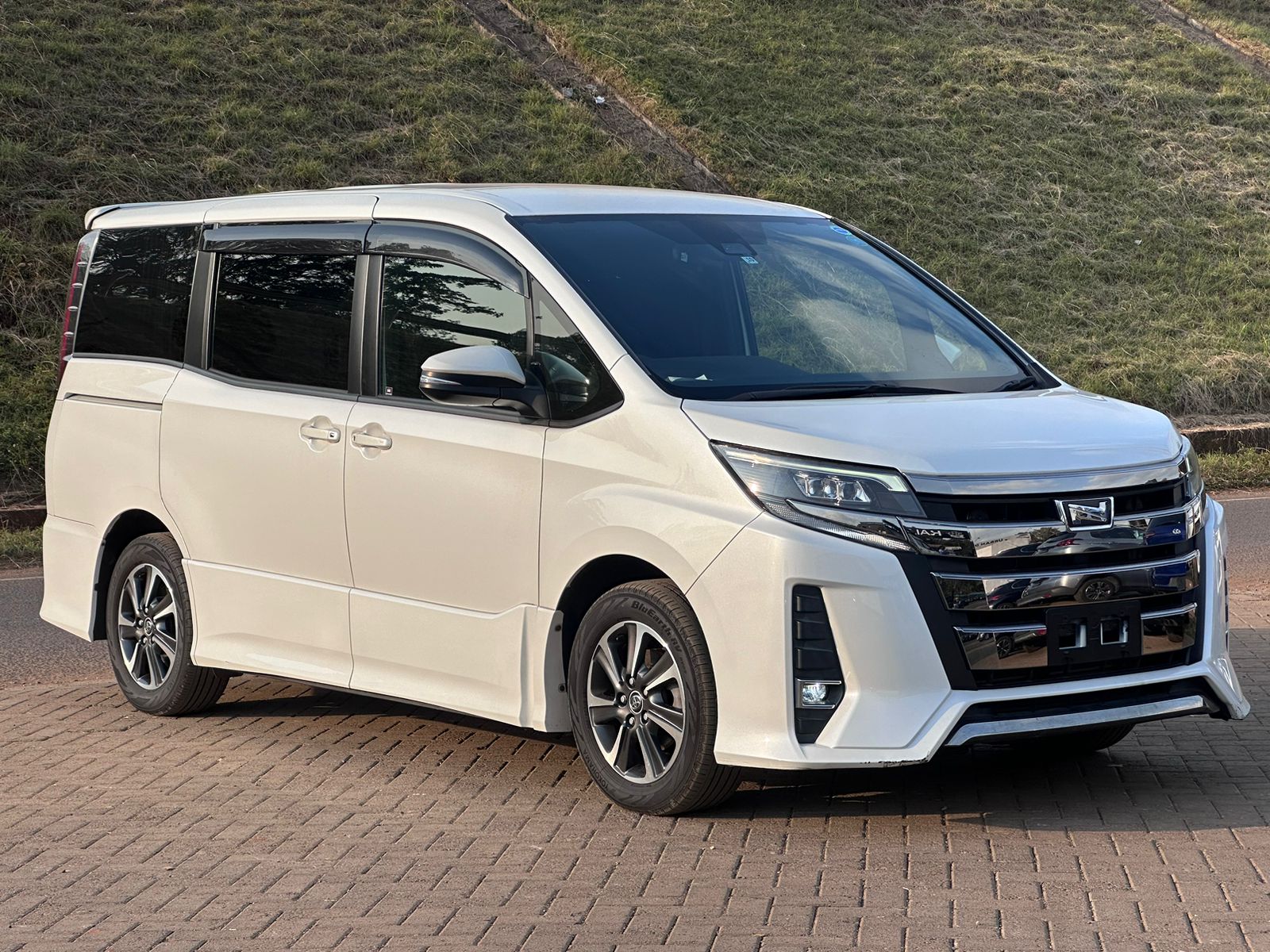
Reliable, private, door-to-door transfers from Nairobi to the Masai Mara using Toyota Noah Minivans (2WD) and Toyota Land Cruisers (4×4).
Nairobi to Masai Mara Transfer Options
Best for: Nairobi → Narok → Sekenani routes on paved or well-graded roads.
Key attributes
- Seats up to 6 passengers comfortably
- Fuel-efficient and cost-effective
- Smooth ride on tarmac and good all-weather roads
- Practical luggage space for families and small groups
- Comes with experienced driver (choose between female or male – indicate preferance when booking)
- Pick-up from anywhere in Nairobi – Airport(Wilson or JKIA), Nairobi Hotel, Nairobi residence or AirBnb in any locality such as Westlands, CBD, Upperhill, Lavington, among others.
- Flexible pick-up time but do not recommend departing Nairobi after 7 PM.
We recommend Toyota Noah Minivan for rentals in the following context:
- If staying in camps near Sekenani, Talek, or Oloolaimutia in the Eastern Sector of MMNR and using the main road. Ask your accommodation in Masai Mara if a 2WD vehicle with low ground clearance can get to the camp. Remember, if self-driving some rental companies do not even let you get on the rough road.
- Dry Season: It’s generally better to use the 2WD vehicle during dry season travel
- Budget reliable transfer option: Suitable if you’re prioritizing lower Nairobi–Masai Mara car rental cost over deep off-road capability
Note: 2WD vehicles are not permitted inside the reserve for game drives. 4WD Land Cruiser vehicles are the best options for renting if you plan to use the same vehicle for game viewing inside Masai Mara National Reserve. Read the announcement of the ban of 2WD private vehicle inside the Reserve by Narok County
Best for: Mixed terrain, conservancies, rainy season, and in-reserve use
Key attributes
- Seats up to 7 passengers
- High ground clearance and reinforced suspension
- Stable on gravel, rocky, muddy, and rutted roads
- Can be configured with pop-up roof for game viewing
- Larger luggage capacity for longer or multi-park trips
Recommended context
- Mara North Conservancy, Mara Triangle, Musiara, Aitong routes
- Rainy seasons (April–May, November)
- Travelers combining transfer + game drive vehicle hire in the Masai Mara
- Groups carrying more luggage or photography gear
The Toyota Noah fits the Nairobi → Narok → Sekenani corridor in dry conditions.
A 4×4 Land Cruiser is strongly recommended for:
- Ololunga–Aitong (Mara North) routes
- Mara Triangle access roads
- Mud, steep sections, or long unpaved stretches
- Any itinerary that includes in-reserve game drives
Nairobi–Masai Mara road transfer pricing is defined by the vehicle class, the route distance, the direction of travel, and the inclusions bundled into the service, which together determine the real cost of traveling overland between Nairobi and the Masai Mara in a safe and reliable way. In this context, published route-based rates make budgeting easier and prevent the uncertainty that often comes with ad-hoc taxi or unstructured vehicle hire.
Safari vehicle class is the most important cost attribute because a 4×4 Land Cruiser with high ground clearance and reinforced suspension has higher operating and maintenance costs than a 2WD Toyota Noah designed for smooth highways, and this difference directly affects the price you pay depending on where your camp is located and what road conditions you will face.
Route distance and direction are the next pricing drivers because a transfer between Nairobi and the Masai Mara, or between the Mara and parks such as Naivasha, Nakuru, or Amboseli, changes fuel consumption, driving hours, and driver logistics, which is why longer or more complex routes cost more than shorter inter-park connections.
Transfer structure also influences cost because a one-way transfer and a return journey do not carry the same operational burden, and a private safari transfer that reserves the vehicle exclusively for your group is priced differently from a shared arrangement that distributes costs.
Seasonal demand affects pricing because peak travel periods, especially during the Great Migration months, increase pressure on vehicle availability, which makes early booking more important for travelers who want predictable rates.
Chauffeur-driven safari transfers are the standard service model, and this means fuel, driver services, and core operational costs are already included in the quoted price, simplifying planning and reducing surprise expenses.
Pricing Factors Summary
| Entity | Key Attribute | Relationship to Price | Context |
|---|---|---|---|
| Safari transfer pricing | Vehicle, distance, season, structure | Determines final cost | Enables predictable safari budgeting |
| Chauffeur-driven service | Fuel and driver included | Reduces hidden charges | Simplifies long-distance planning |
Nairobi to Masai Mara Transfer Pricing (Talek or Sekenani Gate)
The Nairobi–Masai Mara transfer route covers approximately 260 kilometers and typically takes five to six hours, which makes it the most common overland corridor for guests entering through Sekenani Gate or Talek Gate.
The 4×4 Toyota Land Cruiser on this route is priced at 270 dollars one way for up to six passengers, or 540 dollars return, and this option is positioned for travelers who need reliability, comfort, and all-weather capability.
The 2WD Toyota Noah on the same corridor is priced at 200 dollars one way for up to six passengers, or 400 dollars return, and this option suits dry-season travel to camps served by paved or well-graded roads.
Airport and hotel pickup logistics are part of the transfer relationship with Nairobi, and this means drop-off at Jomo Kenyatta International Airport can be arranged with a 20 dollar surcharge to cover additional routing and timing coordination.
Nairobi ↔ Masai Mara Price Summary
| Vehicle Type | One-Way Price | Return Price | Best Use Context |
|---|---|---|---|
| 4×4 Land Cruiser | $270 | $540 | Rough roads, conservancies, all seasons |
| 2WD Toyota Noah | $200 | $400 | Dry season, paved or graded routes |
Lake Nakuru to Masai Mara Transfer Pricing
The Lake Nakuru–Masai Mara transfer route spans about 190 kilometers and usually takes four to five hours, supporting the popular circuit that combines Lake Nakuru’s rhinos with the Masai Mara’s plains wildlife.
The 4×4 Land Cruiser on this route costs 240 dollars one way and 480 dollars return, reflecting its suitability for mixed road conditions and reliable access to camps near the reserve.
The 2WD Toyota Noah on the same route costs 180 dollars one way and 360 dollars return, and this option fits dry-season travel where most of the route remains paved or well maintained.
Nakuru ↔ Masai Mara Price Summary
| Vehicle Type | One-Way Price | Return Price | Best Use Context |
|---|---|---|---|
| 4×4 Land Cruiser | $240 | $480 | Mixed terrain, higher comfort |
| 2WD Toyota Noah | $180 | $360 | Dry season, good road conditions |
Naivasha to Masai Mara Transfer Pricing
The Naivasha–Masai Mara transfer corridor is approximately 180 kilometers long and takes four to five hours, making it a natural link for itineraries combining Lake Naivasha with the Masai Mara.
The 4×4 Land Cruiser on this route is priced at 250 dollars one way and 500 dollars return, which supports travelers who expect variable road conditions or want higher ride comfort.
The 2WD Toyota Noah on this route is priced at 170 dollars one way and 340 dollars return, which suits travelers following the main road network in dry conditions.
Scenic route enhancements can be added, and this means travelers may include a Hell’s Gate National Park stop for 50 dollars or a Crescent Island visit for 40 dollars to turn the transfer into part of the experience.
Naivasha ↔ Masai Mara Price Summary
| Vehicle Type | One-Way Price | Return Price | Best Use Context |
|---|---|---|---|
| 4×4 Land Cruiser | $250 | $500 | Variable roads, higher comfort |
| 2WD Toyota Noah | $170 | $340 | Dry season, main roads |
Masai Mara to Amboseli Transfer Pricing
The Masai Mara–Amboseli transfer route spans roughly 400 kilometers and takes eight to nine hours, connecting two of Kenya’s most important ecosystems in a single overland journey.
The 4×4 Land Cruiser on this long-distance route is priced at 470 dollars one way and 940 dollars return, reflecting the need for durability, comfort, and reliability over a full day of travel.
The 2WD Toyota Noah on the same route is priced at 340 dollars one way and 680 dollars return, and this option is best considered in dry conditions for travelers balancing cost and comfort.
Masai Mara ↔ Amboseli Price Summary
| Vehicle Type | One-Way Price | Return Price | Best Use Context |
|---|---|---|---|
| 4×4 Land Cruiser | $470 | $940 | Long distance, mixed terrain, comfort |
| 2WD Toyota Noah | $340 | $680 | Dry season, highway-focused travel |
Payment Terms and Booking Security
The safari transfer booking system requires upfront payment to secure vehicle availability, which is especially important during peak travel periods when specific vehicle classes sell out quickly.
Flexible return transfer payment options provide additional booking flexibility for travelers planning multi-leg itineraries.
Payment Summary
| Payment Term | Practical Effect |
|---|---|
| Upfront payment | Secures vehicle and dates |
| Flexible return options | Supports multi-leg itineraries |
Choosing a car hire with driver provides:
- Local route knowledge and real-time road condition decisions
- Licensed safari drivers with long-distance experience
- English-speaking driver-guides for clear coordination
- No insurance deposit or self-drive liability
- Access to roadside assistance and breakdown support
Operational inclusions
- Driver accommodation handled by the operator
- Flexible itinerary adjustments
- Door-to-door, airport, or hotel pickups
Private vs shared
- Private safari transfers offer full flexibility and timing control
- Shared transfers reduce cost but limit schedule freedom
Self-drive options require:
- A true 4×4 for most routes
- Compliance with Masai Mara self-drive rules
- Proper insurance coverage and recovery gear
- Navigation planning, fuel stop mapping, and daylight driving
Key considerations
- Park entry restrictions for 2WD vehicles
- Recovery gear and off-road experience are essential in wet season
- Compare self-drive vs driver-guided carefully on cost, risk, and stress
Main access corridors
- Nairobi → Narok → Sekenani Gate (mostly paved)
- Nairobi → Narok → Talek / Oloolaimutia (mixed gravel)
- Ololunga → Aitong → Mara North (rough, muddy, 4×4 required)
Travel time
- Average: 5–6 hours, depending on gate and conditions
Practical planning
- Plan fuel stops and rest breaks
- Avoid night driving due to livestock, wildlife, and poor visibility
- Service the vehicle before departure
- Pack according to luggage space and trip length
How to book
- Request an instant quote or make an online reservation
- Confirm pickup point: airport, hotel, or residence
- Choose vehicle class and transfer type (one-way or round trip)
Payments and documents
- Deposit may be required for peak seasons
- Secure payment options available
- You receive:
- Booking confirmation voucher
- Invoice and receipt for records
Changes and cancellations
- Modification and cancellation policies vary by season
- Reliable customer support is essential for last-minute changes
Popular add-ons
- Cooler boxes, picnic setups, binoculars
- Photography bean bags for stable shooting
- Child seats for family travel
Special travel styles
- Family and child-friendly transfers
- Honeymoon and private trips
- Birding-focused vehicles
- Migration season and off-season travel setups
Multi-park extensions
- Masai Mara → Lake Nakuru
- Masai Mara → Lake Naivasha
- Custom itineraries and extended safari car hire across multiple parks
- Road transfer vs flying to the Mara: Road transfers are more flexible and cost-effective for groups, while flying saves time but costs more and limits luggage.
- Land Cruiser vs safari van: A Land Cruiser is better for rough roads and wet seasons; a safari van is cheaper and fine for dry, well-graded routes.
- 2WD vs 4×4: Choose a 4×4 for muddy, uneven, or in-reserve roads; use 2WD only for dry-season travel on good roads.
- Budget vs luxury safari vehicles: Budget vehicles minimize cost, while luxury vehicles maximize comfort and ride quality on long drives.
- Private vs shared transfers: Private transfers offer flexibility and comfort; shared transfers reduce cost but limit control over timing and stops.
- Self-drive vs chauffeur-driven: Chauffeur-driven is safer and easier for long or first-time trips; self-drive suits only experienced, well-prepared drivers.
- Local operator vs international brand: Local operators usually provide better route knowledge and faster on-ground support; international brands offer more standardized service.
- Diesel vs petrol safari vehicles: Diesel is more efficient and better for long, loaded, or rough drives; petrol is smoother on highways but less practical off-road.
What to check:
- Verified reviews and repeat clients
- Fleet maintenance standards
- Clear insurance coverage
- Roadside assistance availability
- Responsive customer service
- Convenient pickup points (city, airport, or hotel)
How long does the drive take
About 5–6 hours, depending on gate and conditions.
Is fuel included
Yes, for chauffeur-driven transfers, fuel is included in the quoted price.
Can a 2WD vehicle enter the reserve
No. Only 4×4 vehicles are allowed inside for game drives.
Do you offer airport and hotel pickups
Yes. Pickups are available from JKIA, Wilson Airport, hotels, and residences.
Do you provide roadside assistance
Yes. Support is available along the Nairobi–Narok–Mara corridor.
Whether you need a budget-friendly Toyota Noah, a 4×4 safari van, or a premium Land Cruiser, we provide safe, reliable, and comfortable road transfers for individuals, families, and safari groups.
To book, email: bookings@masaimara.ke
Include your travel date, pickup location, group size, luggage details, and preferred vehicle type.
The chauffeur-driven safari transfer package includes a professional driver-guide, fuel and toll fees, and vehicle insurance, which ensures travelers are protected from unpredictable operating costs and can focus on the journey itself.
Inclusions Summary
| Included Item | Why It Matters |
|---|---|
| Driver-guide, fuel, insurance, gas/fuel, unlimited mileage, car and driver, refrigerator, cooling box, car player/spotify player(or memory card), child-car seat(on request) | Predictable costs and safer travel |
The road transfer service scope excludes park entry fees and driver meals or accommodation on multi-day itineraries, which allows travelers to control these costs separately based on their safari plan.
Exclusions Summary
| Not Included | Why |
|---|---|
| Park fees, driver meals/accommodation | Varies by itinerary and lodge choice |
Transfer add-ons are experience and logistics attributes that modify the base price, allowing travelers to customize the journey with comfort, scenic, or cultural enhancements.
Early departure and wildlife viewing options are timing-based upgrades, while airport coordination services reflect logistical complexity when routing to or from JKIA.
Add-Ons Summary
| Add-On | Price | Purpose |
|---|---|---|
| Bottled water | $0 per group | Comfort on long drives |
| Rift Valley viewpoint stop | $0 | Scenic photography stop |
| Maasai village visit | $60 per group (does not include village fees charged per person) | Cultural experience |
| Early morning wildlife departure | $0 | Maximize daylight and sightings |
| JKIA pick-up or drop-off surcharge | $20 | Airport routing coordination |
| Hell’s Gate stop (up to 3 hrs) | $50 | Activity extension |
| Crescent Island visit (up to 3 hrs) | $50 | Naivasha experience add-on |