Masai Mara pricing has evolved from “pay park fees + pick a lodge” into a bundled, scarcity-priced premium system where beds, access, and experience-quality controls are increasingly monetized separately—then recombined into all-inclusive packages. The result is an all-in cost curve that rises faster than in most other Kenya safari destinations.
Three structural shifts explain most of the sticker shock:
- Access has been re-priced and time-boxed (12-hour validity), pushing many itineraries into effectively paying for two “days” across one overnight.
- A parallel “premium geography” (conservancies) has matured: low vehicle density + rulesets + guaranteed land-lease payments create a high price floor, typically embedded inside accommodation rates.
- Bundling has become the dominant product form (fly-in logistics, private guiding, inclusions, conservancy/bed-night levies), reducing price transparency while raising perceived quality and willingness-to-pay.
Below is a deep, operator-style economic explanation—with concrete examples of typical prices and how “inside the reserve vs conservancies vs outside” changes your total safari cost. Check out our guide on the Cost of Masai Mara safari.
1) The fee regime changed the game: from 24-hour access to a 12-hour “day product”
The 12-hour rule (and why it’s economically powerful)
Narok’s fee framework defines park entry as a day-use product (6am–6pm).
The industry-facing explanation for travellers is blunt: tickets are valid 6:00–18:00, with enforcement around exit timing.
What this does to an overnight safari
The practical impact is that an overnight is no longer “one ticket covers your stay” in the intuitive sense; it becomes a day ticket + an overnight/next-period requirement, depending on how your operator, gate controls, and exit timing are handled. This “two-part access” reality is now openly discussed by Mara-focused fee guides and operators’ planning notes.
The new headline prices (non-residents)
A widely used public fee guide summarizes 2025 pricing as:
- USD 100 per adult/day (Jan–Jun)
- USD 200 per adult/day (Jul onwards)
…and explicitly flags the 12-hour validity.
Economic consequence: the Mara’s minimum viable cost rises because access is expensive and temporally constrained. That pushes itineraries toward fewer, pricier days and more bundling.
2) The Mara is now three different accommodation markets—and each prices a different scarcity
A) Conservancies: the premium market is a land-rent model disguised as “experience”
Conservancy stays are priced like a controlled-capacity club: fewer vehicles, less crowding, and stronger experience predictability—funded by guaranteed lease payments to landowners and conservancy management costs.
You can see the lease economics directly in partner disclosures:
- Mara North Conservancy partners: twelve member camps paying USD 87,000/month in fixed lease payments (USD 1.044m/year), with a stated split to landowners and conservation management.
- Mara Naboisho (via a tourism partner foundation page): conservancy tourism partners securing ~USD 900,000/year in lease fees paid to landowners.
- A long-form journalism piece gives an illustrative lease scale: ~USD 235/month per landowner, aggregating to >$900k/year in landowner income for one conservancy example (and notes the model scaling across the Mara).
And on the cost side, conservancy fees are commonly treated as a quasi-tax per guest-night:
- Kicheche’s 2025 rack rates explicitly reference Mara conservancy fees as an add-on category (often embedded in the guest cost structure).
Your claim about “200 to 1,000 landowners and payments upwards of $200,000/year” is directionally consistent with the model: multiple conservancies have hundreds of landowners (e.g., Olare Motorogi over 300).
But the best-supported way to say it (with sources) is: individual conservancies distribute six- to seven-figure annual lease pools, often across hundreds of landowners, via fixed lease structures plus per-night mechanisms.
B) Inside the reserve: you pay for brand + location efficiency, but fees bite hardest here
Inside the MMNR, the product is time efficiency (dawn/dusk without long commutes) and the “true Mara” brand. But the fee regime can make inside-reserve overnights feel punitive because the access product is time-boxed and expensive in peak season.
C) Outside the reserve: the shadow market that keeps the Mara from pricing to infinity
Outside the gates (Sekenani/Talek periphery), the accommodation market behaves more like a competitive bed-base: broader supply, more price dispersion, and stronger budget options. The trade-off is commute + gate friction + lost prime hours, which can raise cost per effective safari hour even when the nightly rate is lower.
3) “Why is Mara so expensive?” The modern answer is: premium upgrading + layered levies + controlled capacity
The premium upgrading story (what changed)
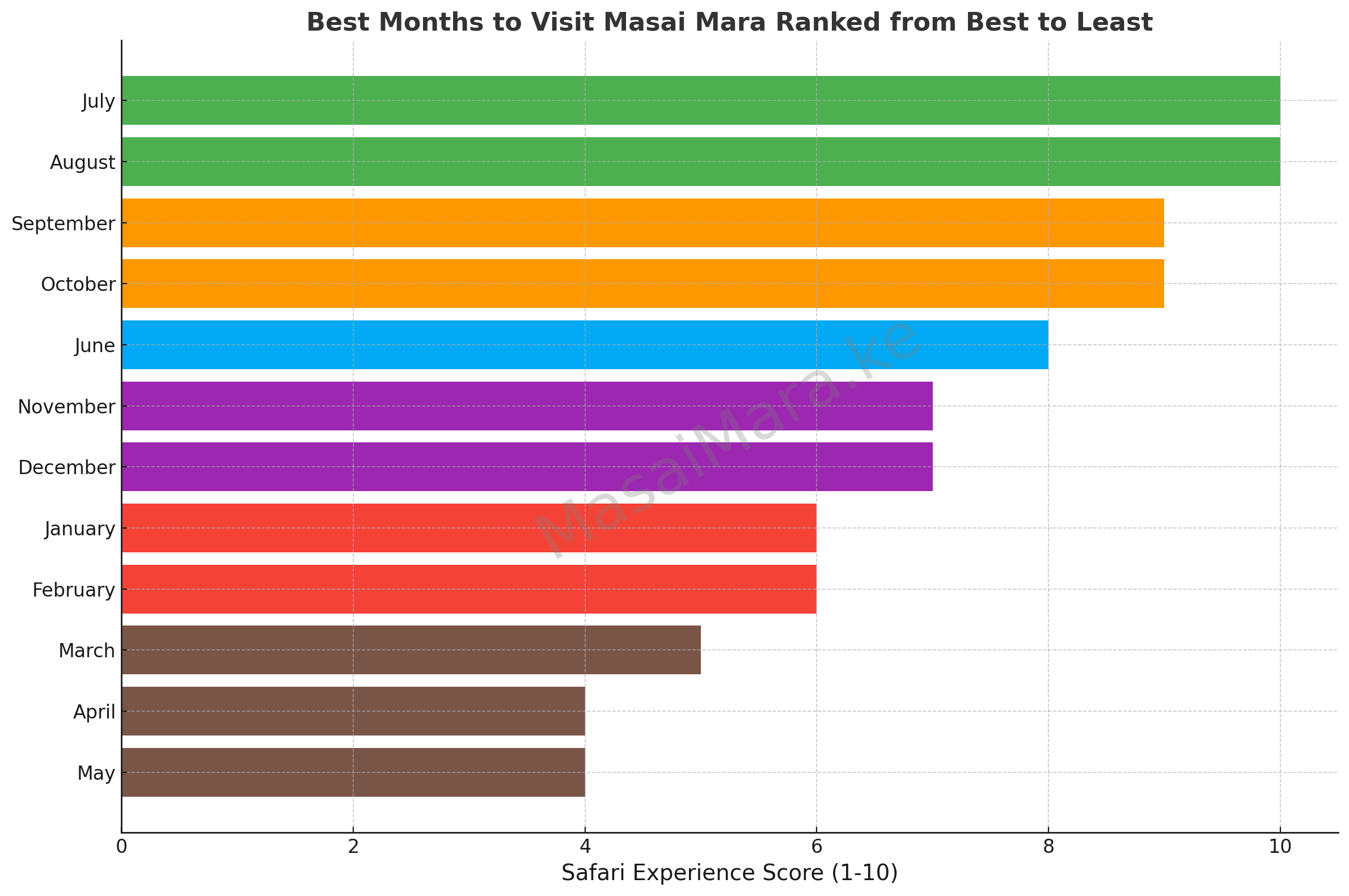
Over ~15 years, the Mara increasingly sold itself not as a park, but as a globally benchmarked luxury wildlife experience (think “migration + big cats + iconic landscapes”), while simultaneously building a surrounding ring of conservancies that institutionalized low-density tourism.
That combination produces:
- Scarcity rents (peak migration demand meets limited high-end inventory)
- Supply discipline (vehicle limits and conservancy rules)
- Higher fixed costs (leases, ranger operations, remote logistics)
A clear example of premium positioning is Angama Mara’s published rates: USD 1,850–2,750 per person per night (season-dependent) including guided safaris into the Mara Triangle and extensive inclusions.
Meanwhile, mid–upper camps publish lower—but still premium—rack rates. For instance:
- Cottar’s 1920s Camp publishes 2025 rack-rate documentation (rates vary by season and unit type).
- Kicheche publishes 2025 rack rates across Mara conservancy camps, explicitly managing conservancy-fee structures.
- Sentinel Mara Camp publishes 2025–26 rack rates and explicitly itemizes the MMNR fee levels and a Narok “bed night levy” concept in its document.
The “new levies” layer: bed-night and lease charges moving into the rate structure
Mara Triangle / conservancy-style communications show how the ecosystem is operationalizing levies:
- A Mara Conservancy monthly update describes (i) higher entrance fee logic and (ii) new lease structures and an additional US$80 per bed night charge (with revenue splitting between beneficiaries and county).
This is exactly how premium destinations scale revenue without simply raising rack rates: they add standardized per-night and per-bed instruments that get bundled into accommodation or packaged pricing.
4) Typical “all-in” price bands by geography (what you actually pay)
These are credible illustrative bands anchored by published rate sheets above; your final quote will vary by season, aircraft vs road, and inclusions.
1) Premium conservancy camps (high-end, low density)
- Typical: ~USD 600–1,500+ pp/pn fully inclusive, plus conservancy fees (often embedded).
- Anchor examples: Kicheche 2025 rack rates (conservancy camps) and Angama (ultra-premium).
2) Inside/at-reserve classic tented camps (mid–upper)
- Typical: ~USD 250–900 pp/pn depending on season and inclusions, plus MMNR fees (USD 100–200/day non-resident).
3) Outside the reserve (budget–mid range)
- Typical: ~USD 40–250 pp/pn in the broader market, with more variability, but you must price in commuting time and gate logistics.
Key insight: The Mara’s cost is increasingly “sticky” because even if you downgrade the bed, the fee floor remains high in peak season and the 12-hour structure can force extra ticketing logic around overnights.
5) How bundled packages accelerated the price climb (and why it makes the Mara feel “premium”)
Bundling did three things:
- It moved the decision from “what lodge?” to “what experience tier?”
Packages bake in aircraft transfers, private guiding ratios, vehicle standards, drinks, laundry, photography positioning, etc. That makes price comparisons harder and pushes customers up-tier. - It internalized conservancy economics into the nightly rate
Instead of an obvious “USD 130 conservancy fee” line item, it becomes part of a seamless all-inclusive number—while still funding leases/rangers. - It allowed time scarcity to be monetized
A 3-night migration-window stay becomes the default product, priced for high willingness-to-pay, rather than longer, cheaper itineraries.
This is exactly what “premium destination upgrading” looks like in tourism economics: a shift from commodity lodging to controlled-capacity experience goods.
6) The conservation case: conservancies are not just “nice”—they are a financing architecture
The strongest evidence-based way to frame it is:
- Conservancies are a payments-for-land-use system: landowners receive predictable lease income, which competes with subdivision, cultivation, and fencing pressures.
- The tourism side commits to fixed and/or formula-based payments, meaning conservation financing is partially de-linked from monthly tourist volatility (a stabilizing feature).
- At scale, these are six- to seven-figure annual flows into community land rents and management operations in specific conservancies (Mara North ~USD 1.044m/year; Naboisho ~USD 900k/year via partners’ disclosures).
So yes: conservancies materially matter—but they also set a premium price floor because the product is explicitly designed to fund leases and keep densities low.
7) Comparing the Mara to other Kenya destinations: why the Mara’s premium trajectory is steeper
Most other headline destinations (Amboseli, Tsavo, Lake Nakuru, Nairobi NP) operate on KWS fee structures and a different accommodation supply ecology—more substitution, more domestic demand smoothing, less “single global spectacle window” pricing pressure.
The Mara, by contrast, is simultaneously:
- spectacle-peaked (migration season),
- capacity-managed (conservancies),
- and fee-layered/time-boxed (12-hour validity).
That combination is why “Mara is expensive” isn’t just inflation—it’s a structural repositioning.
Want to understand the total cost of a safari with details on pricing, what’s included, cost items, and what to consider, check out our guide on the Cost of Masai Mara safari.