
The Masai Mara’s equatorial climate offers a mix of wet and dry seasons, creating a year-round destination for wildlife enthusiasts. Understanding the month-to-month weather, what to expect, and the best safari options can enhance your experience and help tailor your visit.
Masai Mara Weather:
The Masai Mara’s weather is characterized by its consistency, shaped by its equatorial location and high-altitude savannah terrain. With its elevation ranging from 1,480 to 2,280 meters (approximately 4,900 to 7,200 feet) above sea level, the region enjoys temperate conditions throughout the year.
The weather is defined by two primary seasons: the dry season and the rainy season, each bringing unique changes to the landscape and wildlife activity.
The long rains, occurring between March and May, transform the plains into a lush, verdant expanse, while the short rains in November rejuvenate the savannah after the dry months. Despite these rainy periods, the Masai Mara rarely experiences prolonged heavy rainfall, with showers typically occurring in the afternoons, leaving the mornings clear and perfect for game drives.
The dry season, spanning June to October, is the most popular time for visitors due to its ideal game-viewing conditions. During this period, the grasses are shorter, water sources become concentrated, and wildlife is easier to spot, particularly along the Mara River.
This is also the peak of the Great Migration, as massive herds of wildebeest and zebra traverse the plains, followed by predators taking advantage of the abundance of prey. Even during the rainy seasons, the Masai Mara remains accessible, and the scenery takes on a different charm with dramatic skies, vibrant greenery, and an abundance of birdlife.
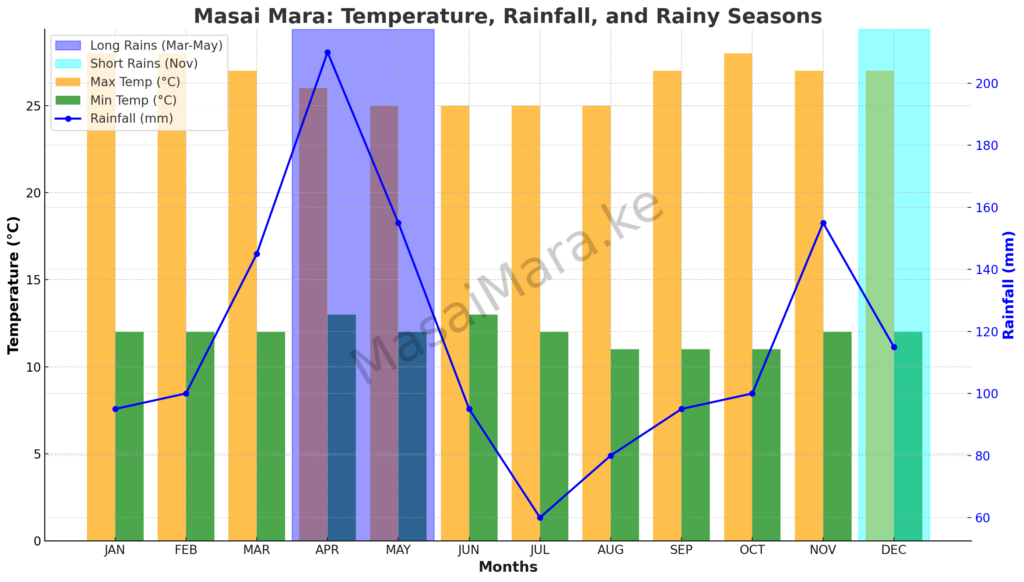
The region’s weather is both predictable and dynamic, with rainfall averaging 800–1,200 mm annually but varying based on location within the reserve. This reliability allows the Masai Mara to support its iconic biodiversity, from big cats to grazing herbivores, as well as migratory birds.
The dry season is ideal for safaris and migration viewing, while the rainy seasons are perfect for photography enthusiasts and those seeking fewer crowds. Regardless of the season, the Masai Mara’s weather ensures that it remains one of Africa’s most captivating wildlife destinations year-round.
Masai Mara Temperatures
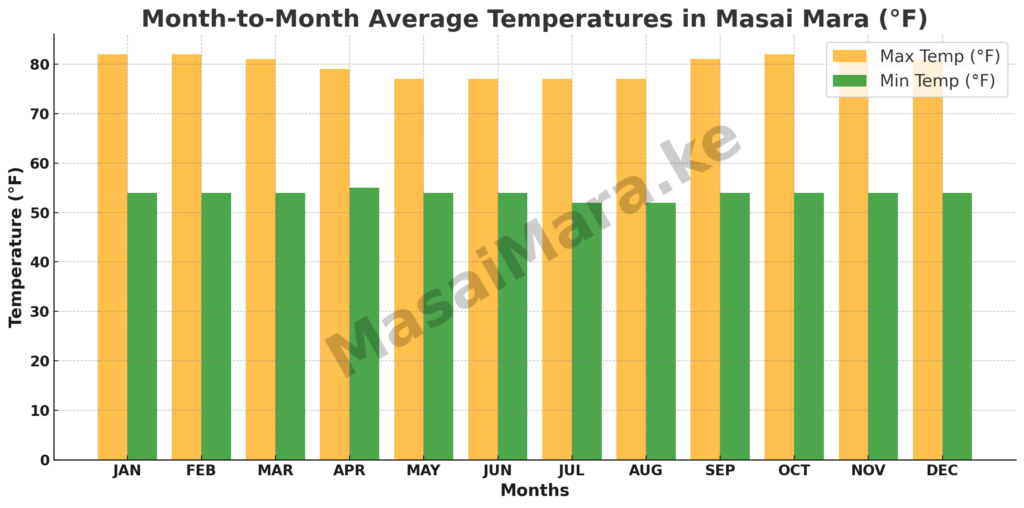
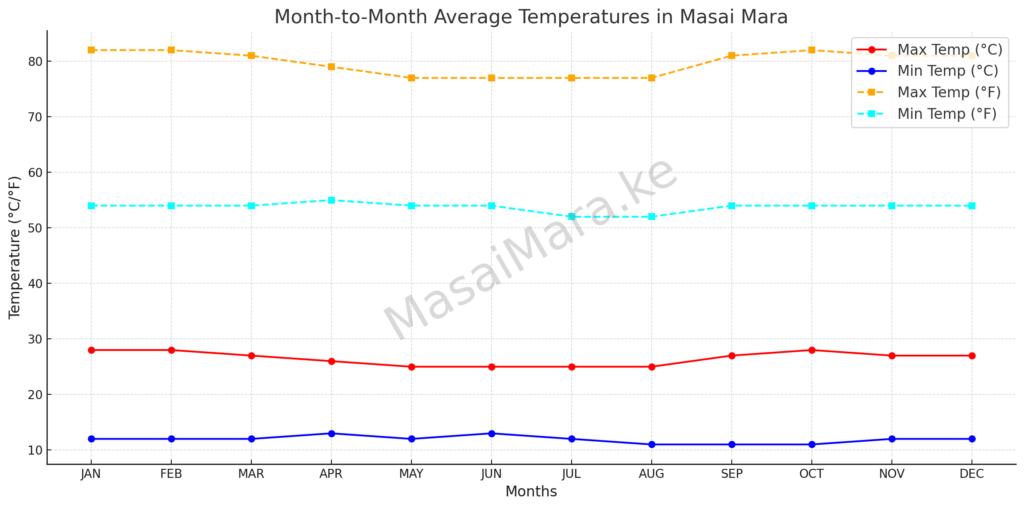
The Masai Mara enjoys a consistently mild and temperate climate, largely influenced by its elevation of 1,480 to 2,280 meters (approximately 4,900 to 7,200 feet) above sea level. The region’s average maximum temperatures range from 25°C to 28°C (77°F to 82°F) throughout the year, providing warm, pleasant conditions ideal for outdoor activities and safaris. Nights and early mornings are significantly cooler, with minimum temperatures averaging between 11°C and 13°C (52°F to 55°F), particularly during the dry season months of June to August.
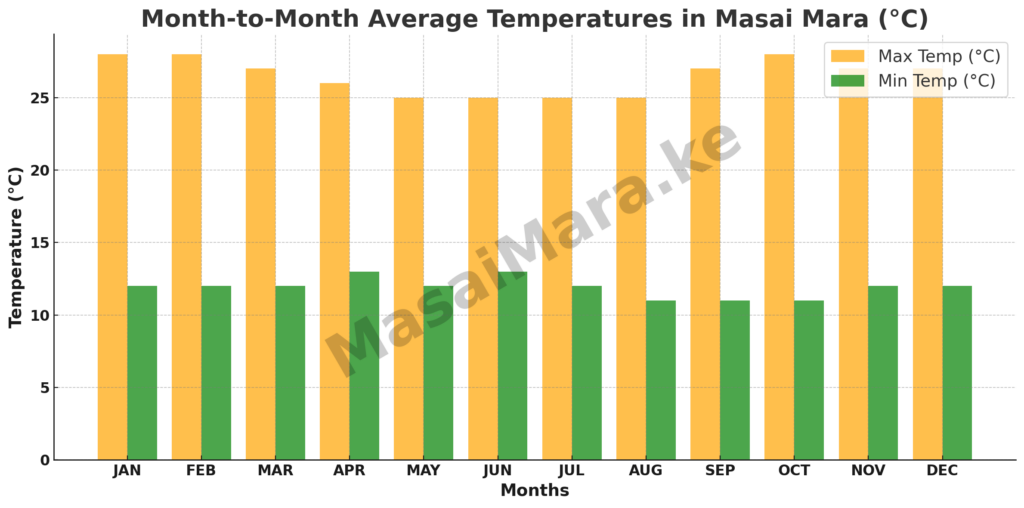
- Warmest Months: January, February, and September are among the warmest months, with daytime highs reaching up to 28°C (82°F). These months are ideal for travelers seeking clear skies and comfortable conditions for game drives.
- Coolest Months: June and July are the coolest months, with average highs of 25°C (77°F) and nighttime lows dipping to 11°C (52°F). The crisp mornings during this time are perfect for early game drives, offering an excellent chance to see predators in action.
- Diurnal Variations: The significant difference between daytime and nighttime temperatures is a hallmark of the Masai Mara’s high-altitude savannah climate. These variations not only influence wildlife activity but also provide a pleasant respite from daytime warmth for visitors.
Expert Insights
The Masai Mara’s stable temperature range makes it a year-round destination for safari enthusiasts. While daytime temperatures remain comfortable, travelers should prepare for chilly mornings and evenings by layering clothing, especially during the dry season.
The mild climate also plays a crucial role in sustaining the region’s biodiversity, supporting everything from grazing herbivores to the apex predators that depend on them. Whether visiting during the dry or rainy season, the Masai Mara’s moderate temperatures ensure a memorable and comfortable safari experience.
Below is a table with the data of Masai Mara’s month-to-month temperatures in F and C;
| Month | Max Temp (°C) | Min Temp (°C) | Max Temp (°F) | Min Temp (°F) | Avg Rainfall (mm) | What to Wear |
|---|---|---|---|---|---|---|
| JAN | 28 | 12 | 82 | 54 | 50 | Lightweight clothing, a light jacket for mornings/evenings, and sturdy shoes. |
| FEB | 28 | 12 | 82 | 54 | 40-50 | Comfortable, breathable clothing; a wide-brim hat and sunscreen. |
| MAR | 27 | 12 | 81 | 54 | 70 | Waterproof jacket, quick-drying clothing, and layers for cooler mornings/evenings. |
| APR | 26 | 13 | 79 | 55 | 120-160 | Waterproof gear, rain boots, and warm layers for damp, cooler conditions. |
| MAY | 25 | 12 | 77 | 54 | 100 | Water-resistant clothing, a sweater for cooler temperatures, and durable shoes. |
| JUN | 25 | 13 | 77 | 55 | 50 | Layered clothing for chilly mornings; a scarf or hat for warmth; comfortable clothing for days. |
| JUL | 25 | 12 | 77 | 54 | 20 | Warm layers for cold mornings; lightweight clothing for sunny afternoons; a windbreaker. |
| AUG | 25 | 11 | 77 | 52 | 30 | Similar to July: warm layers for mornings, breathable clothing for daytime, and walking shoes. |
| SEP | 27 | 11 | 81 | 52 | 40 | Light, airy clothing and warm layers for evenings; sunscreen and a hat for daytime. |
| OCT | 28 | 11 | 82 | 52 | 70 | Lightweight rain gear, layered clothing, and durable shoes for walking or safaris. |
| NOV | 27 | 12 | 81 | 54 | 90-120 | Waterproof outerwear, quick-drying clothes, and layers for cooler mornings and wet afternoons. |
| DEC | 27 | 12 | 81 | 54 | 80 | Light, breathable clothing for sunny days, a warm jacket for evenings, and water-resistant footwear. |
Rainfall in Masai Mara
The rainfall in Masai Mara follows a bimodal distribution, characterized by two distinct rainy seasons: the long rains from March to May and the short rains in November. On average, the Masai Mara receives approximately 1,405 mm (55.3 inches) of rainfall annually, with monthly averages ranging from 60 mm (2.4 inches) during the driest months of July to 210 mm (8.3 inches) during the wettest month of April. This consistent yet varied rainfall pattern ensures the region remains lush and supports a diverse range of flora and fauna, contributing to its status as one of the world’s premier wildlife habitats.
Here’s the Masai Mara month-to-month rainfall data in mm and in inches:
| Month | Rainfall (mm) | Rainfall (inches) |
|---|---|---|
| JAN | 95 | 3.7 |
| FEB | 100 | 3.9 |
| MAR | 145 | 5.7 |
| APR | 210 | 8.3 |
| MAY | 155 | 6.1 |
| JUN | 95 | 3.7 |
| JUL | 60 | 2.4 |
| AUG | 80 | 3.1 |
| SEP | 95 | 3.7 |
| OCT | 100 | 3.9 |
| NOV | 155 | 6.1 |
| DEC | 115 | 4.5 |
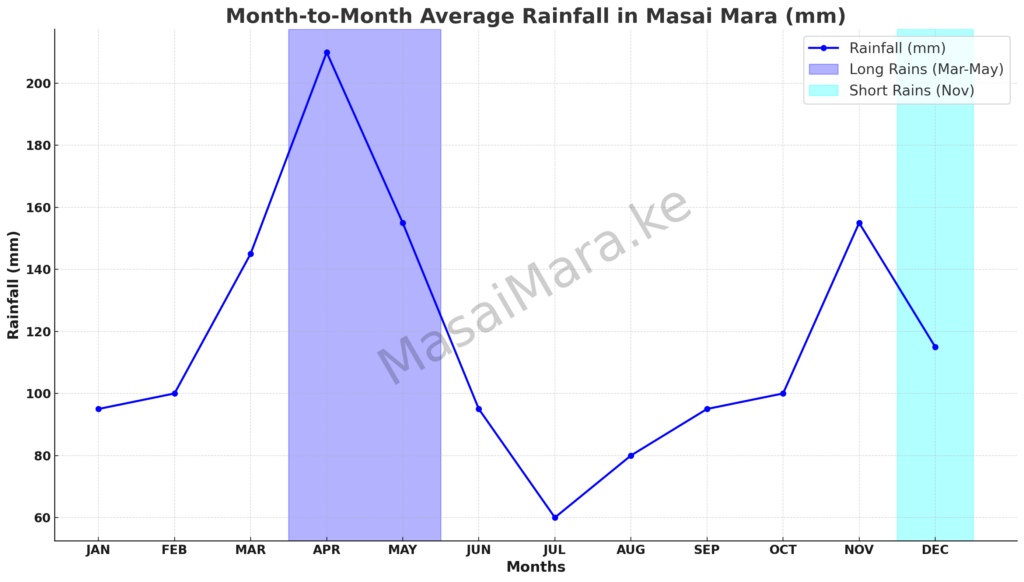
- Wettest Months: April is the wettest month, with an average rainfall of 210 mm (8.3 inches). This marks the peak of the long rains, transforming the savannah into a vibrant green landscape. Wildlife activity intensifies as herbivores feed on the freshly sprouted grass, and predators take advantage of their abundance.
- Driest Months: July and August are the driest months, receiving only 60 mm (2.4 inches) and 80 mm (3.1 inches), respectively. These months are part of the dry season when vegetation thins out, making wildlife easier to spot and contributing to the dramatic river crossings during the Great Migration.
- Seasonal Variations: The long rains (March-May) are the most significant, contributing to approximately 50% of the annual rainfall. The short rains (November) are less intense, averaging 155 mm (6.1 inches), but are crucial for rejuvenating the ecosystem after the dry months.
- Rainfall Extremes: April stands out as the wettest, while July is the driest. These extremes shape the movement of wildlife and the overall ecological dynamics of the Masai Mara.
Sunshine Hours in Masai Mara
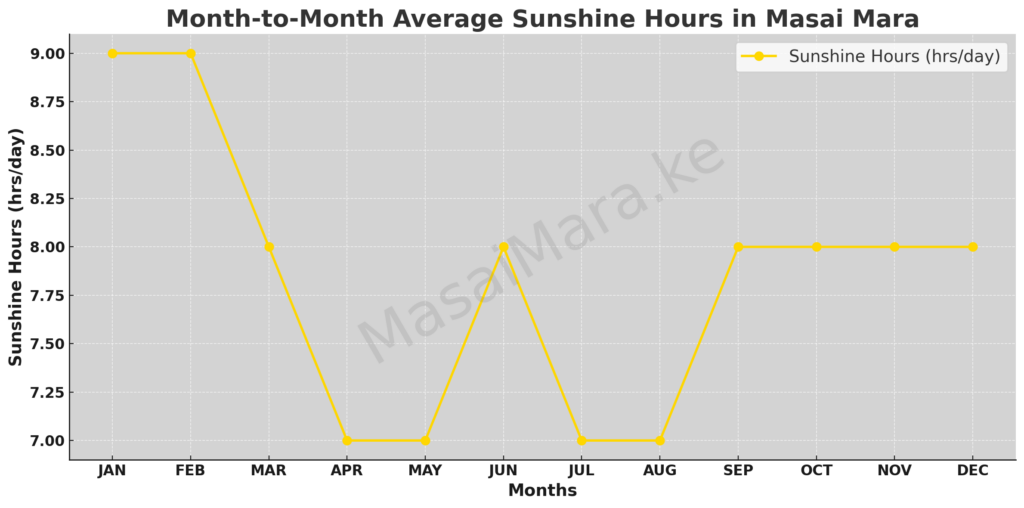
The Masai Mara enjoys abundant sunshine year-round, with an average of 7 to 9 hours of sunshine per day, depending on the season. This consistent sunlight is a defining feature of the region, supporting the lush grasslands and diverse wildlife that thrive in this iconic ecosystem.
Here’s the sunshine hours data for Masai Mara
| Month | Hours of Sunshine per Day |
|---|---|
| JAN | 9 |
| FEB | 9 |
| MAR | 8 |
| APR | 7 |
| MAY | 7 |
| JUN | 8 |
| JUL | 7 |
| AUG | 7 |
| SEP | 8 |
| OCT | 8 |
| NOV | 8 |
| DEC | 8 |
- Sunniest Months: January, February, and September are the sunniest months, with an average of 9 hours of sunshine per day. These months coincide with warm temperatures and clear skies, providing excellent conditions for game drives, photography, and outdoor exploration.
- Cloudier Months: April and May, during the peak of the long rains, are the cloudiest months, with an average of 7 hours of sunshine per day. Despite the increased rainfall, mornings often remain bright, offering opportunities for wildlife viewing before the afternoon showers.
Expert Insights
The Masai Mara’s consistent sunshine ensures favorable conditions for safaris throughout the year. Even during the rainy seasons, the mornings are typically clear, allowing visitors to enjoy the scenic beauty and observe wildlife in natural light. Travelers should take advantage of the early hours for game drives and carry sun protection, such as hats and sunscreen, to stay comfortable during the sunny days. The region’s ample sunlight not only enhances the safari experience but also supports the vibrant ecosystems that make the Masai Mara one of the most captivating wildlife destinations in the world.
January
- Weather: Warm and dry with brief showers.
- Temperature: 28°C (82°F) daytime; 15°C (59°F) nighttime.
- Rainfall: Low, about 50mm.
- What to Expect:
- Calving season begins for wildebeest and zebras.
- Predators are active due to abundant prey.
- Dry conditions make wildlife easier to spot.
- Expert Tips:
- Bring binoculars for predator action during calving.
- Stay in lodges near waterholes for excellent game viewing.
- Suitable Safari: Calving safaris and photographic safaris to capture newborns and predator interactions.
February
- Weather: Continuation of the dry season; sunny and clear.
- Temperature: 28°C (82°F) daytime; 16°C (61°F) nighttime.
- Rainfall: Minimal, about 40mm.
- What to Expect:
- Predator-prey interactions are at their peak.
- Grass remains short, offering unobstructed wildlife views.
- Expert Tips:
- Join small group safaris for an intimate experience.
- Early morning and evening game drives yield the best sightings.
- Suitable Safari: Predator-focused safaris and small group adventures.
March
- Weather: Start of the rainy season; increasing humidity.
- Temperature: 27°C (81°F) daytime; 16°C (61°F) nighttime.
- Rainfall: Moderate, about 70mm.
- What to Expect:
- Migratory birds in full abundance—ideal for birdwatchers.
- Herbivores are still active, grazing in open fields.
- Expert Tips:
- Carry waterproof clothing and protect camera gear.
- Visit conservancies for fewer crowds and excellent birding.
- Suitable Safari: Birdwatching safaris and wildlife observation tours.
April
- Weather: Peak of the long rains; lush landscapes emerge.
- Temperature: 26°C (79°F) daytime; 15°C (59°F) nighttime.
- Rainfall: High, 120-160mm.
- What to Expect:
- Stunning green landscapes perfect for photography.
- Wildlife activity slows during heavy rain, but predators remain active.
- Expert Tips:
- Use a 4×4 vehicle to navigate muddy roads.
- Take advantage of low-season discounts at camps.
- Suitable Safari: Photography safaris and budget safaris with fewer tourists.
May
- Weather: End of the long rains; intermittent showers persist.
- Temperature: 25°C (77°F) daytime; 15°C (59°F) nighttime.
- Rainfall: Decreasing, about 100mm.
- What to Expect:
- Wildlife becomes more visible as the grass shortens.
- The reserve is tranquil with fewer visitors.
- Expert Tips:
- Focus on areas near rivers for guaranteed sightings.
- Self-drive safaris are ideal during this quieter month.
- Suitable Safari: Private safaris for solitude and exploration.
June
- Weather: Start of the dry season; sunny with cool mornings.
- Temperature: 25°C (77°F) daytime; 14°C (57°F) nighttime.
- Rainfall: Minimal, about 50mm.
- What to Expect:
- Arrival of the Great Migration herds from the Serengeti.
- Cooler weather makes game drives pleasant.
- Expert Tips:
- Book camps near migration hotspots like Sand River.
- Layer clothing for chilly morning drives.
- Suitable Safari: Migration safaris and family-friendly safaris.
July
- Weather: Dry and cool with sunny days.
- Temperature: 24°C (75°F) daytime; 13°C (55°F) nighttime.
- Rainfall: Very low, about 20mm.
- What to Expect:
- The migration is in full swing; herds spread across the plains.
- River crossings at Mara River begin—spectacular predator-prey interactions.
- Expert Tips:
- Arrive early at river crossing points to secure a good view.
- Stay in camps near the Mara River for easy access.
- Suitable Safari: Migration river crossing safaris and guided group safaris.
August
- Weather: Continuation of the dry season; clear skies dominate.
- Temperature: 25°C (77°F) daytime; 13°C (55°F) nighttime.
- Rainfall: Low, about 30mm.
- What to Expect:
- Herds remain in the Mara, moving towards lush grazing areas.
- Predators follow the herds, ensuring dramatic action.
- Expert Tips:
- Book accommodations near Lookout Hill for panoramic views.
- Early morning drives yield higher chances of predator sightings.
- Suitable Safari: Big cat safaris and photographic safaris.
September
- Weather: Dry with occasional light rains.
- Temperature: 26°C (79°F) daytime; 14°C (57°F) nighttime.
- Rainfall: Low, about 40mm.
- What to Expect:
- Herds start dispersing across the Mara plains.
- Predator activity remains high.
- Expert Tips:
- Focus on conservancies for exclusive wildlife encounters.
- Opt for evening game drives when animals are most active.
- Suitable Safari: Predator safaris and luxury tented camp experiences.
October
- Weather: Transition to the short rains; warm and humid.
- Temperature: 27°C (81°F) daytime; 15°C (59°F) nighttime.
- Rainfall: Moderate, about 70mm.
- What to Expect:
- Wildebeest herds begin their journey back to Serengeti.
- Birdlife flourishes as migratory species arrive.
- Expert Tips:
- Combine game drives with birdwatching tours.
- Book accommodations near the Tanzanian border for the best sightings.
- Suitable Safari: Migration farewell safaris and birding safaris.
November
- Weather: Short rains dominate; lush greenery returns.
- Temperature: 26°C (79°F) daytime; 15°C (59°F) nighttime.
- Rainfall: Moderate, about 90-120mm.
- What to Expect:
- Fresh vegetation attracts herbivores, creating scenic views.
- The reserve is peaceful with reduced tourist numbers.
- Expert Tips:
- Travel with waterproof gear for afternoon rains.
- Look for camps offering low-season discounts.
- Suitable Safari: Budget safaris and landscape photography tours.
December
- Weather: End of the short rains; sunny mornings with occasional showers.
- Temperature: 27°C (81°F) daytime; 16°C (61°F) nighttime.
- Rainfall: Moderate, about 80mm.
- What to Expect:
- Resident wildlife is abundant, with predators thriving.
- Festive season attracts more visitors.
- Expert Tips:
- Book early for holiday deals at budget-friendly lodges.
- Take advantage of early morning game drives for clear skies.
- Suitable Safari: Family safaris and holiday-themed wildlife tours.
Masai Mara Month-to-Month Weather and Packing Guide
| Month | Avg Daytime Temp (°C/°F) | Avg Nighttime Temp (°C/°F) | Avg Rainfall (mm) | What to Wear |
|---|---|---|---|---|
| January | 28°C / 82°F | 15°C / 59°F | 50 | Lightweight clothing for warm days, a light jacket for cooler mornings and evenings, and sturdy shoes for game drives. |
| February | 28°C / 82°F | 16°C / 61°F | 40-50 | Comfortable, breathable clothing; a wide-brim hat and sunscreen for sunny days; a light jacket for early mornings. |
| March | 27°C / 81°F | 16°C / 61°F | 70 | Waterproof jacket or poncho for occasional rains, quick-drying clothing, and layers for cooler mornings and evenings. |
| April | 26°C / 79°F | 15°C / 59°F | 120-160 | Waterproof gear including rain boots, a waterproof jacket, and warm layers for damp, cooler conditions. |
| May | 25°C / 77°F | 15°C / 59°F | 100 | Light, water-resistant clothing; a sweater or fleece for cooler temperatures; durable, closed-toe shoes for muddy terrain. |
| June | 25°C / 77°F | 14°C / 57°F | 50 | Layered clothing for chilly mornings; a scarf or hat for warmth; comfortable clothing for mild, dry days. |
| July | 24°C / 75°F | 13°C / 55°F | 20 | Warm layers for cold mornings; lightweight clothing for sunny afternoons; a windbreaker for game drives in open vehicles. |
| August | 25°C / 77°F | 13°C / 55°F | 30 | Similar to July: warm layers for early mornings, breathable clothing for the daytime, and comfortable walking shoes. |
| September | 26°C / 79°F | 14°C / 57°F | 40 | A mix of light, airy clothing and warm layers for evenings; sunscreen and a hat for daytime game drives. |
| October | 27°C / 81°F | 15°C / 59°F | 70 | Lightweight rain gear for short showers, layered clothing for changing temperatures, and durable shoes for walking or safari excursions. |
| November | 26°C / 79°F | 15°C / 59°F | 90-120 | Waterproof outerwear, quick-drying clothes, and layers for cooler mornings and wet afternoons. |
| December | 27°C / 81°F | 16°C / 61°F | 80 | Light, breathable clothing for sunny days, a warm jacket for evenings, and water-resistant footwear for occasional showers. |
Packing Essentials
- Year-Round: Comfortable safari gear in neutral colors, a hat, sunscreen, sunglasses, and insect repellent.
- Wet Months (March-May, November): Waterproof footwear, a sturdy umbrella, and quick-dry clothing.
- Dry Months (June-October): Layered clothing, binoculars, and a reusable water bottle to stay hydrated.
Conclusion
The Masai Mara offers unique experiences every month. Whether you seek the drama of the migration, the tranquility of the green season, or the excitement of calving and predator action, the Mara’s ever-changing landscape ensures there’s something for everyone. Plan your trip according to your preferences and let the Mara’s breathtaking beauty leave you with unforgettable memories!
FAQs on Masai Mara Weather and Climate
1. Is the Masai Mara hot year-round?
No, the Masai Mara enjoys mild temperatures due to its high elevation (1,480 to 2,280 meters above sea level). Daytime temperatures typically range from 77°F to 82°F (25°C to 28°C), while nights and early mornings are cooler, averaging 52°F to 55°F (11°C to 13°C).
2. What is the best time to visit Masai Mara for good weather?
The best weather is during the dry seasons (June to October and January to February), offering sunny days, clear skies, and easier access to roads. These periods also align with excellent game-viewing opportunities as animals congregate around water sources.
3. How much rain does Masai Mara receive annually?
The Masai Mara receives an average of 1,405 mm (55.3 inches) of rainfall annually, with the majority falling during the long rains (March to May) and the short rains (November). Rainfall is crucial for sustaining the region’s biodiversity.
4. Does it rain all day during the rainy seasons?
No, rainfall in Masai Mara is typically in short, intense bursts during the afternoons or evenings, with mornings remaining clear and sunny. This allows plenty of time for game drives and outdoor activities even during the rainy months.
5. How does the weather affect wildlife behavior?
Rainfall dictates vegetation growth, water availability, and animal movement. The rainy seasons encourage the Great Migration as wildebeest and zebras follow fresh grass, while the dry seasons concentrate wildlife around permanent water sources, making game viewing more predictable.
6. Are safaris possible during the rainy seasons?
Yes, safaris are still possible during the rainy seasons. Roads can become muddy and challenging, but fewer tourists, vibrant greenery, and unique wildlife behavior (such as calving) make it worthwhile. A 4×4 vehicle is highly recommended.
7. How does the elevation of Masai Mara impact its climate?
The high elevation moderates temperatures, preventing extreme heat that is common in lower-lying savannahs. This creates a comfortable climate for visitors and supports diverse flora and fauna, including grazing herbivores and predators.
8. Are there mosquitoes in Masai Mara due to the rains?
Yes, mosquitoes are more prevalent during the rainy seasons. Visitors are advised to use insect repellents, sleep under mosquito nets, and consider malaria prophylaxis, as the region is a malaria-prone area.
9. What should I pack for the Masai Mara considering the weather?
Pack light layers to accommodate cooler mornings and evenings and warmer midday temperatures. Include a waterproof jacket for the rainy seasons, comfortable safari shoes, sunscreen, and a wide-brimmed hat for sun protection.
10. How does Masai Mara’s weather compare to other safari destinations?
Masai Mara’s mild temperatures and consistent rainfall make it unique compared to hotter destinations like Amboseli or Serengeti. Its climate ensures a lush environment and year-round accessibility, contributing to its reputation as one of the best safari locations in the world.
11. Is climate change impacting the Masai Mara?
Yes, climate change has led to altered rainfall patterns, with some years experiencing prolonged droughts or unseasonal rains. This affects vegetation, wildlife migration patterns, and water availability, posing challenges for conservation efforts.
12. How do rainy and dry seasons affect accommodations?
During the rainy seasons, some camps may close due to accessibility issues, but this is also when off-peak rates and discounts are available. The dry seasons often see higher prices and fuller bookings, so plan accordingly.
13. How many hours of daylight does the Masai Mara have?
Masai Mara experiences approximately 12 hours of daylight year-round, with sunrise around 6:30 AM and sunset at 6:30 PM, making it ideal for early morning and late afternoon game drives.