Plan your safari with confidence: where to go, when to go, how to get there, what you’ll see, and how to choose the right experience.
If you’re planning a safari in Kenya, the Masai Mara National Reserve is the place most travelers dream about—and for good reason. This is the northern anchor of the Serengeti–Mara ecosystem, home to exceptional predator densities, iconic savanna landscapes, and the Great Wildebeest Migration. But the Mara is also a complex, living landscape with different sectors, gates, management zones, airstrips, conservancies, seasons, rules, and travel styles.
This guide walks you through everything you need to plan a successful Masai Mara visit—from geography and access to safaris, costs, seasons, and the small details most people overlook.
What Is Masai Mara National Reserve—and Why It’s So Special
Masai Mara National Reserve is a large protected savanna ecosystem in south-western Kenya, managed by the Narok County Government (with the Mara Triangle managed by the Mara Conservancy). It’s famous for:
- The Great Wildebeest Migration and dramatic river crossings
- High densities of lions, cheetahs, and leopards
- Open plains, acacia-dotted horizons, and classic safari scenery
- A unique model where a core reserve is surrounded by community conservancies that expand the ecosystem and protect corridors
Ecologically, the Mara is the wetter, northern half of the Serengeti–Mara system. Politically and administratively, it’s a National Reserve (not a National Park), reflecting its history as Maasai land held in trust and managed locally.
Ready to choose the right way to experience the Mara?
👉 If you want to compare itineraries, budgets, inclusions/exclusions, and booking options, read our comprehensive guide to Masai Mara safari packages.
Where Is Masai Mara Located?
The Masai Mara sits in Narok County, south-western Kenya, directly north of Tanzania’s Serengeti National Park. There’s no fence between them—wildlife moves freely across the border.
- From Nairobi: ~225–280 km by road (route and gate dependent)
- To the south: Tanzania (Serengeti)
- To the north, east, and west: Maasai community lands and conservancies
Its position explains the migration: when the southern Serengeti dries out, herds move north into the Mara for fresh grass and permanent water in the Mara River system.
Want help choosing the best route for your dates and budget?
👉 See our step-by-step guide on how to get to Masai Mara by road or flight, including timings, costs, and pros/cons.
Masai Mara vs Serengeti: One Ecosystem, Two Countries
Visitors often ask whether the Masai Mara and Serengeti are different ecosystems. Ecologically, they’re one continuous system. Administratively, they’re two separate protected areas in two countries.
- Serengeti (Tanzania): Much larger; contains the main calving grounds
- Masai Mara (Kenya): Smaller, but with higher predator densities and famous river crossings
The migration moves south ↔ north with the rains. If you’re deciding between them, think in terms of season, travel logistics, and what you most want to see—calving in the south or crossings and predators in the north.
Not sure which side fits your trip best?
👉 Read our comparison guide: Masai Mara vs Serengeti—when to go, what you’ll see, and how to choose.
Size, Boundaries, and the Layout of the Reserve
- Area: ~1,510 km² (about 583 sq miles)
- South: Tanzania (Serengeti)
- West: Siria/Oloololo Escarpment and the Mara Triangle
- North & East: Community lands and conservancies
The Landscape at a Glance
- Open grasslands (prime grazing and hunting grounds)
- River systems (Mara, Talek, and seasonal streams)
- Riverine forests and woodland patches
- Seasonal marshes and drainage lines
For visitors, the most important internal division is between the Mara Triangle and the rest of the reserve.
Want a visual breakdown of sectors, rivers, and roads?
👉 Open our detailed Masai Mara map guide with gates, airstrips, and key landmarks marked.
The Mara Triangle Explained (And Why Management Matters)
The Mara Triangle is the north-western part of the reserve, bounded by the Mara River, the Siria Escarpment, and the Tanzania border. Since 2001, it has been managed by the Mara Conservancy, a not-for-profit organization.
Why visitors care:
- Often excellent road maintenance and strong anti-poaching
- Some of the best migration crossing points
- Frequently cited as a successful management model
- Separate gates and fee system from the rest of the reserve
To you as a traveler, it feels like the same Mara—but management quality affects wildlife protection, road conditions, and overall experience.
Planning your routes and gates?
👉 Read our guide to the Mara Triangle vs the main reserve—where to enter, what to expect, and how to plan your days.
The Greater Maasai Mara Ecosystem (Why Conservancies Matter)
The reserve is only the core of a much larger landscape called the Greater Maasai Mara Ecosystem, which includes:
- The Masai Mara National Reserve
- The Mara Triangle
- A ring of community conservancies
- Surrounding grazing lands and wildlife corridors
Why This Matters to Your Safari
- Wildlife uses areas outside the reserve—especially predators and elephants
- Conservancies reduce pressure on the core reserve
- You often get fewer vehicles, off-road tracking, and longer sightings in conservancies
- Maasai landowners receive direct income through leases and tourism
Major Conservancies Around the Mara
- Mara North Conservancy
- Olare Motorogi Conservancy
- Naboisho Conservancy
- Ol Kinyei Conservancy
- Lemek Conservancy
- Enonkishu Conservancy (and others)
Choosing between the reserve and a conservancy stay?
👉 Read our in-depth guide: Conservancies vs Masai Mara—costs, experience, rules, and which is right for you.
How to Get to Masai Mara
By Road (Most Flexible)
- From Nairobi: 5.5–7.5+ hours depending on route, weather, and gate
- Routes typically go via Narok or Mai Mahiu–Narok
- 4WD is strongly recommended, especially in rainy seasons
- Expect rough final sections near the reserve and conservancies
By Air (Fastest and Most Comfortable)
- Daily scheduled and charter flights from Wilson Airport (Nairobi)
- Flight time: ~45–60 minutes
- Land at one of several Mara airstrips (see below)
- Transfers arranged by camps or operators
Not sure which option fits your schedule and budget?
👉 See our full transport guide to Masai Mara with timings, prices, and packing tips for road vs flight.
Airstrips in and Around the Masai Mara
Common airstrips include:
- Keekorok (central/eastern Mara)
- Ol Kiombo (near Talek / eastern sector)
- Musiara (north/central)
- Mara Serena (west)
- Kichwa Tembo (near the Mara Triangle)
- Plus many conservancy-specific airstrips (Naboisho, Olare, Mara North, etc.)
Your camp location usually determines the best airstrip.
Want to avoid long transfers after landing?
👉 Use our airstrip-to-camp planning guide to pick the best flight for your lodge or conservancy.
Entry Gates: Where You Actually Enter the Mara
Major reserve gates include:
- Sekenani Gate (popular from Narok side)
- Talek Gate
- Oloolaimutia Gate
- Musiara Gate
- Oloololo Gate (for the Mara Triangle)
Each gate serves different sectors and road networks. Your route, lodge location, and daily plan should determine which gate you use.
Confused about which gate fits your itinerary?
👉 Read our gate-by-gate guide to Masai Mara with maps, road conditions, and nearby lodges.
Geography, Rivers, and Key Landmarks
Major Rivers
- Mara River (lifeline of the ecosystem; migration crossings)
- Talek River (eastern sector; many camps nearby)
Landmarks Visitors Often Ask About
- Siria / Oloololo Escarpment (dramatic western wall)
- Paradise Plains
- Musiara Marsh
- Rhino Ridge
- Talek and Mara confluence areas
These features shape animal movements, predator territories, and where guides focus game drives.
Want to understand where sightings usually happen?
👉 Explore our geography and landmarks guide to plan smarter game drives.
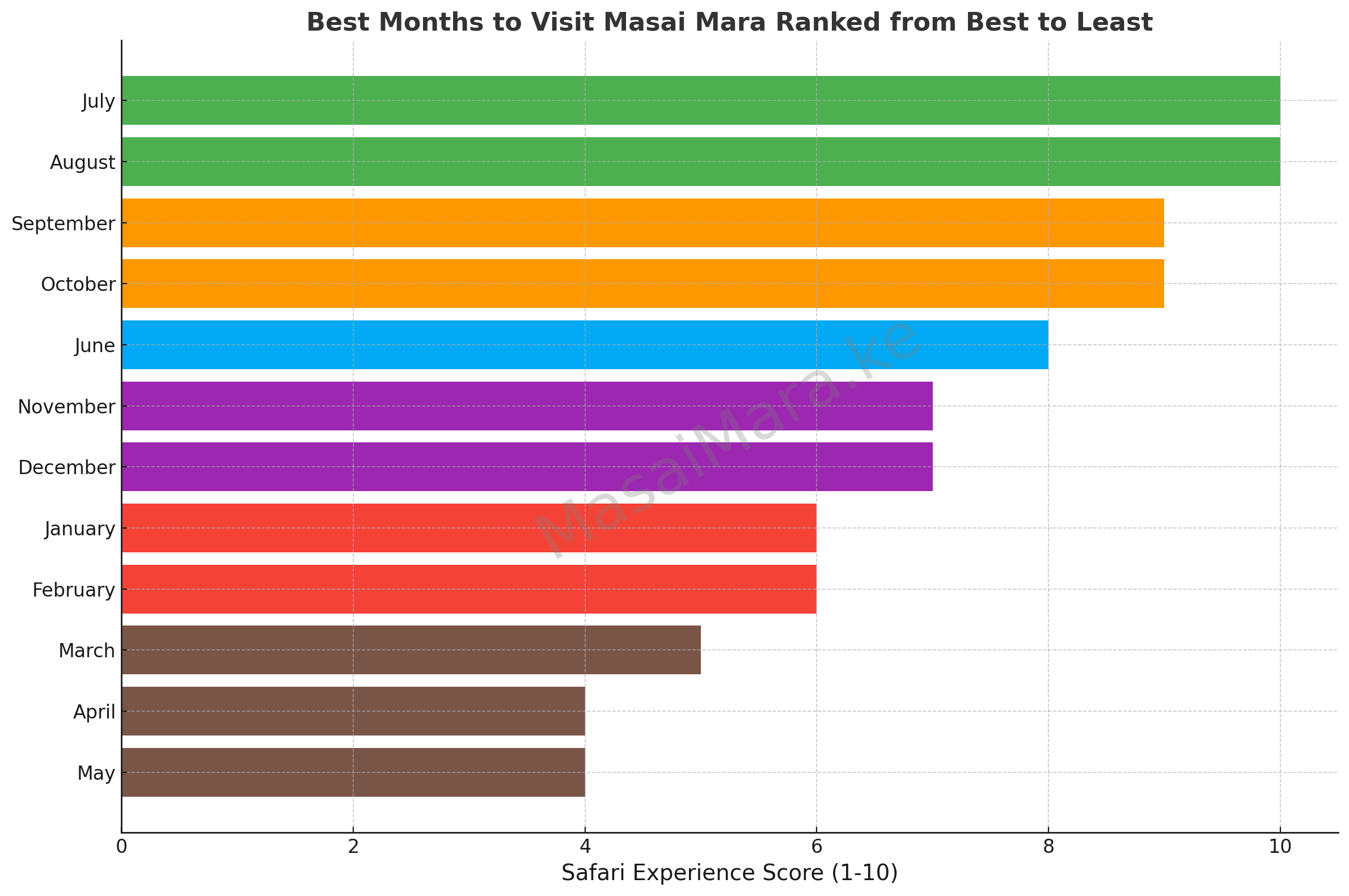
Seasons, Weather, and the Best Time to Visit
The Seasons
- Dry Season: June–October
- Best for migration crossings, easier driving, high wildlife visibility
- Short Rains: November–December
- Greener landscapes, fewer crowds, excellent photography
- Long Rains: March–May
- Lush scenery, fewer tourists, some roads challenging
The Migration Calendar (Approximate)
- July–October: Large herds in the Mara; river crossings
- November–December: Herds start moving south
- January–March: Calving in southern Serengeti
- April–June: Movement back north
Trying to match your dates to the best experience?
👉 Read our month-by-month guide to the best time to visit Masai Mara.
Wildlife: What You’ll See (and How Likely You Are to See It)
Big Cats
- Lions: Very high density, seen year-round
- Cheetahs: Excellent sightings in open plains
- Leopards: More elusive, but regularly seen along rivers and woodlands
Other Highlights
- Elephants, buffalo, giraffe, hippo, crocodile
- Black rhino (rare, but present in protected areas)
- Wildebeest, zebra, topi, impala, gazelles
- 450+ bird species
The Mara is one of the best all-round wildlife viewing areas in Africa, not just during migration.
Want a species-by-species guide?
👉 See our complete wildlife guide to Masai Mara with photos and habitat notes.
Safaris in the Masai Mara: What You Can Do
- Game drives (morning, afternoon, full day)
- Migration safaris (seasonal focus)
- Hot-air balloon safaris (sunrise flights + bush breakfast)
- Birdwatching safaris
- Photography safaris
- Family safaris
- Private vs shared safaris
- Conservancy safaris (often fewer vehicles, more flexibility)
Not sure which style fits you?
👉 Read our detailed guide to Masai Mara safaris—options, pros/cons, and how to choose.
Where to Stay: Camps, Lodges, and Conservancy Properties
You’ll find:
- Budget camps (simple, great value)
- Mid-range lodges and tented camps
- Luxury and ultra-luxury camps
- Exclusive conservancy camps with limited vehicles and premium experiences
Location matters as much as comfort: near rivers, in predator territories, or inside conservancies can change your experience dramatically.
Want help comparing areas and budgets?
👉 Read our accommodation guide to Masai Mara—best areas, price ranges, and what you get at each level.
Rules, Fees, and Practical Logistics
- Park fees: Paid per person per day (rates vary by residency and season)
- Opening hours: Generally sunrise to sunset (night drives only in some conservancies)
- Driving rules: Stay on tracks in the reserve; off-road often allowed in conservancies
- Guides and vehicles: Strongly recommended for safety and sightings
- Payments: Usually cashless at gates; operators handle logistics
Want the current fees and rules in one place?
👉 Check our up-to-date Masai Mara fees and regulations guide.
Safety, Health, and Responsible Travel
- The Mara is safe when visited with reputable operators
- Follow guide instructions around wildlife at all times
- Use malaria prophylaxis and insect repellent
- Drink safe water and use sun protection
- Practice responsible wildlife viewing: distance, patience, no crowding
Planning your first safari and want a checklist?
👉 Download our Masai Mara safety and health checklist for visitors.
Photography, Packing, and Small Details People Forget
What to Pack
- Neutral-colored clothing
- Hat, sunscreen, sunglasses
- Binoculars
- Camera with dust protection
- Light jacket for early mornings
- Power bank and plug adapters
Photography Tips
- Early morning and late afternoon light is best
- Be patient at sightings—behavior unfolds over time
- Respect distance rules; great photos come from good positioning, not crowding
Want a photographer’s packing and gear guide?
👉 Read our Masai Mara photography and packing guide.
Masai Mara at a Glance (Quick Planning Summary)
- Location: South-western Kenya, border with Tanzania
- Size: ~1,510 km²
- Famous for: Great Migration, big cats, classic savanna
- Key zones: Main reserve + Mara Triangle + conservancies
- Access: By road (6–8 hrs) or by flight (45–60 min)
- Best time: July–October for migration; great wildlife year-round
- Stay options: Budget to ultra-luxury, reserve or conservancy
- Top activities: Game drives, balloon safaris, photography, birding
Start Planning Your Masai Mara Safari
The Masai Mara isn’t just a place—it’s an ecosystem, a cultural landscape, and one of the world’s great wildlife theaters. The better you understand where to go, when to go, and how to choose your experience, the more rewarding your safari will be.
👉 If you want to explore itineraries, compare budget vs mid-range vs luxury options, see what’s included, and learn exactly how to book, read our complete guide to Masai Mara safari packages.
Ting laboratory, a community development engine, and a biological stronghold. Its success has inspired other models of co-managed conservation across East Africa.
As Kenya continues to invest in balancing development and wildlife protection, the Mara remains a symbol of what’s possible when local communities, government, and conservationists work together.