
A Masai Mara game drive is the core safari experience in the Masai Mara ecosystem: a guided wildlife-viewing drive in a safari vehicle (usually a 4×4 Land Cruiser or safari van) through the Masai Mara National Reserve (MMNR) and, in some itineraries, surrounding conservancies. The Mara is widely regarded as one of the best safari destinations on Earth because it combines high predator density, vast open savannah landscapes, big herds of plains game, and (in season) Great Migration drama along major rivers.
This guide covers what most travelers search for before booking: Masai Mara game drive cost, safari vehicle prices, Land Cruiser vs safari van, shared vs private game drives, 4 hours vs 8 hours vs 12 hours, the best routes and areas (Talek, Sekenani, Mara River, Sand River), best times of day and year, and how to book a game drive without surprises. It’s written for first-timers, families with kids, photographers, and budget travelers trying to get maximum value from the park fee.
1. What Is a Game Drive in the Masai Mara?
A game drive is a wildlife-viewing excursion where your driver-guide tracks animals across different habitats—open plains, riverine corridors, rolling hills, and seasonal wetlands—while interpreting behavior and positioning you for sightings and photography.
How game drives work inside MMNR vs conservancies
- MMNR (Masai Mara National Reserve): access is through official gates and ticketing; drives are limited by reserve rules (including time windows).
- Conservancies: typically have different access rules and can offer experiences not allowed inside MMNR (notably night game drives in many conservancies).
Guided vs self-drive (where applicable)
Most visitors do guided game drives because the Mara’s value is strongly tied to local tracking knowledge—predator territories, recent sightings, and how to read tracks and behavior. Self-drive is possible in parts of the ecosystem, but for most travelers (especially first-timers) a guided vehicle delivers more sightings per hour and fewer logistical headaches.
The daily rhythm of a game drive
Wildlife activity peaks when temperatures are cooler:
- Morning game drives (around 6:00–10:00 am): best for predators and crisp visibility
- Afternoon game drives (around 3:30–6:00 pm): best for golden light and late-day animal movement
- Full-day/extended drives: combine both peaks, plus river time and long-distance habitat coverage
2. Types of Safari Vehicles for Masai Mara Game Drives
2.1 Toyota Land Cruiser (4×4)
The 4×4 Land Cruiser safari vehicle is preferred in the Mara for one simple reason: it handles rough terrain better and keeps you comfortable during long hours in the reserve.
Why it’s the default choice
- Better traction and clearance on muddy or rutted tracks
- More stable on uneven terrain
- Comfortable for full-day driving
- Excellent viewing from a pop-up roof (stand and scan 360°)
Pop-up roof vs open-sided Land Cruisers
- Closed-body Land Cruiser with pop-up roof: best all-round choice; better protection from wind, cold mornings, and rain
- Open-sided Land Cruiser: more immersive and more photography-friendly, but typically USD 50–150 more per day and colder at dawn
Who should choose a Land Cruiser
- Anyone doing an 8-hour or 12-hour continuous safari
- Visitors traveling in shoulder season or wet conditions
- Photographers who want more flexibility and better angles
- Travelers aiming to reach deeper sectors like the Mara River and Sand River
If interested in renting a safari vehicle, book a Masai Mara Land Cruiser
2.2 Safari Van / Toyota Hiace
A safari van (often a Toyota Hiace configured for safaris with a pop-up roof) can be excellent value when conditions are right.
When a safari van makes sense
- Dry season or when you plan to focus on central circuits
- Larger groups trying to reduce per-person cost
- Visitors prioritizing budget over reaching the most rugged sectors
Cost advantages
Safari vans are usually cheaper than Land Cruisers, so the Masai Mara game drive vehicle cost can drop meaningfully—especially when shared.
Limitations
- Less capable in deep mud and rough off-road sectors
- Often lower ground clearance than a Land Cruiser
- May reduce the range of routes your guide can confidently pursue
2.3 Open-Sided Safari Vehicles
Open-sided vehicles (typically open-sided Land Cruisers) are a premium option used heavily by higher-end camps and photographers.
Why photographers love them
- No windows = cleaner angles and faster shooting
- You feel closer to the environment (more immersive)
Price premium
Open-sided vehicles commonly cost USD 50–150 more per day than standard closed-body pop-up roof Land Cruisers.
Comfort and practicality
They can be cold early morning and expose you more to dust/wind, so they’re best for travelers who prioritize photography and immersion
How to Choose the Best Game Drive Vehicle in Masai Mara
- Start with the terrain, not the price
- Masai Mara roads range from smooth tracks to deep ruts and black cotton mud after rain.
- A 4×4 Land Cruiser is the safest all-season choice for reliability, traction, and ground clearance.
- Safari vans can work in dry season, but struggle in mud and rough sectors.
- Pick the right vehicle type for your priorities
- Land Cruiser 4×4: Best for rough terrain, long days, riverine areas, and migration season.
- Safari van with pop-up roof: More budget-friendly, fine for main tracks in dry conditions, less capable off-road.
- Open-sided safari jeeps: Excellent for photography and fly-in safaris, but exposed to dust, cold, and rain.
- Match the vehicle size to your group
- 4–6 guests: Ideal for comfort, space for cameras, and window/roof access.
- 7–8 guests: Still workable, but space and shooting angles become more limited.
- Fewer people = better visibility, more flexibility, better photos.
- Prioritize viewing design (this affects your entire safari)
- Must-have features:
- Pop-up roof or open sides for 360° viewing
- Large windows and high seating position
- Raised suspension for better sightlines over grass
- Avoid vehicles without proper game-viewing roofs—they limit sightings and photography.
- Must-have features:
- If photography matters, choose the vehicle around the camera
- Look for:
- Pop-up roof or open sides (no shooting through glass)
- Enough space to move lenses and reposition
- Stable suspension for sharp shots
- Ask if the vehicle supports:
- Beanbags
- Charging ports
- Clear roof hatches without obstructions
- Look for:
- Decide between private vs shared vehicle (this changes everything)
- Private vehicle:
- You control pace, stops, and time at sightings
- Essential for photographers, families, and serious wildlife watchers
- Costs more, but delivers a dramatically better experience
- Shared vehicle:
- Cheaper
- Fixed schedule and group priorities
- Often crowded and less flexible at sightings
- Private vehicle:
- Choose open-sided vs closed based on comfort vs immersion
- Open-sided vehicles:
- Best visibility and photography
- More immersive
- Colder, dustier, and exposed to weather
- Closed vehicles with pop-up roof:
- Better for long drives, cold mornings, rain, and dust
- Still excellent viewing from the roof hatch
- Slightly less “open” feel, but more comfortable overall
- Open-sided vehicles:
- Check the vehicle’s safari-specific modifications
- Good safari vehicles should have:
- Heavy-duty suspension
- All-terrain tires
- Reinforced chassis
- Radio communication
- First aid kit
- Nice-to-haves:
- Cooler box
- Charging ports
- Extra fuel tanks
- Camera-friendly seating layout
- Good safari vehicles should have:
- Comfort matters more than most people expect
- Look for:
- High-back cushioned seats
- Enough legroom
- Good shock absorption
- You’ll spend 6–12 hours per day in the vehicle—comfort directly affects your enjoyment.
- Look for:
- Safety is non-negotiable
- Confirm the vehicle has:
- Seat belts
- First aid kit
- Two-way radio
- Proper maintenance
- The driver-guide’s experience matters as much as the vehicle itself—ask about training and local knowledge.
- Confirm the vehicle has:
- Factor in season and road conditions
- Rainy seasons (Mar–May, Nov):
- Strongly prefer 4×4 Land Cruiser
- Mud and slippery black cotton soil are common
- Dry season (Jun–Oct, Jan–Feb):
- Roads are easier, vans can work
- Still, Land Cruisers remain more comfortable and reliable
- Rainy seasons (Mar–May, Nov):
- Understand access rules by area
- Some conservancies only allow 4×4 vehicles
- If your itinerary includes remote areas or conservancies, a Land Cruiser is often mandatory
- Don’t ignore luggage and gear space
- If you carry:
- Camera bags
- Tripods
- Kids’ gear
- Picnic gear
- Make sure the vehicle has adequate storage without blocking seats or viewing angles
- If you carry:
- Ask the right questions before booking
- Is it private or shared?
- How many guests in the vehicle?
- Does it have a pop-up roof or open sides?
- Is it 4×4?
- Who is the driver-guide and what’s their experience?
- What’s included: fuel, permits, insurance, guide, radio, recovery gear?
- Expert bottom line
- If budget allows: Choose a private 4×4 Land Cruiser with an experienced guide.
- It delivers:
- Better access
- Better sightings
- Better comfort
- Better photography
- Better overall safari experience
Masai Mara Game Viewing Safari Vehicle Comparison Table
| Feature | Land Cruiser 4×4 | Safari Van (Pop-up Roof) | Open Safari Jeep |
|---|---|---|---|
| Best For | All-season safaris, rough terrain, migration season, long full-day drives | Budget safaris, dry season, main tracks | Photography-focused safaris, fly-in camps, immersive viewing |
| Terrain Capability | Excellent – true 4×4, high ground clearance, handles mud and rough roads | Moderate – usually 2WD or light 4WD, struggles in mud and rough areas | Good off-road ability, but limited to certain areas and conditions |
| Comfort Level | High – strong suspension, stable ride, good for long days | Moderate – more basic suspension, bumpier on rough roads | Moderate – more exposed to wind, cold, and dust |
| Viewing Design | Pop-up roof + large windows, elevated seating | Pop-up roof, decent windows | Fully open sides or open top, unobstructed views |
| Photography | Excellent – stable platform, good angles from roof hatch | Good – workable, but more restricted angles | Excellent – no glass, no roof obstructions, best freedom of movement |
| Weather Protection | Very good – enclosed cabin protects from rain, cold, dust | Good – enclosed, but less insulated | Poor – fully exposed to sun, wind, cold, and dust |
| Seating & Space | 6–7 guests ideal for comfort and camera gear | 6–8 guests, tighter space for gear | Usually 4–6 guests, more space per person |
| Reliability in Rainy Season | Excellent – best choice for mud and slippery black cotton soil | Poor to fair – can get stuck, not recommended | Fair – depends on vehicle and area, still exposed |
| Safety & Stability | High – robust build, strong suspension, widely used in Mara | Moderate – safe on good roads, less stable off-road | Moderate – safe with good guides, but more exposed |
| Typical Cost | Higher (premium safari vehicle) | Lower (budget-friendly option) | High to premium (often used by high-end camps) |
| Where Commonly Used | Masai Mara Reserve & conservancies, road safaris from Nairobi | Budget safaris, dry-season routes, main reserve tracks | Fly-in safaris, private conservancies, specialist photo safaris |
| Access Restrictions | Allowed everywhere | Restricted in some conservancies | Usually limited to conservancies and lodge areas |
| Overall Verdict | Best all-round safari vehicle for Masai Mara | Best for budget in good conditions | Best for photography and immersive experience, less for comfort |
Expert Summary
- Choose a Land Cruiser 4×4 if you want the most reliable, comfortable, all-season safari experience—especially for migration season or long full-day drives.
- Choose a Safari Van if you are budget-focused, traveling in the dry season, and staying on main routes.
- Choose an Open Safari Jeep if photography and immersion matter more than comfort and weather protection, especially on fly-in or conservancy safaris.
3. Cost of Masai Mara Game Drive Vehicles (Full Breakdown)
3.1 Typical vehicle rental prices
Common market ranges for Masai Mara game drive vehicles:
- Safari van / Hiace: USD 80–150 per day (varies by operator and vehicle spec)
- Closed-body Land Cruiser: USD 200–250 per day (typical on MasaiMara.ke)
- Open-sided Land Cruiser: USD 250–350 per day (premium photography vehicles)
- Private Land Cruiser game drive: often USD 200–400 per vehicle/day, depending on inclusions and provider
Shared game drives can reduce the per-person cost dramatically—sometimes as low as USD 70–100 per person when a vehicle is full.
3.2 What’s included vs excluded (why quotes differ)
This is the most important budgeting rule in the Mara:
Always confirm whether your quote is:
- Vehicle-only (itemized): you pay fuel, wages, entries, etc. separately, or
- All-inclusive vehicle rate: driver-guide + fuel + operational park fees are already bundled
Usually included (in all-inclusive camp/operator pricing)
- Driver-guide
- Fuel
- Operational logistics
- Often vehicle and driver operational fees
Usually excluded
- Park entry fees for guests
- Picnic lunch (sometimes included, often separate)
- Tips
3.3 Real cost when renting vehicle-only (itemized)
If you rent a game drive vehicle on a vehicle-only basis, the true cost rises once you add the standard operational expenses, which typically include:
- Safari Vehicle Rental Cost Per day: $150 for Toyota HiAce Minivan or $200 to $250 Per day
- Driver wages: USD 15–25/day
- Fuel: USD 27–40/day
- Vehicle entry fee: ~ USD 10/day
- Driver entry fee: ~ USD 7–14/day (season dependent)
- Tips: ~ USD 10 per guest/day (≈ USD 20/day for 2 guests)
- Picnic lunch: ~ USD 15 per person (≈ USD 30/day for 2 guests)
- Park entry fees: for non-residents USD 100 per person (Jan–Jun) and USD 200 per person (Jul–Dec) (lower for Kenyan citizens/residents)
Example totals (2 non-resident guests + Land Cruiser, full day):
- Jan–Jun: roughly USD 520–630/day
- Jul–Dec: roughly USD 720–850/day
This is why many travelers prefer camp-arranged vehicles: fewer surprise costs and smoother operations.
3.4 All-inclusive game drives from camps and operators
Many camps simplify the Masai Mara game drive price by bundling driver-guide, fuel, and operational logistics into a clear per-vehicle rate.
A common camp-based model (used by Kambu Mara Camp / Kambu Campers Masai Mara near Sekenani) is time-based pricing:
- USD 150 (4 hours)
- USD 200 (8 hours)
- USD 250 (12 hours)
Prices are per vehicle with a driver-guide, while park tickets are purchased separately at the gate. Full-day and extended drives are designed as continuous, in-park safaris, and guests carry a packed lunch to eat at a designated picnic site inside MMNR.
4. Shared vs Private Game Drives in the Masai Mara
4.1 Shared game drives (joining a group)
A shared game drive means multiple travelers share one vehicle and split the cost.
Pros
- Biggest way to reduce per-person game drive cost
- Social experience
- Same ecosystem, same wildlife quality (if the guide is strong)
Cons
- Less flexibility on route and stop timing
- Group preferences affect pacing (photography vs quick sightings vs kids)
Who should choose shared drives
- Solo travelers and couples
- Budget-focused travelers
- Visitors flexible on timing (morning/afternoon/full-day)
Shared cost table (using typical camp rates)
Using common camp rates (USD 200 for 8 hours; USD 250 for 12 hours):
| People Sharing | 8 Hours (Per Person) | 12 Hours (Per Person) |
|---|---|---|
| 2 | $100 | $125 |
| 3 | $67 | $83 |
| 4 | $50 | $63 |
| 5 | $40 | $50 |
| 6 | $33 | $42 |
| 7 | $29 | $36 |
Camps near Sekenani and Talek—including Kambu Mara Camp—often help match guests for shared drives, subject to availability.
4.2 Private game drives
A private game drive means the vehicle is exclusively yours (your family/group only).
Why people pay for private
- You control timing, route focus, and stop length
- Better for serious photography
- Better for families who need breaks and pacing control
Typical private price range
- Land Cruiser private game drives commonly range USD 200–400 per vehicle/day, depending on vehicle type (open-sided vs closed) and inclusions.
Check out our guide on Masai Mara safari cost.
5. Game Drive Durations Explained: 4 Hours vs 8 Hours vs 12 Hours
5.1 Half-day game drive (4 hours)
Best timing: morning or late afternoon
Best for: families with kids, short stays, visitors staying inside MMNR or conservancies
Typical route focus (near Talek and Sekenani)
- Enter via Sekenani Gate or Talek Gate depending on your location
- Work the Sekenani–Talek plains “Big Cat Zone” (lions and cheetah territory)
- Short scanning along the Talek River corridor for leopard habitat
- Return without long transits (distance eats your safari time)
5.2 Full-day game drive (8 hours)
Format: continuous in-park safari (packed lunch)
Typical timing: 6:00 am–2:00 pm (common camp structure)
Best balance: depth vs comfort vs cost
Typical 8-hour route
- Talek area and Sekenani plains for cats and open-country sightings
- Lookout Hill / panorama scanning for herds and predator activity
- Talek River corridor for leopard work
- Time permitting: key Mara River sectors
- Picnic lunch at a designated site inside MMNR
5.3 Extended full-day game drive (12 hours)
Format: continuous dawn-to-dusk safari
Typical timing: 6:00 am–6:00 pm
Why it’s popular: it maximizes expensive park tickets and expands your range
What 12 hours unlocks
- All core areas covered in an 8-hour drive (Talek, Sekenani, Lookout Hill, Mara River)
- Plus a longer push south toward Sand River and the Kenya–Tanzania border region
- Better sunrise + sunset photography windows
- More time to wait out leopards and track evolving predator behavior
5.4 Expert comparison table: which duration should you choose?
| Duration | Best For | Typical Timing | What You Cover | Why Choose It |
|---|---|---|---|---|
| 4 hours | Families, kids, short stays | Morning or afternoon | High-yield zones near your gate | Less tiring, cheaper, great wildlife in peak hours |
| 8 hours | Most first-timers, outside-reserve stays | ~6:00 am–2:00 pm | Talek + Sekenani + Lookout Hill + often Mara River | Best balance of coverage vs fatigue vs cost |
| 12 hours | Photographers, single-day maximizers | ~6:00 am–6:00 pm | Core zones + Sand River/border sectors | Maximum habitat coverage and best value for park-fee day |
6. Best Routes and Game Drive Areas in the Masai Mara
The Mara is not one habitat—it’s a mosaic. The best guides route by habitat type, season, sightings, and crowd pressure.
- Talek area & Big Cat Zone: lion and cheetah territory, strong prey base
- Sekenani plains: classic open savannah viewing near major gate access
- Talek River corridor: riverine woodland = leopard habitat and rich birdlife
- Mara River sectors: hippos, crocodiles, and (in season) migration crossings
- Lookout Hill and panoramic viewpoints: scanning herds and predator movement
- Sand River & Kenya–Tanzania border region: scenic, often lower-traffic, excellent for long extended traverses
7. Best Time for a Masai Mara Game Drive
7.1 Best time of day
- Morning: predators active, cooler temperatures, best clarity and early light
- Afternoon: golden light, relaxed pace, strong late-day movement
- Full-day: covers both peaks; best for photographers and single-day visitors
7.2 Best time of year
- Jan–Jun (green/shoulder season): generally fewer crowds and lower non-resident park fees (USD 100)
- Jul–Dec (peak season): migration period overlaps strongly; higher non-resident park fees (USD 200) and more demand
Seasons also affect road conditions: rain increases the value of a true 4×4 Land Cruiser.
8. What Animals You Can See on a Masai Mara Game Drive
A typical Masai Mara game drive can deliver:
- Big Five: lion, leopard, elephant, buffalo (rhino is less common but possible)
- Big cats: lions are frequent; cheetah sightings strong on open plains; leopards more likely near rivers
- Plains game: wildebeest, zebra, topi, gazelle, giraffe, eland
- River species: hippos and crocodiles in major river systems
- Birdlife: raptors, vultures, waterbirds, savannah specialists
Longer drives and river-focused routes increase the odds of leopard and more complex predator behavior.
9. Photography on Masai Mara Game Drives
Best vehicle for photography: open-sided Land Cruiser (premium), followed by pop-up roof Land Cruiser.
Open roof vs open-sided: pop-up roofs are excellent; open-sided is better for unobstructed angles.
Lens guidance: a telephoto zoom is ideal; binoculars dramatically increase sighting enjoyment.
Etiquette: do not pressure guides to crowd animals; great photos come from patience and respectful distance.
10. Practical Logistics and Tips for Game Drives
- Gates matter: choose the gate closest to your camp (Sekenani and Talek are common high-utility gates)
- Packed lunches: essential for continuous 8–12 hour safaris; lunch at designated picnic sites
- Distance planning: avoid wasting safari time on long dead drives—route efficiency matters
- Safety rules: remain in the vehicle except at designated areas; follow guide instructions
- What to pack: warm layer for dawn, sunscreen, hat, camera, binoculars, charging/power bank
- Kids: 4-hour drives or split drives in conservancies are often best for children under 4
11. How to Book a Masai Mara Game Drive
You can book:
- Through your camp: simplest; pricing often bundled; logistics handled
- Through a tour operator/platform (MasaiMara.ke): clearer comparison and matching vehicles to search intent (budget, photography, family)
- Vehicle-only rentals: can look cheaper but often cost more after add-ons
What to ask before booking
- Is the quote all-inclusive or vehicle-only?
- What vehicle type exactly (Land Cruiser vs van; open-sided vs closed)?
- What duration (4, 8, 12 hours) and is it continuous?
- What is excluded (park fees, lunch, tips)?
- What is the cancellation and deposit policy?
12. Sample Masai Mara Game Drive Itineraries
1-day safari from outside the reserve (best-value structure)
- Choose 8 hours for efficient coverage or 12 hours to maximize a high park-fee day
- Prioritize Talek/Sekenani early; rivers mid-day; open plains late
2-day safari with split drives (best for relaxed pacing)
- Morning game drive Day 1
- Afternoon game drive Day 1 or Day 2
- Works especially well if staying inside MMNR or in conservancies
3-day budget-focused itinerary using time optimization
- Build around fewer entries, longer continuous drives, and shared vehicles where possible
- This is the logic behind budget strategies used by camps like Kambu Mara Camp near Sekenani: maximize wildlife time per dollar through smart routing and continuous drives
Photographer-focused itinerary
- Open-sided vehicle if possible
- Prioritize sunrise and sunset windows
- Spend more time in riverine corridors for leopard and in open plains for cheetah behavior
Morning vs Afternoon vs Night Game Drives in the Masai Mara
The Masai Mara offers very different safari experiences depending on the time of day you go out. Morning game drives focus on predators finishing their hunts and herbivores emerging to graze. Afternoon game drives capture relaxed wildlife activity, dramatic light, and sunset scenes. Night game drives (only permitted in private conservancies, not inside the main Reserve) reveal a completely different world of nocturnal animals and hunting behavior you will never see during the day. Choosing the right time—or combining two in one day—directly affects what you see, how crowded it feels, and the quality of photography and wildlife encounters.
🦁 Game Drive Comparison Table: Morning vs Afternoon vs Night
| Feature | Morning Game Drive | Afternoon Game Drive | Night Game Drive* |
|---|---|---|---|
| Typical time | 6:00 AM – 10:30 AM | 3:00 PM – 6:30 PM | 7:00 PM – 10:00 PM |
| Wildlife activity | Very high: predators active, kills, scavengers, grazing herds | Moderate: animals active again as heat drops | High for nocturnal species (civets, genets, aardvark, porcupine, owls) |
| Best for | Lions, leopards, cheetahs, hyenas, hunting behavior | Elephants, giraffes, buffalo, general game + sunset scenes | Nocturnal mammals, night hunters, rare sightings |
| Photography | Excellent soft light, dramatic action, clear air | Golden-hour light, silhouettes, scenic landscapes | Spotlight photography; more challenging but unique |
| Crowds | Can be busy at popular sightings | Usually fewer vehicles than morning | Very low (conservancies only) |
| Where allowed | Reserve & conservancies | Reserve & conservancies | Conservancies only (not in the main Reserve) |
| Driving style | Focused, fast-paced, tracking predators early | More relaxed, scenic, ends at sunset | Slow, spotlight-assisted tracking |
| Pros | Best chance for predator action and fresh kills | Best light for landscapes + relaxed viewing | See species you’ll never see by day |
| Cons | Early wake-up, colder mornings, busier at sightings | Less intense action than morning | Not allowed in the Reserve; limited to certain areas |
*Night game drives are only permitted in private conservancies such as Naboisho, Mara North, Olare Motorogi, Ol Kinyei, and others—not inside the Masai Mara National Reserve itself.
Day vs Night Game Drives in Masai Mara: Quick Comparison
If you’re planning a Masai Mara safari, day and night game drives offer very different experiences. Day drives deliver the classic safari: wide savannah views, the Big Five, large herds, and (in season) the Great Migration. Night drives—only available in private conservancies, not inside the main Reserve—reveal the hidden nocturnal world: lions and leopards hunting, hyenas, civets, and other rarely seen species. The best itineraries combine both.
Day game drives run early morning and late afternoon (or full day). They’re best for photography, landscapes, and seeing the widest variety of animals.
Night game drives run for 2–3 hours after sunset. They’re more intimate and dramatic, with fewer vehicles and a focus on predators and nocturnal wildlife—but limited visibility and tougher photography.
Expert takeaway: Do day drives for scale and diversity. Add a night drive in a conservancy for depth and rare behavior.
Day vs Night Game Drives – At a Glance
| Feature | Day Game Drives | Night Game Drives |
|---|---|---|
| Where allowed | Reserve + conservancies | Conservancies only |
| Duration | 3–4 hrs or full day (up to 12 hrs) | 1.5–3 hrs |
| Best for | Big Five, herds, migration, scenery | Nocturnal animals, hunting behavior |
| Wildlife activity | Peak early morning & late afternoon | Predators more active |
| Photography | Excellent natural light | Challenging low light |
| Crowds | Can be busy at hotspots | Fewer vehicles, more exclusive |
| Cost (typical) | Higher (longer drives + park fees) | Slightly lower but needs conservancy fees |
| Experience | Classic, scenic, comprehensive | Intimate, suspenseful, specialist |
Expert Take: Which One Should You Choose?
- Choose a Morning Game Drive if your priority is big cats, hunting behavior, and dramatic wildlife action. This is the single most productive time of day in the Masai Mara.
- Choose an Afternoon Game Drive if you want beautiful light, scenic landscapes, and a more relaxed safari pace, especially for photography and first-time visitors.
- Choose a Night Game Drive (in conservancies) if you want rare, secretive species and a completely different safari experience that most Reserve-only visitors never get to see.
Best Overall Strategy
If your itinerary allows, do both a morning and an afternoon drive on the same day—and add a night drive if you’re staying in a conservancy. This gives you:
- Action + predators in the morning
- Light + scenery in the afternoon
- Nocturnal species at night
Bottom line: There is no single “best” time—each game drive slot shows you a different side of the Masai Mara. The most rewarding safaris combine morning + afternoon, and, where possible, night drives in conservancies for the full wildlife picture
How We’re Able to Deliver Superior Game Viewing Experiences:
- At MasaiMara.ke, we deliver a superior game drive experience by working only with top-tier guides who have completed at least two years of formal training in tour or wildlife guiding and hold professional certifications.
- Many safari drivers in the Mara are licensed to drive but not trained as guides, which leads to uneven and often superficial experiences.
- KPSGA certifications (Bronze, Silver, Gold) are member-based and voluntary, not mandatory, so standards vary across the reserve.
- By setting higher internal standards for training and certification, we ensure deeper wildlife knowledge, better interpretation, safer drives, and a consistently high-quality safari experience.
Masai Mara Game Drives Vs Other Masai Mara Activities:
Masai Mara game drives are the core wildlife activity—the one experience that consistently delivers Big Five/big cat sightings across seasons because you can cover multiple habitats (open plains, riverine corridors, marshes) in a single outing with an expert driver-guide.
Most other “things to do” in the Mara (ballooning, village visits, bush walks, sundowners, night drives in conservancies) are best viewed as high-value add-ons that either change your perspective (air), deepen context (culture/ecology), or unlock different wildlife windows (night), but they rarely replace the sheer volume and variety of sightings a well-planned game drive produces.
Table comparison: Masai Mara game drive vs other top activities
| Activity | What it delivers best | Typical duration | Best time to do it | Wildlife value | Photography value | Comfort/effort | Cost level | Key limitations / trade-offs | Best for |
|---|---|---|---|---|---|---|---|---|---|
| Game drive (MMNR) | Big cats + Big Five odds; widest habitat coverage | 4 / 8 / 12 hours | Dawn + late afternoon; full-day for depth | Very High | High (golden hours) | Medium (bumpy roads) | $$–$$$ | Crowding at popular sightings; requires good routing | First-timers, families, most visitors, “one-shot” safari days |
| Great Migration focus drive | River crossings + mega-herds (seasonal) | 8–12 hours | Jul–Oct peak; timing varies daily | High (seasonal) | Very High | Medium | $$$ | Crossings aren’t guaranteed; can involve long waits | Migration chasers, photographers, patient travelers |
| Hot air balloon safari | Aerial “scale and scenery” + sunrise drama | ~1 hour flight (half-day overall) | Dawn only | Medium (viewing, not close-ups) | Very High | High comfort | $$$$ | Weather-dependent; premium price | Honeymooners, photographers, bucket-list travelers |
| Maasai village visit (Enkang) | Culture, livelihoods, conservation context | 1–2 hours | Midday (between drives) | Low | Medium | Very high | $$ | Quality varies; must choose responsible/community-led visits | Curious learners, families, culture-focused travelers |
| Night game drive (conservancies) | Nocturnal species + predator behavior at night | 2–3 hours | After dinner | Medium–High | Medium (low light) | Medium | $$$ | Not allowed inside MMNR; only in conservancies | Repeat safari-goers, night wildlife enthusiasts |
| Walking safari (conservancies) | Tracks, plants, ecology, “small things” | 1–3 hours | Early morning / late afternoon | Medium (different lens) | Medium–High | Higher effort | $$$ | Not in MMNR; safety rules and pace constraints | Naturalists, older kids/teens, eco-focused travelers |
| Birding-focused outing | 500+ species; raptors, waterbirds, specials | 3–8 hours | Early morning; after rain/green season | Medium | High | Medium | $$–$$$ | Best with a bird guide; not “Big Five” centered | Birders, photographers, green-season travelers |
| Sundowners / bush dinner | Atmosphere, landscape, storytelling | 1–3 hours | Sunset / evening | Low | High (sunset) | Very high | $$$–$$$$ | Not a wildlife activity; safety-managed location | Couples, groups, celebration trips |
| Conservation visit / giving back | Meaningful context + impact | 1–4 hours | Midday | Low–Medium | Medium | High | $$–$$$ | Availability varies; must vet legitimacy | Purpose-driven travelers, educators, families |
| Scenic flight | Fast aerial overview; logistics | 15–60 minutes | Clear mornings | Low–Medium | High | Very high | $$$ | Less immersive than balloon; visibility varies | Time-poor travelers, aerial-view lovers |
Masai Mara Game Drives Routes (What, Where, and How to Choose)
A game drive is a guided wildlife-viewing journey in a safari vehicle, focused on observing animals in their natural habitat for conservation, education, and photography—not hunting. The concept evolved from early African expeditions described by writers like Theodore Roosevelt and Karen Blixen, and became standardized with the creation of protected areas such as the Masai Mara. Today, game drives are the core safari experience, typically run in the early morning and late afternoon, with full-day and (in conservancies) night drives as extensions.
In the Masai Mara ecosystem, visitors have three main game drive options, each with a different character:
- Maasai Mara National Reserve (MMNR) — The most extensive and diverse area for wildlife viewing, famous for the Great Migration (July–October). It offers the longest drive networks, the widest habitat range, and the highest chance of seeing the Big Five. It can be busier, but it remains the best choice for first-time visitors and full-day safaris.
- Mara Triangle — The northwestern sector between the Mara River and the Oloololo Escarpment, managed by the Mara Conservancy. It’s quieter, well-managed, and excellent for self-drive, with superb migration viewing and fewer vehicles at sightings.
- Mara Conservancies (e.g., Mara North, Naboisho, Olare Motorogi, Ol Kinyei) — More exclusive and lower-density, with fewer vehicles, flexible rules (including night drives), and a strong community and conservation model. They’re ideal for privacy and specialized experiences, though the drivable area is smaller than the main Reserve.
Which should you choose?
- For maximum wildlife diversity and long, immersive days: choose MMNR.
- For quieter drives with excellent management: choose the Mara Triangle.
- For privacy, flexibility, and night drives: choose a conservancy (especially Mara North or Naboisho).
How long should you drive?
- Morning (6:00–9:00): best for predators and action.
- Afternoon (15:00–18:00): best light, relaxed viewing, scenic landscapes.
- Full day (6:00–18:00): most comprehensive coverage, ideal for migration season.
- Night (19:00–21:00): conservancies only; for nocturnal species and rare sightings.
Packages vs private vehicles:
- Luxury camps often include shared drives in all-inclusive packages.
- Many mid-range and budget camps offer private vehicles at more flexible rates.
- Always confirm what’s included (park/conservancy fees, vehicle type, shared vs private, meals).
Bottom line: There is no single “best” area—MMNR for scale and diversity, Mara Triangle for quieter quality, conservancies for privacy and special experiences. The best itineraries often combine one Reserve stay with one conservancy stay.
Expert Guide to Masai Mara Game Drive Routes (Where Guides Actually Drive)
The Masai Mara doesn’t have “tourist circuits” in the classic sense—it has ecological zones and wildlife corridors that guides use depending on season, animal movement, and recent sightings. Below are the core route areas and what each is best for:
1) Mara River Corridor (MMNR & Mara Triangle)
- Best for: Great Migration crossings, hippos, crocodiles, riverine birds, big cats waiting near crossings
- Key zones: Paradise Crossing, Lookout Hill crossings, Crocodile Crossing (Triangle side)
- When to go: Early morning or full-day during migration season (July–October)
- What guides do: Patrol known crossing points, scan riverbanks for herds stacking up, follow predator movement along the river
2) Oloololo Escarpment Base (Mara Triangle)
- Best for: Lions, leopards, scenic landscapes, fewer vehicles
- Terrain: Rolling hills, wooded edges, open plains below the escarpment
- When to go: Morning for light and predator movement; late afternoon for views and atmosphere
- What guides do: Work the tree lines and slopes where cats rest and hunt, then drop onto the plains
3) Central Plains (MMNR Core: around Talek & Musiara areas)
- Best for: Year-round general game, lions, cheetahs, hyenas, large herbivore herds
- Why it’s important: This is the highest-density wildlife zone in the Reserve
- When to go: Morning for predators; afternoon for mixed game and scenery
- What guides do: Track resident lion prides, scan open plains for cheetahs, work river edges for leopards
4) Rhino Ridge & Western Triangle Ridges
- Best for: Black rhino sightings (where conditions allow), elephants, buffalo, wide views
- Terrain: Elevated ridges and broken ground
- When to go: Late morning to afternoon when animals move up to graze or rest
- What guides do: Slow, careful scanning of slopes and valleys; patience is key here
5) Talek & Sand River Tributaries (Eastern & Central MMNR)
- Best for: Leopards, birds, elephants, hippos, shaded resting predators
- Terrain: Riverine woodland and broken banks
- When to go: Mid-morning or afternoon when animals seek shade and water
- What guides do: Drive the river lines, check big trees for leopards, work crossings for fresh tracks
6) Conservancy Routes (Mara North, Naboisho, Olare Motorogi, Ol Kinyei)
- Best for: Low-vehicle-density sightings, walking safaris (where permitted), night drives, relaxed tracking
- Terrain: Mix of open plains, low hills, and seasonal riverbeds
- When to go: All day, including night (conservancies only)
- What guides do: Track specific individuals, go off-road (where allowed), follow behavior rather than fixed loops
Practical Route Strategy (How Pros Plan a Day)
- Morning: Start on open plains or river edges for predators and action
- Midday: Shift to riverine areas and shaded zones for resting cats, elephants, and birds
- Afternoon: Return to plains and scenic zones for light, movement, and landscapes
- Migration season: Prioritize Mara River corridors and stay flexible—crossings are unpredictable
- Conservancies: Mix tracking + off-road + night drives for maximum variety
Final Expert Take
There is no single “best route” in the Masai Mara—great game drives are adaptive. The best guides read tracks, radio calls, weather, and animal movement, then choose the right zone for the time of day and season. Pick the right area (MMNR, Triangle, or conservancy), allow enough time, and let a skilled guide shape the route—that’s how exceptional Masai Mara game drives actually happen.
What I Always Tell Guests Before Their First Mara Game Drive
After years of doing game drives in the Masai Mara, I’ve seen the same surprises, the same regrets, and the same “I wish someone had told me this” moments. So here’s my honest, first-hand advice—exactly what I’d tell you if you were sitting next to me in the vehicle before sunrise.
- In the Mara, timing beats distance—every time.
Your best sightings almost always happen at first light and late afternoon. That’s when lions move, cheetahs hunt, and leopards are still active. Midday drives can still be good, but they’re slower, hotter, and many animals are resting in shade. If you only have energy for one drive a day, make it the morning one. - Your camp’s game-drive policy can shape your whole safari.
Some camps run strict schedules (for example 6–9am and 4–6pm). Others allow full-day drives if you’re in a private vehicle or staying somewhere with flexible guiding. Many guests arrive thinking “Masai Mara = drive all day anywhere” and then feel restricted. Always ask: Can we do full-day drives? Can we stay out longer if something is happening? - “Shared game drive” changes the experience more than people expect.
Shared vehicles can mean 6–8 guests with different priorities—one wants photos, one wants breakfast, one is tired. If photography, kids’ comfort, or your own pace matters, a private vehicle is the single best upgrade you can make. Also ask: How many seats? Do we get a window or roof spot? - Yes, crowds happen—especially at big cats and river crossings.
I’ve had guests tell me, “We found lions… and suddenly 20 vehicles arrived.” That’s normal in popular areas. This is why many repeat visitors choose conservancies (fewer vehicles) or drive at quieter times. Also, your experience depends a lot on your guide’s etiquette—good guides keep distance, don’t block animals, and position for light, not chaos. - Rules about off-roading affect how close you get.
Inside the main Reserve, you usually stay on established tracks. In many conservancies, controlled off-road driving is allowed. Some guests expect “leopard at 3 metres” everywhere and feel disappointed in MMNR. It’s not worse—it’s just different rules and different density. - A migration reality check: crossings are never guaranteed.
I’ve seen people arrive expecting a crossing at “10 a.m.” The truth? You might wait three hours and see nothing—or watch a crossing happen in 90 seconds and it’s over. The best strategy is: great guides, full-day flexibility, and being near the right river sections. Mixing Reserve + conservancy nights often works best. - Where you sleep affects how tired you’ll be—and how much you’ll see.
Staying far outside the Reserve means gate queues, long drives, and lost time, especially after rain. On short trips (1–2 nights), many guests wish they’d paid a bit more to stay closer to where they actually drive. - Dust, bumps, and temperature swings are part of the deal—pack for it.
I constantly hear: “I wish I had brought a scarf,” “My camera is full of dust,” “I didn’t expect it to be this cold in the morning.” Bring layers, sunglasses, a buff/scarf, and zip bags for cameras. Morning can be cold. Midday can be brutally hot. - Toilets are a logistics issue, not a guarantee.
You rely on designated picnic sites or lodge stops. If you’re traveling with kids, pregnant, or have sensitive stomach issues, plan your drives and stops intentionally. This makes a huge difference to comfort. - For photography, the vehicle matters more than your zoom lens.
I’ve seen great cameras ruined by bad vehicle setups. Avoid closed vans for serious viewing. Ask for a Land Cruiser with pop-up roof, check if beanbags are available, and whether your guide understands sun angle, backgrounds, and patience. You can’t “zoom” your way out of poor positioning. - Animals don’t follow maps—habitat and time matter more than routes.
First-time visitors obsess over GPS points. Experienced safari-goers think in habitats: riverine areas for leopards, open plains for cheetahs, shaded edges for lions in heat. A good day is built around where animals like to be at certain times, not ticking off locations. - Tipping is awkward only if you don’t plan it.
Ask early: Who do we tip? Driver-guide? Camp staff pool? Porter? Housekeeping? Having a simple plan avoids uncomfortable moments on your last day. - The best guides don’t chase radio noise—they build a day.
Some guests regret “sighting chasing” that turns into a vehicle rally. The best safaris use radio intel selectively, but focus on a coherent circuit: different habitats, good light, relaxed stops. Ironically, this usually produces better sightings and better photos. - About vehicles: don’t underestimate how much this affects your safari.
Safari vans are cheaper and work on most main routes, but Land Cruiser 4x4s are more comfortable on rough tracks and better off-road. Also, most self-drive cars don’t have proper pop-up roofs. For most visitors, hiring a vehicle with a driver-guide is worth it—you avoid stress, paperwork, breakdown risks, and you gain local knowledge that completely changes what you see.
My bottom-line advice as a Mara guide
If you remember only three things:
- Prioritise time of day and flexibility, not just where you stay.
- Choose the right vehicle and guide before you worry about room luxury.
- Set expectations: this is real wilderness, not a scripted show.
Get those right, and even a simple camp can give you an extraordinary Masai Mara safari. Get them wrong, and even the best lodge can feel disappointing.
13. FAQs About Masai Mara Game Drives
How much does a Masai Mara game drive cost?
It commonly ranges from USD 180 to USD 550+ for non-residents depending on vehicle type and season, and can be higher if your hire is vehicle-only with itemized operational costs.
Is a Land Cruiser worth it over a safari van?
For rough roads, wet conditions, comfort, and reaching deeper sectors, yes. For central circuits and tighter budgets, a van can be excellent value.
Are shared game drives worth it?
Yes for budget travelers and solo/couples—shared safaris can reduce costs to USD 70–100 per person depending on occupancy.
How long should a game drive be?
4 hours for kids/short stays, 8 hours for best all-round value, 12 hours to maximize a high park-fee day and cover deeper sectors.
Do game drives include park fees?
Often not. Many camp-based and operator-based vehicle rates exclude MMNR guest entry tickets.
Is a 12-hour game drive too long?
It’s long but highly rewarding for serious wildlife enthusiasts and single-day visitors optimizing value.
Can kids join game drives?
Yes—4-hour drives are generally best for young children due to comfort and pacing.
Conclusion: The Smart Way to Plan a Masai Mara Game Drive
A great Masai Mara game drive comes down to three decisions: vehicle, duration, and format (shared vs private; all-inclusive vs vehicle-only). If you plan around the realities of park fees and time inside the reserve, you’ll get better sightings and better value. For many travelers, the most reliable structure is a camp-arranged continuous safari (4/8/12 hours) with clear inclusions—exactly why camps near key gates like Kambu Mara Camp (Sekenani area) have become popular for travelers who want transparent pricing, efficient routes, and optional cost sharing to reduce the per-person bill.
Planning & Booking Game Drive:
1) Do I need to book Masai Mara game drives in advance?
Yes—book ahead for July–October and December holidays. In low season you can book closer, but the best vehicles and guides still fill first.
2) Can I book a Masai Mara game drive without staying at a lodge or camp?
Yes. You can hire a safari vehicle + driver-guide through a tour operator or platform and meet at a gate (e.g., Sekenani/Talek) or a pickup point near your accommodation.
3) What details should I provide when requesting a game drive quote?
Your date(s), where you’re staying (gate area), number of adults/children, preferred duration (4/8/12 hours), vehicle type (van vs Land Cruiser), and whether you want shared or private.
4) What questions should I ask before paying a deposit?
Ask: Is this price per vehicle or per person? Is it all-inclusive or vehicle-only? What’s excluded (park fees, lunch, tips)? What’s the cancellation policy? Who is the operator/guide?
5) Are shared game drives guaranteed if I request one?
Not always. Shared drives depend on finding other guests with matching dates and timing. Many camps help match guests, but availability can’t be guaranteed.
6) Can I change from shared to private (or vice versa) later?
Often yes, but it depends on availability and the operator’s policy. The closer to the date, the less flexible it becomes.
7) What is the best pickup arrangement if I’m staying outside the reserve?
A continuous drive with an early pickup and a single gate entry is best (less time lost commuting and fewer complications with ticket timing).
8) Do game drives run every day?
Yes. Game drives operate daily year-round, with route adjustments based on weather, sightings, and road conditions.
Cost, Inclusions, and “Hidden Fees”
9) Why do Masai Mara game drive prices vary so much?
Because quotes differ on inclusions (fuel, guide, vehicle/driver entry fees), vehicle type (van vs Land Cruiser vs open-sided), duration, season, and whether it’s shared or private. Read our guide on Why Masai Mara is so Expensive
10) What costs are most commonly excluded from game drive quotes?
Most often: park entry fees, picnic lunch, and tips. Some budget “vehicle-only” hires may also exclude fuel and driver costs.
11) What is the difference between vehicle-only hire and all-inclusive game drive pricing?
Vehicle-only means you pay operational costs separately (fuel, wages, entries). All-inclusive usually bundles driver-guide + fuel + logistics, making budgeting simpler.
12) Are tips mandatory in the Masai Mara?
No, but tipping is customary for good guiding. Budget as a guideline rather than a fixed fee.
13) Is the safari van always cheaper than a Land Cruiser?
Usually yes on the vehicle line—but in peak season, park fees can dominate your total cost, so the vehicle difference may be less dramatic than expected.
14) What’s the cheapest way to do a Masai Mara game drive?
Travel Jan–Jun (lower park fees), join a shared drive, choose a standard Land Cruiser or van (not open-sided), and do an efficient 8-hour route from a gate-adjacent camp.
15) Can the per-person cost drop below USD 70?
Sometimes, if a camp runs fixed-rate shared drives or you join a full vehicle on a promotional shared schedule—just confirm what’s included and whether the guide/vehicle quality is reliable.
16) Should I pay park fees online or at the gate?
It depends on the current system and operator guidance. The key is to follow official payment methods and confirm ticket validity timing before you enter.
Park Rules, Timing, Gates, and Tickets: Game Drive Operational Details in MMNR
17) What time do Masai Mara game drives usually start?
Morning drives typically start around dawn (often ~6:00 am). Afternoon drives typically start mid-afternoon (often ~3:00–3:30 pm), depending on where you’re staying and gate access.
18) What are the best gates for game drives?
It depends on where you’re staying. Common high-utility gates include Sekenani and Talek for central Mara access; other gates suit other regions. Choose the gate that minimizes dead driving.
19) Can I enter from one gate and exit from another?
Sometimes yes, but logistics matter: your driver’s plan, where you’re staying, and ticket validity windows. Confirm before the drive.
20) Is re-entering the reserve allowed on the same ticket?
This depends on the current MMNR ticket rules and enforcement. Operationally, continuous drives avoid complications—re-entry can waste time and risk ticket disputes.
21) Are off-road game drives allowed in the Masai Mara?
Typically no inside the main reserve except in specific situations/areas under guide discretion and rules. Conservancies may differ. Always follow ranger and reserve regulations.
22) Can vehicles drive right up to animals?
No. Responsible guides keep ethical distances, avoid blocking animals, and follow crowding rules (especially around big cats and crossings).
23) Are picnic stops allowed anywhere?
No. Eating and bathroom breaks should be done at designated picnic sites and approved stop points.
24) Can I get out of the vehicle during a game drive?
Only at designated areas (picnic sites, specific viewpoints where allowed). Otherwise, stay inside for safety and compliance.
Wildlife, Sightings, and Expectations During MMNR Safari:
25) What animals are easiest to see on a game drive in the Masai Mara?
Typically: elephants, buffalo, giraffes, zebra, wildebeest, antelope, and lions. Leopards and cheetahs are very possible but more variable.
26) What are my chances of seeing the Big Five in one day?
High for lion, elephant, buffalo; moderate for leopard; lower for rhino (sightings occur but are not as consistent as other parks).
27) Is it better to do one long drive or two shorter drives for sightings?
If you’re staying inside MMNR/conservancies, two shorter drives can be ideal. If staying outside, one continuous 8–12 hour drive usually yields more.
28) How does season affect wildlife sightings?
Dry season concentrates animals near water and improves road access; green season can be lush with fewer crowds but taller grass can reduce visibility in some areas.
29) What is the best strategy for seeing big cats?
Start early, focus on high-yield plains (Talek/Sekenani zones), work riverine corridors for leopard, and use a guide who communicates well with other guides.
30) Are river crossings guaranteed during the Great Migration?
No. Crossings are unpredictable. You can spend hours waiting, which is why longer drives (or multiple days) increase chances.
31) Can I request specific animals (e.g., leopard) on my game drive?
You can request, and a good guide will prioritize habitats where that species is likely—but sightings are never guaranteed.
32) Are sightings better in conservancies or in MMNR?
It depends. Conservancies can offer lower crowding and sometimes night drives; MMNR offers classic river systems and big, open landscapes. Many itineraries combine both.
Vehicle Choice, Seating, Comfort, and Safety
33) Is a Land Cruiser worth it for the Masai Mara?
For most travelers, yes—especially for comfort, rough-road access, and deeper routes. It’s the best all-round safari vehicle for the Mara.
34) Do all guests get a window seat?
In well-configured safari vehicles, yes—especially Land Cruisers set up for 6–7 guests. Confirm vehicle configuration if you’re sharing.
35) How many people fit in a Masai Mara safari vehicle?
Commonly 6–7 in a Land Cruiser for best comfort and viewing; vans may carry more but comfort and viewing quality can vary.
36) Are open-sided vehicles safe?
Yes with professional guides and correct behavior, but they’re colder and dustier. They’re best for dedicated photographers and fly-in style camp setups.
37) What’s better for kids: van or Land Cruiser?
Usually a closed-body Land Cruiser with pop-up roof is best: smoother ride on rough roads, better protection from wind/cold, easier naps.
38) Is a private vehicle safer than a shared vehicle?
Safety depends on guide quality and rules, not exclusivity. Private drives mainly offer comfort, control, and flexibility.
Photography-Specific FAQs
39) What is the best time for photography on a game drive?
Early morning and late afternoon for soft light and animal activity. Full-day drives give you both sunrise and sunset windows.
40) Should I choose open-sided or pop-up roof for photography?
Open-sided gives the cleanest shooting angles. Pop-up roof is a strong second choice and better in cold/rain.
41) What camera gear is ideal for Masai Mara game drives?
A telephoto zoom is ideal; binoculars help even if you have a camera. Carry dust protection and spare batteries/power.
42) Can I use a drone in the Masai Mara?
Drone rules are strict and permissions are required. Assume you cannot fly without explicit authorization and compliance with regulations.
43) How do I avoid “vehicle crowding” ruining photos?
Go early, choose less congested sectors, travel in lower season, and prioritize guides who avoid crowded sightings and reposition creatively.
Families, Seniors, Accessibility
44) Are game drives suitable for elderly travelers?
Yes—choose a comfortable vehicle (Land Cruiser), prioritize 4-hour or 8-hour drives, and avoid overly long routes if back/neck issues exist.
45) Is a 12-hour game drive too long for children?
For many kids, yes—especially under 4. A 4-hour drive (or two short drives with rest at camp) is usually better.
46) Can I do a game drive if I’m pregnant?
Often yes with caution—choose shorter drives, smoother routes, and a comfortable vehicle. Consult your clinician for your personal situation.
47) Are there toilets during game drives?
Facilities are limited. Guides plan stops at designated picnic sites or approved rest points. Plan hydration accordingly.
Practical “What to Pack” and On-Drive Etiquette
48) What should I wear on a Masai Mara game drive?
Neutral colors, closed shoes, a warm layer for dawn, and sun protection (hat/sunglasses/sunscreen). Avoid bright colors and noisy fabrics.
49) What should I bring in the vehicle?
Drinking water, camera/binoculars, power bank, light snack, warm layer, rain jacket in wet months, and dust protection for gear.
50) Can I bring alcohol on a game drive?
Generally not recommended. It’s a wildlife activity requiring attention and compliance with reserve rules and operator policies.
51) Can I play music or talk loudly in the vehicle?
Avoid it. Quiet vehicles see more natural behavior and get better sightings—especially for cats and shy species.
52) Is it okay to feed animals?
Never. Feeding wildlife is illegal/unsafe and changes animal behavior.
Money-Saving FAQs
53) How can I reduce the cost of a Masai Mara game drive without ruining the experience?
Join a shared drive, travel Jan–Jun, choose 8 hours instead of 12 if your route is efficient, and book through a camp/operator that bundles costs transparently. Check out our 3-day Masai Mara Budget safari package which includes full day game drive in Masai Mara NR.
54) Are gate-area rentals (Sekenani/Talek) cheaper?
They can be up to ~20% cheaper, but downside risks include unvetted guiding, poor vehicle maintenance, and under-fueling—so vet carefully.
55) Is it cheaper to stay near the gate and do one long game drive?
Often yes. Gate-adjacent camps reduce commuting time, making 8–12 hour continuous drives more efficient and cost-effective.
56) Is a 4-hour game drive good value?
Yes if you’re staying inside the reserve or conservancies and can do two shorter drives. If you’re outside, 4 hours can feel rushed after gate transfers.
Conservation, Responsible Tourism, and Impact
57) How do game drives support conservation in the Masai Mara?
Park fees and tourism revenue fund ranger operations, road maintenance, habitat protection, and community-linked conservation structures—when managed responsibly.
58) What does “ethical guiding” look like in the Masai Mara?
Keeping distance, not chasing animals, limiting crowding at sightings, respecting hunting/resting behavior, and following reserve rules even when sightings are “hot.”
59) How can I reduce my footprint while doing game drives?
Choose reputable operators, avoid litter, minimize single-use plastics, respect wildlife distances, and avoid demanding off-rule behavior for photos.
60) Do shared game drives increase crowding pressure?
Not inherently. Crowd pressure is driven more by total vehicles at sightings; responsible guiding and timing choices reduce impacts more than vehicle occupancy.
Itinerary Integration
61) Can I combine a balloon safari and a game drive on the same day?
Yes. Balloon safaris run at dawn; you can often do an afternoon game drive afterward, or a shorter game drive depending on fatigue.
62) Is one day enough for Masai Mara game drives?
You can have an excellent day, especially with a 12-hour drive—but 2–3 days usually delivers better big cat depth and migration chances.
63) What’s the best number of game drives for a 2-night stay?
Commonly 3 drives (evening Day 1, morning Day 2, morning Day 3) or 2 long continuous drives depending on your camp location.
64) If I only have one day, should I choose 8 hours or 12 hours?
If you’re maximizing a high park-fee day, 12 hours gives the best value and lets you cover core areas plus deeper southern sectors.
Other FAQs
65) How much is a Masai Mara Land Cruiser for a game drive?
Commonly USD 200–250 per day for a closed-body Land Cruiser, and USD 250–350 per day for open-sided photography vehicles, depending on the operator and inclusions.
66) How much is a Masai Mara safari van for a game drive?
Commonly USD 80–150 per day, depending on vehicle spec, season, and inclusions.
67) What is the typical Masai Mara game drive price from camps like Kambu Mara Camp?
A typical camp-arranged structure is USD 150 (4 hours), USD 200 (8 hours), and USD 250 (12 hours) per vehicle with driver-guide, with park fees usually paid separately.
68) What is the cheapest “good quality” way to do game drives?
Travel in Jan–Jun, stay near a gate, and join a shared Land Cruiser drive arranged by a reputable camp/operator.
When Theodore Roosevelt set out on his famous African expedition in 1909, he did not speak of “game drives” as we know them today—but he described the essence of them perfectly: long days moving through wild country, observing animals in their natural habitats, and recording what he saw with the eye of both a hunter and a naturalist. In African Game Trails, Roosevelt wrote about traveling by wagon and on foot across East Africa, watching vast herds of game and predators at work. What we now call a game drive grew directly out of those early journeys of exploration, observation, and survival in the African wilderness.
In the late 19th and early 20th centuries, safaris in East Africa were not tourism experiences. The word safari itself comes from the Swahili safara, meaning “journey.” These were long expeditions—often on foot, by horse, or by ox-drawn wagon—organized for hunting, mapping, and scientific collecting. Figures like Frederick Selous, Theodore Roosevelt, and later Karen Blixen (author of Out of Africa) wrote vividly about days spent moving slowly through the landscape, stopping to observe animals, track them, or camp near rivers and plains. Selous, in particular, emphasized careful observation and reading the land—skills that remain at the heart of guiding today.
The true ancestor of the modern game drive emerged when motor vehicles began to appear in East Africa in the 1920s and 1930s. As roads improved and cars replaced wagons, explorers, wardens, and settlers started using vehicles to patrol and traverse vast areas like the Serengeti and what is now the Masai Mara. These early drives were practical—checking waterholes, tracking wildlife, or moving between camps—but they revealed something new: from a vehicle, you could cover more ground, follow animals for longer, and observe behavior without disturbing it as much as you would on foot.
The real transformation came after the establishment of national parks and game reserves in the mid-20th century. With the creation of protected areas such as the Serengeti (1951) and the Masai Mara (1961), the focus of safaris shifted from hunting to photography, conservation, and wildlife viewing. Wardens and guides began taking visitors out in vehicles specifically to look for animals, explain their behavior, and interpret the landscape. The “game drive” became a defined activity: a guided journey by vehicle through wildlife areas, usually in the early morning or late afternoon, timed to match animal activity.
Writers and conservationists like Joy Adamson and Bernhard Grzimek helped popularize this new vision of Africa—one where the goal was not to collect trophies, but to understand and protect wildlife. By the 1960s and 1970s, safari lodges and camps across Kenya and Tanzania were building their entire guest experience around daily game drives. The vehicle itself evolved too: first simple Land Rovers, then the now-iconic open or pop-up-roof 4×4 safari vehicles, designed specifically for photography and viewing.
Today, a game drive is the core experience of a photographic safari. It is a guided wildlife viewing excursion, usually lasting 3 to 6 hours, conducted in a specially adapted 4×4 vehicle, led by a trained driver-guide or ranger. In places like the Masai Mara, morning and afternoon game drives follow the same rhythm first established decades ago: leave at dawn to find predators and active herds, return during the heat of the day, and go out again in the late afternoon for softer light and renewed animal movement. In private conservancies, the concept has expanded further to include night game drives and off-road tracking, something early explorers could only have dreamed of.
At its heart, however, the game drive remains exactly what Roosevelt, Selous, and Blixen described in different words: a journey through wild country, guided by knowledge of animals and landscape, in search of understanding rather than conquest. The tools have changed—from wagons and notebooks to Land Cruisers and cameras—but the purpose is the same: to witness wildlife where it lives, and to let the landscape tell its story.
In modern safari terms:
A game drive is not just a drive. It is the structured, conservation-minded descendant of the great African journeys of exploration—designed to maximize wildlife sightings, minimize impact, and turn observation into appreciation.
Your day in the Masai Mara doesn’t begin with lions. It begins with cold air, a thermos of coffee, and the soft metallic click of a Land Cruiser door at around 5:45 a.m.
The sky is still bruised purple when you roll out of camp. Headlights cut tunnels through dust. Somewhere in the dark, hyenas whooped all night and now fall silent. This is what a Masai Mara game drive actually feels like: not a postcard, not a documentary voiceover—just you, a vast African savannah, and the sense that something might happen at any moment.
As the sun rises, the landscape reveals itself in layers. First, the grasslands—endless, pale gold plains that seem to breathe with the wind. Then the acacia trees, flat-topped and scattered like punctuation marks across the horizon. In the distance, a line of blue hills dissolves into heat haze. This is the classic Masai Mara ecosystem: open savannah, riverine woodland, seasonal marshes, and rolling plains stitched together by dirt tracks and animal paths.
Within minutes, you realise the scale. The Masai Mara is not a zoo. It is huge. You don’t “go to” animals—they appear, disappear, and reappear somewhere else entirely. You scan. Your guide scans. Everyone scans.
Then you see them.
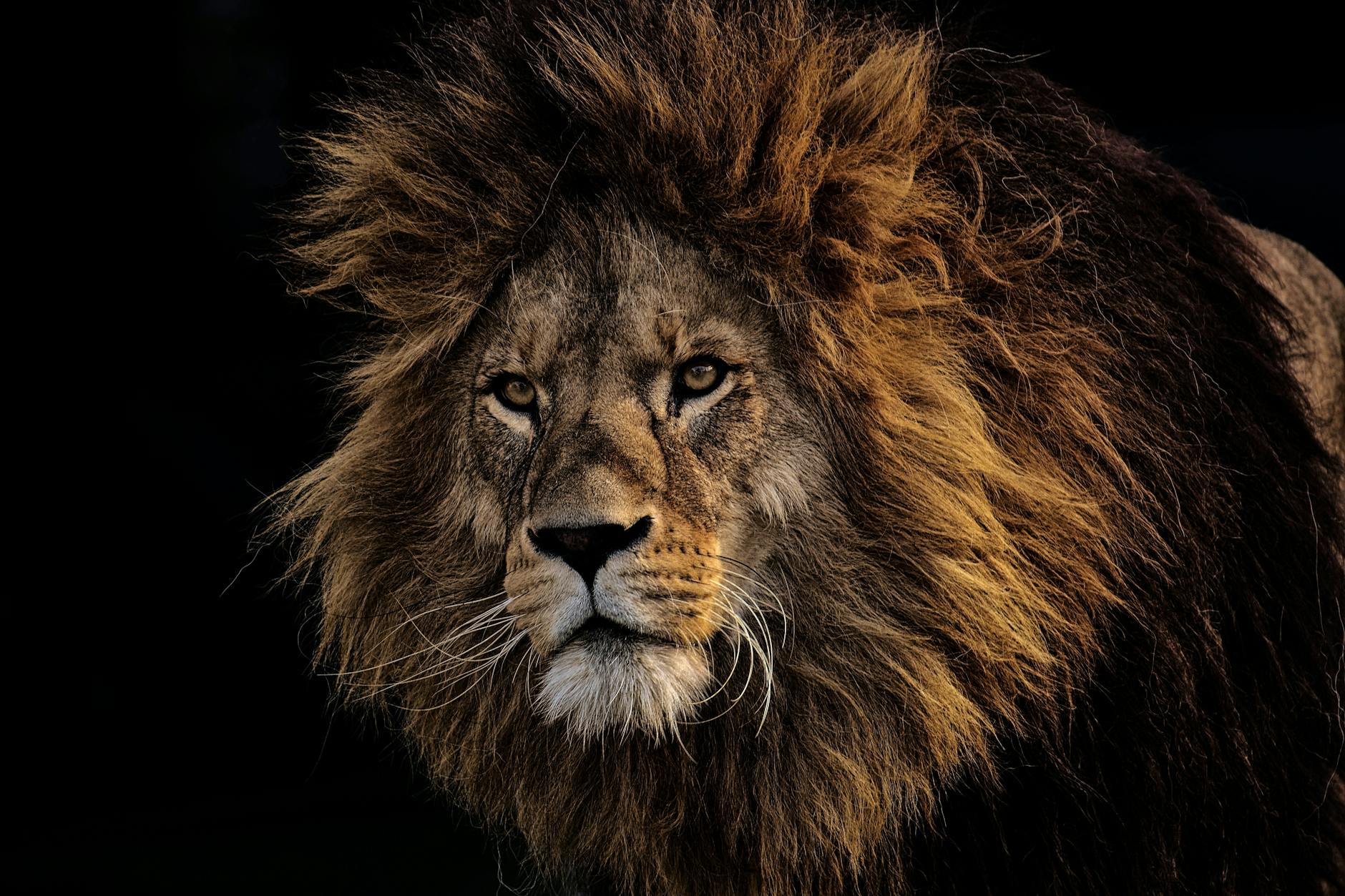
A shape in the grass becomes a lion. Then three. Then a whole pride, draped over the savannah like discarded coats. They haven’t moved all night. Their bellies are full. One lifts its head, blinks at your vehicle, and goes back to sleep. This is the first lesson of a Masai Mara safari game drive: wildlife doesn’t perform. You don’t control the script. You are a guest in a working ecosystem.
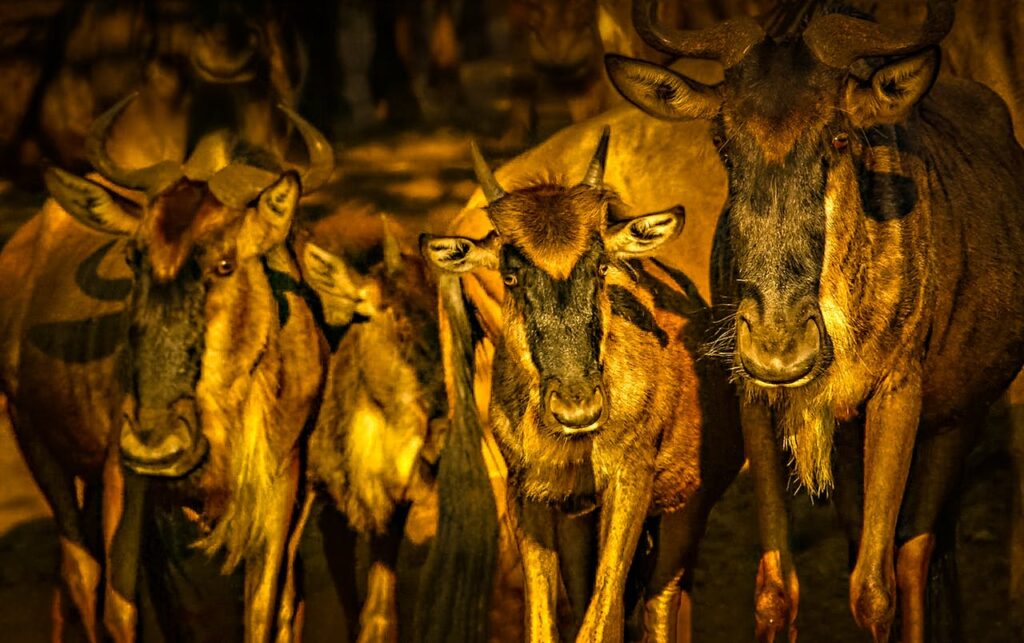
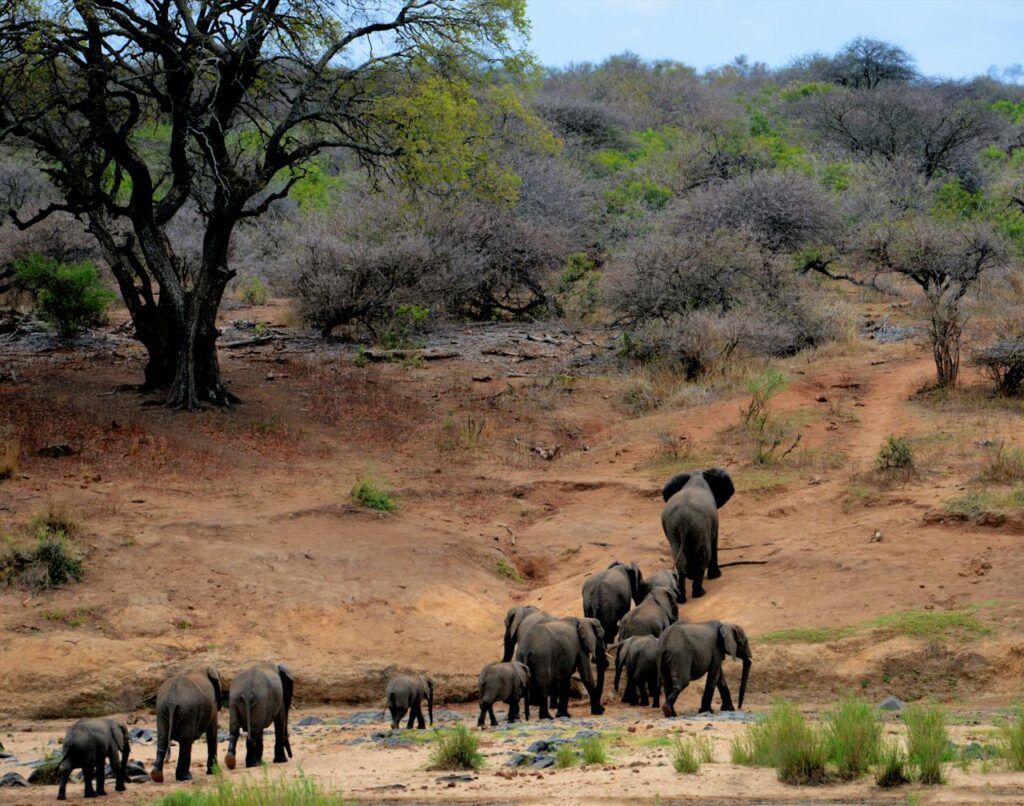
As the light strengthens, the plains come alive. You pass herds of wildebeest and zebra moving like smoke across the grass. Giraffes stand like watchtowers, chewing slowly, unbothered by your presence. Elephants appear in the distance—first as grey boulders, then as a family, then as individuals with ears, tusks, and dust on their backs.
The driving itself is part of the experience. The vehicle rocks and sways over rutted tracks. Dust hangs in the air. Sometimes you drive for twenty minutes without seeing much. Sometimes you turn a corner and find a cheetah on a termite mound, scanning for breakfast. This is the honest rhythm of a Masai Mara game drive: long, quiet stretches punctuated by moments that make everyone fall silent.
By mid-morning, the Mara feels bigger. The sky is higher. The heat builds. You stop under an acacia tree for coffee or at a designated picnic spot. You hear birds you can’t name. You notice how the grass changes near rivers, how the land dips and rises in ways photos never show.
If it’s migration season, the scale multiplies again. You might drive toward the Mara River, where the banks are carved with hippo paths and the water looks deceptively calm. You wait. And wait. And then—maybe—wildebeest begin to gather. The tension is real. Sometimes nothing happens for hours. Sometimes the crossing explodes into motion: dust, hooves, splashes, crocodiles, chaos. It’s loud, messy, and over far too quickly. And that’s the truth most people don’t tell you: the Great Migration crossings are spectacular—but unpredictable, brief, and never guaranteed.
In the afternoon, the light softens. The savannah turns gold again. Predators wake up. You might find a leopard draped over a tree branch, tail hanging like a question mark. Or a lioness stalking through grass so tall you only see the tips of her ears. Or cheetahs teaching cubs how to run, failing, trying again.
By this point, you’re dusty, a little tired, and completely absorbed. You’ve stopped checking your phone. You’ve stopped thinking about time. The Masai Mara does that to you. It stretches your sense of scale and shrinks your sense of urgency.
As sunset comes, the sky burns orange and pink behind silhouettes of acacia trees. You head back to camp, passing zebras that look like shadows with stripes, elephants that melt into the dusk, and birds settling into roosts you’ll never see.
And this is the part no brochure tells you: most of a Masai Mara game drive is not drama. It’s space. Light. Waiting. Watching. And then—suddenly—it’s something unforgettable.
You don’t come away thinking, “I saw everything.” You come away thinking, “I saw how big and alive this place is.”
That’s what a Masai Mara safari game drive really is.
Common Questions I Find
Is the Masai Mara game drive worth it?
Yes—if you want real wilderness, not a theme park. It’s not scripted, not guaranteed, and that’s exactly why it’s special.
What will I see on a Masai Mara game drive?
Common sightings include lions, elephants, giraffes, zebras, wildebeest, buffalo, and many antelope species. Leopards and cheetahs are seen often—but not on demand.
What is the landscape like in the Masai Mara?
Open savannah plains, scattered acacia trees, riverine forests along the Mara and Talek rivers, seasonal marshes, and rolling grasslands that stretch to the horizon.
How long is a typical game drive?
Morning drives usually run 6–9 a.m. or 6–10 a.m. Afternoon drives run about 3–6 p.m. Full-day drives can last 8–12 hours with a picnic stop.
Is the Great Migration guaranteed?
No. The herds are seasonal and the river crossings are unpredictable. You increase your chances with good timing and good guides—but nature decides.
The honest takeaway
A Masai Mara game drive is not about ticking animals off a list. It’s about entering one of Africa’s last great savannah ecosystems and letting it unfold around you—slowly, quietly, and sometimes spectacularly.
If you come for perfection, you’ll be frustrated.
If you come for reality, scale, and wildness—you’ll remember it for the rest of your life.