
Masai Mara safari vehicle choice is the single most important decision you’ll make for your game drives. I’ve been driving and guiding in the Masai Mara National Reserve and its surrounding conservancies for over a decade—crossing the Talek River when it was a trickle and when it was a brown wall of floodwater, recovering vehicles from black-cotton mud, tracking lions at first light, and waiting whole days on the open plains for cheetahs to finally move.
Over thousands of kilometers on Mara roads, one truth has never changed: your safari vehicle is not just transport. It is your wildlife viewing platform, your safety shell, and your comfort base for long game drives in the Masai Mara ecosystem. Choose the right Land Cruiser, safari van, or open-sided jeep—and your Masai Mara safari becomes smoother, safer, and far more rewarding.
This is a complete, practical guide to Masai Mara safari vehicles—what works, what doesn’t, and how to choose the right one for your trip, your budget, and your safari style.
Why the Right Safari Vehicle Matters in the Masai Mara
The Masai Mara is not a theme park. Roads are seasonal tracks. The terrain changes weekly. One day it’s dusty and fast; the next it’s slippery, rutted, and slow. Your vehicle must handle:
- Black cotton soil that turns into glue in the rains
- River crossings and flooded depressions
- Long game drives (6–12 hours is normal)
- Off-road approaches in conservancies
- Stop-and-go driving around sightings
- Standing, turning, and shooting photos from the roof or sides
A good safari vehicle does three things:
- Gets you there reliably
- Keeps you comfortable and safe
- Gives you the best possible wildlife viewing and photography
The Main Types of Masai Mara Safari Vehicles
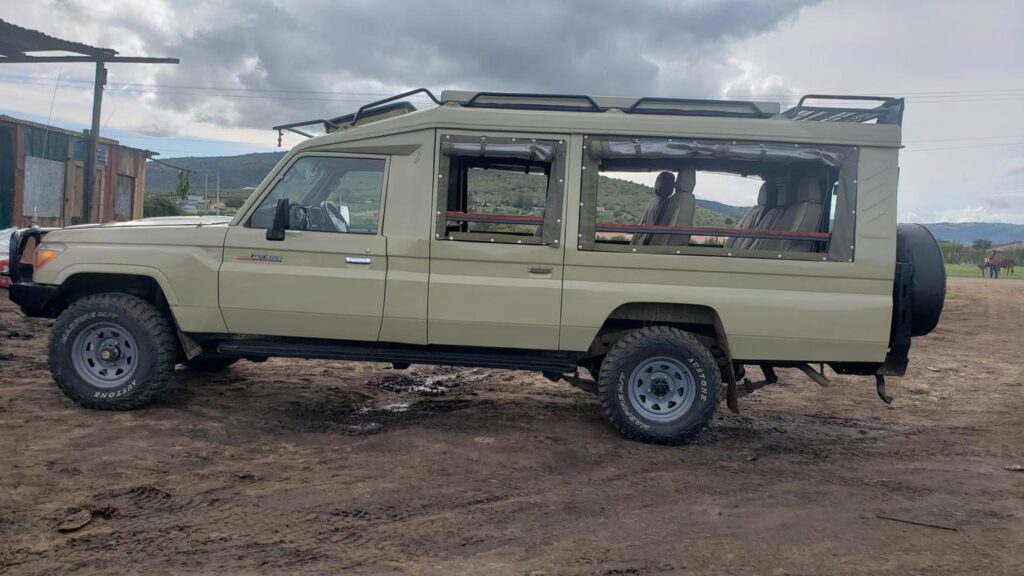
1) Toyota Land Cruiser Safari (Closed-Body, Pop-Up Roof)
This is the gold standard in the Masai Mara.
Why guides love it:
- True 4×4 with high ground clearance
- Handles mud, ruts, riverbanks, and rough tracks
- Pop-up roof for 360° viewing and photography
- Strong suspension, reliable engine, easy to fix in the bush
- Comfortable for long full-day game drives
Typical features:
- Seats 5–7 passengers comfortably
- Cushioned seats, good legroom
- Large windows + pop-up roof
- Often fitted with UHF radio for sighting updates
- Sometimes has charging ports and cooler box
Best for:
- First-time visitors
- Families and small groups
- Year-round safaris (especially rainy season)
- Long full-day game drives
- Mixed terrain and unpredictable
Limitations:
- More expensive than vans
- Slightly less “open” feeling than open-sided vehicles
My honest guide’s verdict:
If you can afford only one upgrade on your safari, make it this vehicle. For 90% of visitors, a closed-body Land Cruiser with a pop-up roof delivers the best balance of reliability, comfort, safety, and viewing quality in the Masai Mara.
2) Toyota Land Cruiser (Open-Sided)
These are common in private conservancies and fly-in safari operations.
Why people choose them:
- Unobstructed side views (no glass, no reflections)
- Excellent for photography and filming
- More “immersive” bush experience
- Still proper 4×4 with strong off-road capability
Typical features:
- Seats 4–6 guests (more space per person)
- Open sides with canvas or roll-up covers
- Raised seats for better sightlines
- Usually used inside conservancies, not for long highway transfers
Best for:
- Serious photographers
- Repeat visitors
- Dry-season safaris
- Conservancy stays (Mara North, Naboisho, Olare Motorogi, Ol Kinyei, etc.)
- Guests who prioritize viewing over weather protection
Limitations:
- Exposed to dust, wind, cold mornings, and rain
- Not ideal for long road transfers from Nairobi
- Less comfortable in bad weather
Guide’s reality check:
Open-sided vehicles are fantastic when conditions are right. But if it rains, gets cold, or turns dusty, you’ll understand why many guests prefer closed vehicles with pop-up roofs.
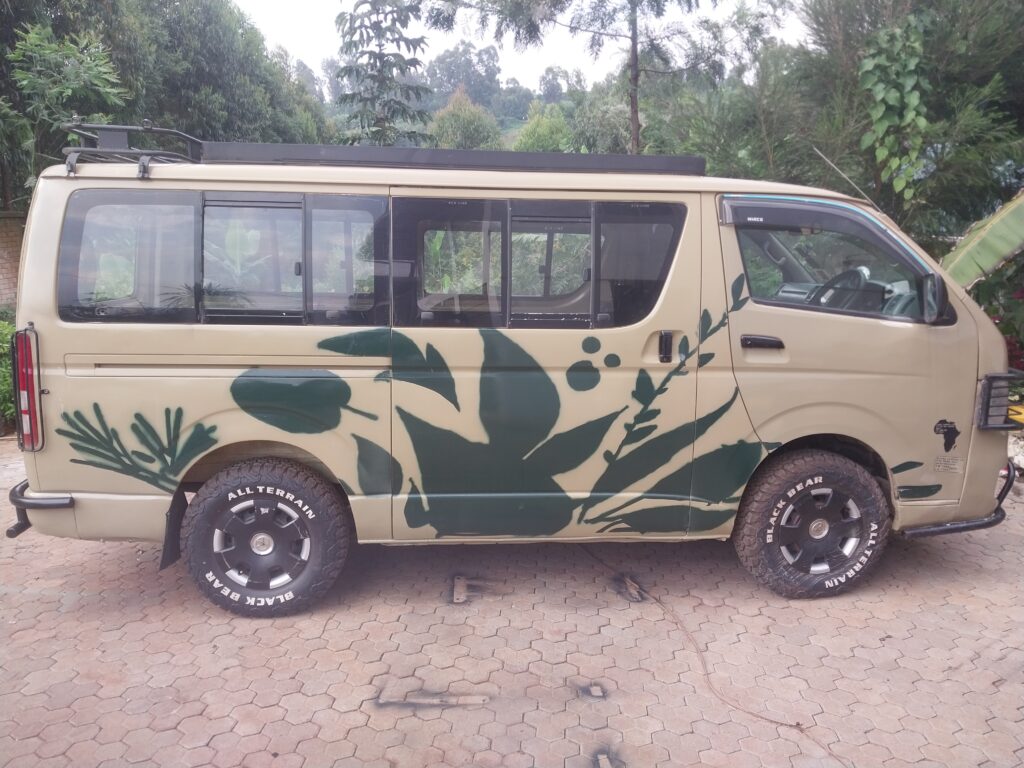
3) Safari Minivan (Toyota Hiace / Tour Van)
This is the budget option you’ll see a lot on Kenya’s main safari circuit.
Why people use them:
- Cheaper to hire
- Fine on highways and good dirt roads
- Usually have a pop-up roof
- Can seat 6–8 passengers
Typical features:
- 2WD or light-duty 4WD
- Lower ground clearance
- Pop-up roof for viewing
- Simpler suspension and build
Best for:
- Budget travelers
- Short safaris
- Dry-season trips
- Well-maintained routes
- Transfers + light game drives
Limitations (important):
- Struggles badly in mud
- Lower clearance = easier to get stuck
- Rougher ride over long days
- Less durable for serious off-road work
- More punctures, more recovery delays
Guide’s honest advice:
A van can work in dry season and good conditions, but in the rains it becomes a gamble. I’ve spent many afternoons towing vans out of black cotton soil while Land Cruisers drive past.
4) Land Rover Defender (Open-Sided or Closed)
Less common than Land Cruisers, but still used by some camps.
Why people like them:
- Excellent off-road ability
- Tough, rugged build
- Often configured as open-sided safari vehicles
- Great for adventurous, photography-focused trips
Best for:
- Photographers
- Smaller groups
- Conservancy safaris
- Guests who like a more “raw” safari feel
Limitations:
- Rougher ride than Land Cruisers
- Can be noisier and less comfortable
- Fewer spare parts in remote areas compared to Toyota
Guide’s view:
Very capable vehicles, but for comfort and reliability in Kenya, Toyota Land Cruisers still win.
5) Overlander Trucks
These are mostly used for long multi-country or budget group tours.
Features:
- Carry 12–30 people
- Raised viewing platforms
- Often include camping gear, storage, and kitchen setups
Best for:
- Large group tours
- Long overland expeditions
- Budget adventure travel
Limitations:
- Too big for many Mara tracks
- Hard to maneuver around sightings
- Less flexible for intimate wildlife viewing
- Slower and more restricted
Guide’s verdict:
Great for crossing Africa. Not ideal for quality Masai Mara game viewing.
| Vehicle Type | Capacity | Visibility | Comfort | Off-Road Capability | Price Range (per day) | Best For | Expert Recommendation |
|---|---|---|---|---|---|---|---|
| Toyota Land Cruiser (Closed-Body) | 5-7 Passengers | Good (Large windows + Pop-up roof) | High (Cushioned seats, ample space) | Excellent (4WD, high clearance) | $150 – $300 | Families, small groups, safaris in any weather | Best overall option for comfort, visibility, and off-road capability. Suitable for year-round safaris, especially during rainy seasons. Ideal for families or groups who need privacy. |
| Toyota Land Cruiser (Open-Sided) | 5-7 Passengers | Excellent (No side windows) | Medium (Exposed to elements) | Excellent (4WD, high clearance) | $200 – $350 | Photographers, wildlife enthusiasts, dry season safaris | Best for wildlife photography and visibility. Offers a close-to-nature experience but is less comfortable in dusty or rainy conditions. Recommended for photographers or dry-season safaris. |
| Safari Minivan | 6-8 Passengers | Good (Pop-up roof) | Medium (Limited legroom) | Fair (2WD or low-clearance 4WD) | $100 – $180 | Budget-conscious travelers, short safaris | Budget-friendly option for short, dry season safaris on well-maintained roads. Not recommended for rough terrain or long drives. |
| Land Rover Defender (Open-Sided) | 4-6 Passengers | Excellent (No side windows) | Medium (Rougher ride, exposed) | Excellent (4WD, strong suspension) | $220 – $350 | Adventurous safari-goers, photographers | Best for adventurous safari-goers looking for ruggedness and excellent off-road capability. Ideal for those wanting a raw, immersive experience, but less comfortable than Land Cruisers. |
| Toyota Land Cruiser (Pop-Up Roof) | 5-7 Passengers | Very Good (Pop-up roof) | High (Cushioned, spacious) | Excellent (4WD, high clearance) | $150 – $300 | General game viewing, mixed terrain | Versatile option for most safaris, especially for mixed terrain and long drives. Offers good comfort and visibility, making it a great choice for most safari-goers. |
| Land Cruiser Pick-up with Open Back | 4-5 Passengers | Good (Open back, rollable canvas sides) | Medium (Open to elements) | Excellent (4WD, durable) | $200 – $350 | Small private groups, photography safaris | Recommended for small groups or photography, especially during dry seasons. Best for those seeking an open, intimate wildlife experience, but not suited for bad weather. |
Safari Vehicle Modifications That Actually Matter
A proper Masai Mara safari vehicle is not a normal car. It should have:
✅ Pop-Up Roof
- Essential for standing and scanning
- Better photography angles
- Safer viewing (you stay inside the vehicle)
- 360° visibility
✅ Strong Suspension & All-Terrain Tires
- The Mara is not kind to weak suspension
- Good suspension = less fatigue, fewer breakdowns
- All-terrain tires = fewer punctures and better grip in mud
✅ UHF Radio
- Allows guides to share real-time wildlife sightings
- Big advantage for spotting leopards, cheetahs, and kills
- Standard in most serious safari operations
✅ Charging Ports & Cooler Box (Nice to Have)
- Useful for photographers
- Long drives drain batteries fast
- Not essential, but very helpful
Choosing the Right Vehicle by Safari Style
For Families & First-Time Visitors
Best choice: Closed-body Toyota Land Cruiser (pop-up roof)
Why: Comfort, safety, weather protection, reliability, excellent viewing
For Photographers & Wildlife Enthusiasts
Best choice: Open-sided Land Cruiser or Defender
Why: Clean sightlines, no glass, better angles, more space per person
For Budget Travelers
Best choice: Safari minivan (dry season only)
Why: Cheaper, acceptable on good roads, still has pop-up roof
Warning: Risky in rain and rough conditions
For Adventurous or Conservancy Safaris
Best choice: Open-sided Land Cruiser or Defender
Why: Immersive, flexible, great for off-road and night drives (in conservancies)
Seasonal Reality: Dry vs Rainy Season
| Season | What You Need | Best Vehicle |
|---|---|---|
| June–October (Dry) | Dust, long days, good tracks | Land Cruiser or Van |
| April–May & November (Rains) | Mud, flooded tracks, slippery soil | 4×4 Land Cruiser only |
Guide’s rule: If it might rain, don’t gamble—take a proper 4×4 Land Cruiser.
Typical Safari Vehicle Rental Costs (Guide Range)
(Prices vary by season and operator, but this is a realistic guide)
- Land Cruiser 4×4
- Half day: ~$150
- Full day (8 hrs): ~$200
- Extended day (12 hrs): ~$250
- Safari Van
- Half day: ~$80
- Full day: ~$120
- Extended day: ~$150
Always check:
- Is fuel included?
- Is the driver-guide included?
- Are park fees included or separate?
- Is it private or shared?
Private vs Shared Safari Vehicles
Private Vehicle
- You control the pace
- You choose how long to stay at sightings
- Better for photography, families, birders
- More expensive, but huge upgrade in experience
Shared Vehicle
- Cheaper
- Fixed schedule
- Compromises on time, angles, and priorities
- Fine for budget trips, but less flexible
Guide’s advice: If photography, kids, or comfort matter—go private.
Safety, Comfort & Practical Details
- Seat belts: Usually available in Land Cruisers
- First aid kits: Standard in good operators’ vehicles
- Getting out of the vehicle: Only at designated picnic or rest areas
- Air conditioning: Rarely used (roof and windows provide airflow)
- Child seats: Sometimes available on request
- Wi-Fi: Not reliable in the Mara—don’t plan around it
FAQs (Quick Guide Answers)
- Best vehicle for Masai Mara? Toyota Land Cruiser 4×4 with pop-up roof
- Is 4WD necessary? Yes, especially in rainy season
- Are open-sided vehicles safe? Yes, when used properly with guides
- Do vehicles come with driver-guide? Yes, always
- Can I hire a private vehicle? Yes—and it’s worth it
- Are night drives allowed? Only in private conservancies, not in the main reserve
Why MasaiMara.ke Recommends Land Cruisers
After more than 10 years on these roads, in every season, in every condition, my professional view is simple:
If you want reliability, comfort, safety, and the best wildlife viewing in the Masai Mara, choose a proper 4×4 Toyota Land Cruiser safari vehicle.
They handle mud when vans fail.
They stay comfortable when tracks get rough.
They give you the best viewing angles with pop-up roofs.
And they keep your safari focused on wildlife—not breakdowns.
Final Guide’s Advice
- Match the vehicle to the season
- Match the vehicle to your goals (photography, family, budget, comfort)
- Don’t underestimate road conditions
- Don’t over-prioritize saving a little money at the cost of a bad experience
- A great guide in the right vehicle makes all the difference
In the Masai Mara, the animals are wild, the distances are real, and the terrain is honest. Choose your safari vehicle wisely—and your safari will reward you for it.
Frequently Asked Questions About Masai Mara Safari Vehicles
Do safari vehicles have guaranteed window seats?
Not always. In shared vehicles, seats are allocated by the operator or guide. If a window or roof spot matters to you, book a private vehicle or confirm seating in advance.
Can I switch vehicles during my safari?
Usually no. Once a vehicle and driver-guide are assigned, you keep the same unit for logistics, licensing, and park compliance reasons—unless there’s a mechanical issue.
Are safari vehicles inspected or regulated?
Yes. Vehicles operating in the Masai Mara must meet park and county regulations, including safety standards, insurance, and proper safari modifications such as pop-up roofs.
Do safari vehicles carry spare tires and recovery gear?
Good operators always do. A proper safari vehicle should carry at least one spare tire, a jack, basic tools, and recovery equipment, especially in rainy seasons.
What happens if the safari vehicle breaks down?
The driver will call for backup or assistance from the operator. Reputable companies have support vehicles in the area, but delays can happen in remote parts of the Mara.
Are safari vehicles noisy and do they scare animals?
Well-maintained vehicles are relatively quiet. Animals in the Mara are habituated to vehicles and do not see them as a threat when driven responsibly.
Can safari vehicles drive off-road in the Masai Mara?
Inside the main reserve, off-roading is restricted to protect habitats. In some private conservancies, controlled off-road driving is allowed under strict rules.
Do safari vehicles have seat rotation for fairness?
Some shared tours rotate seats daily, others don’t. If this matters to you, confirm the seat rotation policy before booking.
Can I stand on the seat instead of using the pop-up roof?
No. Standing on seats is unsafe and not allowed. Use the pop-up roof for elevated viewing—this is exactly why safari vehicles are modified.
Are safari vehicles suitable for elderly travelers?
Yes, especially closed-body Land Cruisers with easy entry steps and cushioned seats. Let your operator know in advance if mobility is a concern.
Can safari vehicles accommodate wheelchairs?
Most standard safari vehicles are not wheelchair-accessible. Some operators can arrange specially adapted vehicles with advance notice.
Do safari vehicles have child safety features?
Most have seat belts, but child seats are not standard. If you need one, request it in advance—availability varies by operator.
Is it safe to take babies or toddlers in safari vehicles?
It can be, but long, bumpy drives and dust can be uncomfortable. Many camps recommend shorter drives or private vehicles for families with very young children.
Can I bring my own drinks and snacks into the vehicle?
Yes. Most operators allow this, and many vehicles have cooler boxes. Just keep food sealed to avoid attracting monkeys at stops.
Are safari vehicles insured?
Yes. Licensed operators carry commercial vehicle insurance and passenger liability cover. Always book with a registered, reputable company.
Do safari vehicles have trackers or GPS?
Some modern vehicles do, especially those used by lodges and conservancies. GPS helps with navigation, safety, and recovery, but it’s not universal.
Can safari vehicles access all areas of the Masai Mara?
No single vehicle can go everywhere in all seasons. Road conditions, floods, and park rules determine which tracks are accessible on any given day.
Are safari vehicles shared between different camps?
Sometimes, especially with independent operators. Lodge-based safaris usually use their own dedicated vehicles for in-house guests.
Do safari vehicles differ between fly-in and road safaris?
Yes. Fly-in safaris often use open-sided vehicles based inside conservancies, while road safaris usually use closed-body Land Cruisers for long-distance travel.
Can I request a specific vehicle model?
You can request, but it’s subject to availability. If a specific setup matters (open-sided, extra space, photography layout), book early and confirm in writing.
Are safari vehicles cleaned daily?
Good operators clean vehicles daily or between drives, especially the interior and windows, to maintain visibility and hygiene.
Do safari vehicles have limits on luggage?
Yes. Especially for fly-in safaris. Soft bags are usually required, and space in the vehicle is limited. Always check luggage limits with your operator.
Is tipping the driver-guide expected?
Yes. Tipping is customary in Kenya. While not mandatory, it’s a significant part of a guide’s income and is appreciated for good service.
Can safari vehicles be used for night drives?
Only in private conservancies where night drives are permitted. Night drives are not allowed in the main Masai Mara National Reserve.
Do safari vehicles have first aid kits?
Reputable operators always carry basic first aid kits. For serious medical issues, evacuation protocols apply.
What’s the single biggest mistake guests make about safari vehicles?
Choosing the cheapest option without considering terrain, season, and comfort—then spending the safari stuck, uncomfortable, or missing sightings.
Final Tip
If you’re unsure, choose a 4×4 Land Cruiser with a pop-up roof and a good guide. It’s the safest, most versatile, and most reliable option for almost every Masai Mara safari scenario.