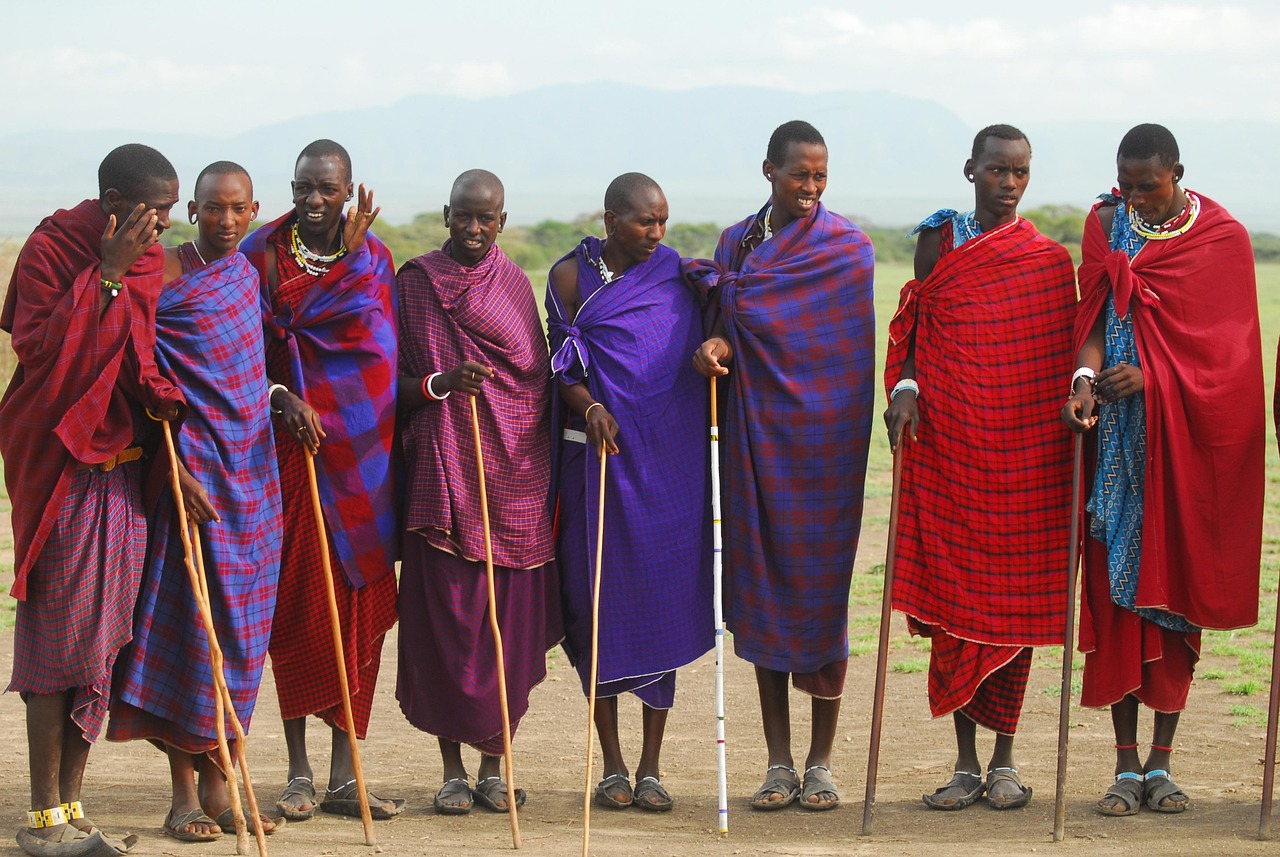
A comprehensive expert guide for MasaiMara.ke, written from an on-the-ground Maasailand perspective (Mara-centered, but regionally informed).
Maasailand is not “empty wilderness” surrounding Masai Mara Reserve in Narok or in Kajiado County. It is a lived rangeland shaped by pastoral land-use systems, colonial and post-colonial land policy, electoral politics, conservation law, and a tourism economy that depends on both wildlife and community consent. To understand conservation in the Maasai Mara (and across Maasailand more broadly), you have to follow one central thread: land tenure and the rules of access—who owns land, who decides how it’s used, and who bears the costs of coexistence with wildlife.
This guide maps the full landscape of entities and subtopics you need to cover for genuine topical authority: history, land tenure, governance, conservancy economics, equity, human–wildlife conflict, climate risk, and policy.
1) What “Maasailand” means in conservation terms
Maasailand typically refers to the Maasai-inhabited rangelands of southern Kenya and northern Tanzania, including the Greater Maasai Mara ecosystem (Narok/Trans Mara/Loita), and further afield ecosystems like Amboseli and surrounding group ranch landscapes. In conservation ecology, these are classic wildlife dispersal areas: much of the wildlife value sits outside formally protected areas, in community lands that function as corridors, calving grounds, and dry-season refuges.
That’s why the Mara’s conservation story is fundamentally a story of community land governance and the political economy of open rangelands.
2) The historical baseline: dispossession, boundary-making, and “wildlife space”
2.1 Colonial agreements and forced relocations
Modern land politics in Maasailand cannot be separated from the early 20th-century restructuring of Maasai territory via the 1904 and 1911 Anglo-Maasai agreements, which facilitated major relocations and large-scale loss of Maasai grazing lands. These agreements became foundational precedents for later land policy and conservation boundaries.
2.2 The “Mara” as a protected area project
As protected area models expanded, landscapes historically used through seasonal mobility were reclassified as reserve/park space—often with rules that treated livestock grazing as incompatible with wildlife management. This reframed Maasailand from “pastoral homeland” into “national wildlife asset,” creating a long-running tension between conservation governance and pastoral land-use logic.
3) Land tenure systems: the engine room of Maasailand politics
3.1 Group ranches: communal title with internal politics
In much of Kenyan Maasailand, communal tenure was formalized historically through group ranches—a structure meant to secure land for pastoralists while enabling development planning. In practice, group ranch politics often produced internal contestation over membership, boundaries, and benefit distribution.
3.2 Subdivision and individual titling: fragmentation with ecological consequences
Over time, many group ranches were subdivided into individual parcels. This has repeatedly been linked to:
- Rangeland fragmentation (fencing, reduced mobility)
- Lower drought resilience (less flexibility to move herds)
- Increased cultivation and settlement density
- Pressure on wildlife corridors and dispersal areas
The academic literature treats subdivision as a political-economic decision (security of ownership, capturing land value, intra-community inequality) with major ecological side effects.
3.3 Community land reform: new legal terrain, ongoing tension
Kenya’s evolving community land framework (including implementation debates) matters because it shapes whether rangelands can be governed as commons (supporting mobility and shared access) or whether they drift toward further individualization and enclosure—two very different futures for pastoralism and wildlife.
4) Governance and power: who makes decisions about land and wildlife?
Conservation outcomes in Maasailand depend on overlapping governance layers:
- County government (in the Mara, Narok/Trans Mara governance contexts)
- National wildlife policy and law (e.g., Kenya’s wildlife governance architecture)
- Conservancy institutions (boards, constitutions, management plans)
- Tourism investors/operators (contracting, lodge economics, employment)
- Community politics (landowner decision-making, elders, youth, women’s voices)
This is why “community-based conservation” is never purely technical. It is political: it distributes money, authority, access rights, and risk.
5) The Mara Conservancy Model: how it works (and why it matters)
5.1 The core mechanism: land leases for conservation
The distinctive feature of the Mara conservancy model is the direct lease payment to landowners who sign agreements setting aside land for wildlife and tourism.
5.2 The trade-off: income in exchange for restrictions and plans
In exchange for lease payments, members typically agree to management plans that can restrict:
- where and when livestock can graze
- settlement and cultivation patterns
- resource extraction and development
This is the heart of the “Mara bargain”: predictable cash income and rangeland protection, traded against aspects of pastoral flexibility.
5.3 Scale and revenue flows
Recent analyses and reports describe conservancy payments as substantial livelihood inputs for participating households and note the large number of landowners receiving lease-linked income across the Mara ecosystem (exact totals vary by report and year).
6) Equity and the “politics of benefits”: who wins, who loses, and why
A serious Maasailand conservation guide must address distribution, not just totals.
6.1 Uneven participation and unequal outcomes
Research on conservancy participation shows that:
- not all landowners participate equally
- household wealth and land size can shape who benefits most
- the same intervention can create winners and losers within a community
This is an equity problem, not a PR problem—and it affects legitimacy.
6.2 Rent, governance, and accountability
Because lease income is predictable, it becomes politically powerful. That raises governance questions:
- How transparent are payment systems?
- Who sits on boards and who is represented?
- How are revenues allocated across bursaries, community projects, ranger programs, or compensation schemes?
- How are disputes resolved when land use restrictions clash with drought realities?
MMWCA and allied institutions emphasize benefit pathways (lease payments, bursaries, access arrangements, and other programs), but implementation and perceptions vary by conservancy.
7) Pastoralism and conservation: the real compatibility question
7.1 Grazing as an ecological process vs grazing as a policy problem
From a rangeland ecology perspective, well-managed grazing can be compatible with wildlife systems; from a governance perspective, grazing is often treated as a threat to tourism value. Conservancies therefore attempt to regulate grazing through zoning and seasonal plans—an approach that can work in normal rainfall years but becomes contentious during drought.
7.2 The drought problem: when rules collide with survival
When drought hits, pastoral logic prioritizes access to grass and water, while conservation logic prioritizes habitat integrity and tourism operations. This is a predictable conflict—one that must be governed openly rather than denied.
8) Human–wildlife conflict in Maasailand: costs of coexistence
Human–wildlife conflict (HWC) is not a side issue—it is a central driver of attitudes toward conservation. Key forms include:
- livestock predation (lions, hyenas, leopards)
- crop raiding (especially where cultivation expands)
- injury risk to people
- disease interfaces between livestock, wildlife, and people
Some conservancies and programs describe “consolation” or mitigation schemes and other benefit structures, but these vary widely and rarely cover the full cost borne by households on the front line.
Strategic linkage for MasaiMara.ke (your pillar logic):
drought/forage scarcity → wildlife range shifts toward farms/bomas → crop-raiding & depredation increase → retaliation risk rises.
This is the bridge between your climate and HWC content pillars.
9) Wildlife corridors, connectivity, and why land subdivision matters
One of the most consistent findings across Maasailand ecosystems is that wildlife depends on lands outside parks/reserves. Group ranch/community lands often function as:
- dispersal zones
- corridors between protected areas
- seasonal grazing refuges for migratory species
When rangelands subdivide and fence, corridor function can collapse. This is why land tenure is not merely “community politics”—it is landscape ecology.
10) Tourism as a political economy: conservation depends on markets
The conservancy model is financed largely through tourism revenue, which introduces real vulnerabilities:
- shocks (pandemics, insecurity, market downturns) can destabilize lease payments
- tourism can increase incentives to restrict grazing or settlement to protect “product value”
- lodge siting and access roads create local development politics
This is why conservancies are not only conservation units—they are tourism-finance institutions embedded in volatile global markets.
11) Institutions and key entities you should name explicitly on MasaiMara.ke
For credibility and entity coverage, reference (and internally link where relevant):
- Maasai Mara Wildlife Conservancies Association (MMWCA) and its “Mara Model” framing, benefit pathways, and member conservancies
- Conservancy management plans and land lease agreements as the operational backbone
- Community land governance debates and subdivision dynamics
(If you maintain “Institution pages” on MasaiMara.ke, these entities deserve their own short profiles.)
12) Future directions: what “success” looks like in Maasailand conservation
A robust, credible Maasailand conservation narrative doesn’t claim perfect harmony. It defines success as governance capacity under stress:
- Resilient rangelands: keeping landscapes open enough for mobility and corridors
- Legitimate institutions: transparent payments, credible representation, enforceable rules
- Drought governance: negotiated contingency plans that don’t criminalize survival grazing
- Equity and inclusion: women, youth, and land-poor households represented in benefit pathways
- HWC risk reduction: practical mitigation plus fair, timely consolation/compensation where feasible
- Economic diversification: so conservation doesn’t rise and fall only on tourism cycles