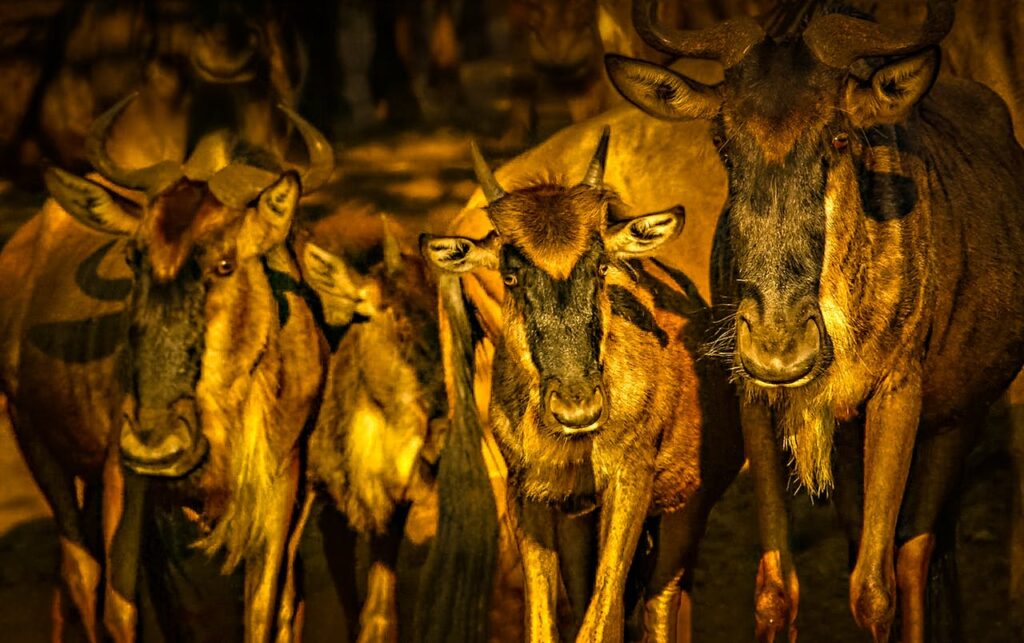
Among the most-rewarding safari experiences when visiting Masai Mara is taking a hot air balloon safari ride.
A hot air balloon safari over the Masai Mara is one of the most distinctive wildlife experiences in Africa: a dawn ascent, a silent glide over open plains and riverine corridors, and a landing celebration and bush breakfast in the middle of a functioning predator–prey ecosystem.
It is simultaneously a safari activity, an aviation operation, and a premium hospitality product—so the “best” balloon safari is the one you plan with the same rigor you would apply to any high-stakes, early-morning, weather-dependent excursion.
This post provides details on key topics including what ballooning is (and is not), when it runs, how safe it is, what the itinerary looks like, what you will see, what it costs (and why), what’s typically included vs. extra fees, how operators differ, how age/height rules work, what to wear, medical considerations, cancellation and refund realities, and how to book intelligently.
1) What a Masai Mara Balloon Safari Actually Is
A balloon safari is a sunrise flight (typically 45–60 minutes) conducted in calm morning conditions, launched from established sites in and around the greater Mara ecosystem. Unlike a game drive, ballooning delivers:
- Landscape-scale perspective: drainage lines, marsh systems, river bends, game trails, burn scars, grazing mosaics.
- Low-noise wildlife viewing: the balloon’s movement is largely silent between burner bursts, and animals are often comparatively unperturbed.
- Aviation-led routing: your path is shaped by wind layers; the pilot controls altitude to “ride” different wind directions, but cannot steer like an aircraft.
Ballooning is therefore not a guaranteed “fly over the river crossing” activity. It is a best-effort flight within safe wind corridors, typically optimized for broad scenery and wildlife density rather than a single target event.
2) Why Balloon Safaris Run Only in the Morning
Operators fly at dawn for three practical reasons:
- Safer wind profile: early mornings tend to have lighter, more predictable winds.
- Better visibility and photography: sunrise light reduces harsh shadows and produces the “golden Mara” effect.
- Peak wildlife activity: many species are more active in the cooler hours, improving the probability of dynamic sightings (predators moving, herds shifting, birds hunting).
This is why there are no standard afternoon balloon safaris in the Mara; risk rises as the day warms and convection/winds become less stable.
3) The Full Itinerary: From Wake-Up to Return to Camp
A typical Masai Mara balloon safari is best understood as a 4–5 hour block, even though the flight itself is about an hour.
Typical schedule (varies by lodge distance)
- 04:30–05:00 – Pick-up from camp/lodge (timing depends on launch location)
- 05:30–06:00 – Arrival at launch site; balloon inflation begins
- Briefing – Safety instructions + landing posture + basket positioning
- 06:00–07:00 – Flight (commonly 45–60 minutes; occasionally up to ~75 minutes if conditions allow)
- 07:00–07:30 – Landing + champagne toast (traditional ballooning ritual)
- 07:30–09:00 – Bush breakfast set-up and full breakfast service
- 09:00–10:00 – Transfer back to camp (sometimes as a short game drive depending on operator and location)
Two planning implications:
- You will miss the earliest part of a normal morning game drive if you balloon the same day (but the balloon replaces that time with aerial viewing).
- If you are doing a full-day game drive, ballooning usually works best when scheduled as a dedicated morning activity and then you transition into a longer drive after breakfast (logistics vary).
4) What You See From the Air (and How to Set Expectations)
A high-quality balloon flight typically gives you a layered “Mara panorama”:
- Open plains with grazing herds (wildebeest, zebra, topi, buffalo)
- Riverine corridors where vegetation concentrates wildlife and birdlife
- Marsh systems and drainage lines (often strong for elephants, buffalo, and general game)
- Predator context: you may spot lions or hyenas as moving dots or clustered activity—sometimes around kills—though fine behavioral detail is still best on the ground
Altitude: what it means in practice
Flights commonly vary altitude throughout the hour:
- Low-level glides (often perceived as ~30–100 feet in places) for intimacy and “being in the landscape”
- Higher climbs (hundreds of feet; occasionally higher) for geography, herds, and horizon
The key point: the pilot uses altitude as the main control variable, trading intimacy for panorama depending on wind layers and safety.
5) Great Migration Ballooning: When It’s Truly Special (and Why)
Ballooning during the Great Migration can be exceptional because it reveals scale: how herds string across the plains, where densities peak, and how movement shapes the landscape.
That said, a crucial expert framing is:
- Migration season increases “spectacle probability,” not certainty.
- River crossings are episodic and localized; you can be in the Mara during peak months and still not see a crossing that morning.
- From the balloon, the best viewing is often oblique, not directly overhead—side angles can provide better depth perception and less “flattened” perspective.
If your primary goal is a river crossing, ballooning should be treated as a premium enhancement, not your only plan. A well-timed ground drive remains the most reliable crossing strategy.
6) Safety: The Question Everyone Asks, Answered Properly
The bottom line
Balloon safaris are considered very safe when run by licensed operators with disciplined weather rules, trained pilots, and rigorous maintenance. The risk profile is managed primarily through go/no-go decisions and standard operating procedures.
What “safe operation” looks like in the Mara
A reputable balloon operation typically includes:
- Licensed, experienced pilots (often with extensive flight hours in local conditions)
- Daily pre-flight checks (envelope/fabric integrity, burners, fuel systems, basket structure)
- Weather monitoring and conservative cancellation thresholds
- Formal passenger briefing (boarding, in-basket behavior, landing brace position)
- Chase crew support following the balloon by vehicle, maintaining radio contact
- Emergency preparedness (first aid, communications, controlled landing options)
Landings: what to expect (and why it matters)
Landings vary with wind:
- Soft upright landing is common in calm conditions.
- Bumpier landing can happen if winds are stronger; sometimes the basket may tip on touchdown. This is not automatically a sign of danger—what matters is that passengers are braced properly and follow pilot commands.
Passenger safety rules that actually matter
- Follow crew instructions during boarding and landing (these are the risk moments)
- Do not lean out; secure cameras and straps
- Hold internal handles on descent and landing
- Do not exit until the pilot gives the all-clear
7) Who Should Not Fly: Medical and Practical Exclusions
Most operators restrict balloon participation for:
- Pregnancy (landing bumps make this a standard exclusion)
- Severe back/neck problems, recent surgeries, or conditions aggravated by sudden jolts
- Mobility limitations that prevent stepping into/out of the basket or holding braced posture
If a guest can’t safely adopt a landing brace posture, ballooning is not the right activity.
8) Age and Height Rules: The Real Logic
Balloon baskets have high sides (often around chest height for many adults), so visibility and safety depend on height. This is why many operators enforce a minimum height (commonly around 1.2 meters) and/or a minimum age.
Key points for your policy page:
- Rules vary widely: some allow younger children, others do not.
- Height is often more operationally meaningful than age because a child who cannot see over the rim also cannot position safely.
- Teen “child rates” vary by operator; some treat children as children up to mid-teens, others switch to adult pricing earlier.
Your best practice is to publish this clearly as: “Minimum height requirement + operator-specific minimum age; confirm at booking.”
9) What to Wear and Bring: Expert Packing Guidance
Ballooning starts cold and ends warm. The goal is comfort, stability, and safe footing.
Wear
- Layers (warm top for pre-dawn; lighter layer underneath)
- Closed shoes with good grip (sneakers or light boots)
- A hat/cap can help with radiant heat from burners (optional but popular)
Bring
- Camera with strap; phone tether if possible
- A light daypack is usually unnecessary; keep items minimal and secure
- Avoid dangling scarves or loose items that can snag or drop
Don’t
- Bring large tripods or bulky gear unless cleared in advance
- Over-hydrate immediately before flight—there are no bathrooms in the balloon
10) Photography: How to Get the “Signature Shot”
Balloon photography is about three things: light, stability, and composition.
- Shoot early: the first 10–20 minutes after sunrise often delivers the best color.
- Use fast shutter speed: the balloon is stable, but your hands and wind are not.
- Prioritize landscapes and herds: the aerial view excels at scale; close-up predator behavior is still a ground advantage.
- Think in layers: foreground animals, mid-ground river line, background horizon.
If you want one practical “insider” principle: side angles create depth—especially for herds and river corridors.
11) Cost: What You Pay, What It Typically Includes, and the Common Add-Ons
Typical price range
Many Masai Mara balloon safaris are priced in the $450–$600 per person band for shared flights, with private/charter experiences priced higher.
Usually included
- Pick-up from and return to many camps/lodges (distance dependent)
- 45–60 minute flight
- Champagne toast
- Full bush breakfast
- Crew support and recovery logistics
Common extras (must be disclosed clearly)
- Landing/park-related fees (some operators pass these through separately)
- Medical evacuation cover (many operators require proof of cover or offer facilitated purchase)
- Transport surcharges if your lodge is far from the launch site (some camps can be 1–2 hours away)
Best practice for your page: publish a “What’s included / What’s not included” box and advise guests to confirm at booking because inclusion rules vary by operator and accommodation location.
12) Insurance and Evacuation Cover: How to Explain It Cleanly
Many balloon operators require or strongly recommend medical evacuation coverage because ballooning is an aviation activity in a remote setting. The most helpful framing for guests is:
- This is not a “balloon-specific” risk message; it is a standard remote-safari risk management practice.
- Coverage can be arranged independently or via the operator if they have a streamlined partner process.
- Guests should confirm whether the balloon ticket price includes any insurance element (often it does not).
13) Transfers and Logistics: Why Camp Location Matters
Most operators provide transfers from “qualifying” accommodations, but the Mara is large and the ecosystem includes reserve and conservancy zones. Lodges far from the launch site may trigger:
- earlier pick-up times
- additional transport fees
- higher risk of late arrival (which can cause missed briefings)
Your operational guidance should be:
- Provide your lodge name at booking.
- Confirm the exact pick-up time window the day before.
- Ask whether your return transfer is a direct return or a short game drive.
14) Operators: What Actually Differentiates Them
When guests ask “which operator is best,” the expert answer is: it depends on what you value. Operators typically differentiate on:
- Safety culture and weather conservatism (cancellation thresholds)
- Pilot experience and communication style (briefings and in-flight interpretation)
- Basket size and passenger count (space and photo angles)
- Breakfast quality and setup (true premium differentiator)
- Launch area and typical flight corridor (scenery emphasis)
- Cancellation and refund policy (material financial difference)
What to look for (guest checklist)
- Clear licensing and safety briefing structure
- Transparent inclusions/exclusions
- Written cancellation/refund policy
- Clear child/height rules
- Confirmed transport plan from your specific camp
15) Cancellations, Weather, and Refund Policies: The Reality
Ballooning is weather-dependent; cancellations happen—even in peak season.
Your guest-facing policy section should state:
- Flights may be delayed, shortened, or cancelled for safety.
- Operators typically offer a reschedule if seats exist; otherwise a refund or credit depends on policy.
- Some operators enforce strict “non-refundable” terms; others have sliding schedules with increasing charges closer to departure.
From a planning perspective, the most practical advice is:
- Schedule ballooning early in your stay (gives room to reschedule)
- Understand deposit and balance due dates
- Ask what happens if weather cancels and you cannot reschedule
16) What Makes a “Great” Balloon Safari Day: Practical Expert Tips
- Treat it like an early flight: sleep early, prep clothing and camera the night before.
- Listen closely at briefing: boarding and landing are the only moments where guests materially influence safety.
- Slow down your photography: take photos, then put the camera down and watch.
- Be flexible: the pilot is optimizing for safe wind; your route is a product of nature.
- Use ballooning to complement game drives: balloon = scale and serenity; drives = behavioral detail.
17) Frequently Asked Questions
How long is the balloon ride?
Typically 45–60 minutes, with overall experience ~4–5 hours including transfers and breakfast.
Is it scary?
Most guests find it calmer than expected; the sensation is more like drifting than “flying.” The most intense moment is usually takeoff and landing.
Can I choose where we fly?
No. The pilot controls altitude, but wind direction determines the path.
Will we see the river crossing?
Not guaranteed. Migration season improves the chance of large herds, but crossings are unpredictable.
Are balloon safaris safe over wildlife?
Generally yes; wildlife often appears relatively unbothered by balloons compared to vehicles, though behavior varies by species and context.
Hot Air Balloon Safari Operators in the Masai Mara
Hot air balloon safaris in the Masai Mara are regulated through defined flying concessions granted by reserve management authorities, the Mara Triangle Management, and conservancy bodies. These concessions shape where operators can fly, what landscapes they consistently access, wildlife density, crowd levels, and ultimately the character of the flight.
Equally important are an operator’s history, fleet scale, pilot experience, and service philosophy. Longevity often correlates with deeper local wind knowledge and operational resilience, while newer operators may differentiate through sustainability, flexibility, or pricing.
What follows is a full, detail-rich comparison of the leading Masai Mara balloon safari operators, integrating founding dates, concession areas, specialties, and trade-offs.
Governor’s Balloon Safaris
Founded: 1972
Best for: Great Migration river crossings, classic luxury, iconic Mara imagery
Governor’s Balloon Safaris is the oldest balloon safari operator in Kenya and one of the most established in Africa, with over five decades of continuous operations in the Mara.
Flying concessions
- Mara Triangle
- Mara River corridor
- Musiara Marsh
These are among the most visually dramatic and wildlife-dense areas, particularly during the Great Migration.
Operational strengths
- Exceptional institutional memory of local wind systems
- Highly experienced pilots, many with decades of Mara-specific flying
- Strong positioning for wildebeest river crossings (July–October)
Experience profile
- 45–60 minute flights
- Refined, traditional luxury service model
- Premium champagne bush breakfast
- Highly polished logistics and guest handling
Considerations
- Highest average pricing ($550–$600)
- Limited availability in peak season; advance booking essential
Expert assessment:
Governor’s is the reference standard for migration-focused ballooning and suits guests prioritizing iconic river scenes and a time-tested luxury experience.
Mara Balloon Safaris
Founded: 1989
Best for: Value-driven travelers, families, central Mara predator plains
Mara Balloon Safaris offers one of the most accessible price points while still operating within high-quality wildlife areas.
Flying concessions
- Talek region
- Central Masai Mara
These zones are particularly strong for lions, cheetahs, elephants, and open savannah species.
Operational strengths
- Competitive pricing ($450–$480)
- Family-friendly policies and flexibility
- Consistent access to predator-rich plains
Experience profile
- ~45-minute flights
- Slightly larger baskets to accommodate shared group flights
- Friendly, informal service style
Considerations
- Less consistent access to Mara River scenery
- Less exclusivity compared to Triangle-based operators
Expert assessment:
An excellent mid-range choice for guests who want strong wildlife viewing from the air without paying a premium for river concessions.
Balloon Safaris Ltd (Transworld Safaris)
Founded: 1976
Best for: Reliability, longer scenic coverage, operational consistency
Balloon Safaris Ltd is one of East Africa’s longest-running balloon companies, with operations spanning multiple decades and regions.
Flying concessions
- Central Masai Mara
- Eastern Masai Mara
Operational strengths
- Deep experience across the broader Serengeti–Mara ecosystem
- Strong safety and maintenance culture
- Often achieves longer flight durations (up to ~60 minutes) when conditions allow
Experience profile
- Panoramic flights over plains, woodlands, and drainage systems
- Professional, practical service rather than overt luxury branding
- Competitive pricing ($450–$500)
Considerations
- Less “boutique” or luxury-focused
- Wildlife emphasis varies seasonally
Expert assessment:
Ideal for travelers prioritizing experience, safety, and coverage over luxury flourishes.
Skyship Company Ltd
Founded: 1995
Best for: Eco-luxury, small groups, low-density airspace
Skyship Company Ltd differentiates itself through a sustainability-led, low-impact approach.
Flying concessions
- Mara Triangle
- Private conservancies adjacent to the reserve
Operational strengths
- Smaller group sizes
- Quieter, less crowded airspace
- Emphasis on conservation-compatible tourism
Experience profile
- 45–60 minute flights
- Intimate basket configurations
- Strong interpretive narration from pilots
Considerations
- Higher pricing ($500–$550)
- Limited availability due to smaller fleet size
Expert assessment:
Best suited for guests seeking an exclusive, environmentally conscious balloon safari with fewer passengers and minimal congestion.
Adventures Aloft Balloon Safaris
Founded: 1996
Best for: Flexible routing, multi-camp itineraries, cross-border safaris
Adventures Aloft operates in both the Masai Mara and Serengeti, making it well suited to Kenya–Tanzania circuit travelers.
Flying concessions
- Ol Kiombo
- Talek region
Operational strengths
- Adaptive flight routing based on wildlife movement
- Strong integration with diverse camps and itineraries
- 60-minute flights common
Experience profile
- Balanced service level
- Good for guests moving between camps or countries
Considerations
- Basket sizes can be larger than boutique operators
- Wildlife emphasis varies with routing
Expert assessment:
A strong choice for logistically complex or cross-border safaris where flexibility matters.
Hot Air Safaris (East Africa)
Founded: 2000
Best for: Groups, private charters, Kenya–Tanzania continuity
Hot Air Safaris operates one of the largest balloon fleets in the region.
Flying concessions
- Central Masai Mara
- Serengeti National Park (Tanzania)
Operational strengths
- Capacity for large groups and private charters
- Strong international certifications and safety systems
- Cross-border operational expertise
Experience profile
- 45–60 minute flights
- Efficient, scalable operations
- Premium pricing ($500–$600)
Considerations
- Less personalized due to scale
- Experience can feel more corporate than boutique
Expert assessment:
Best for groups, charters, and multi-country itineraries where operational scale is an advantage.
At-a-Glance Expert Comparison of Masai Mara Balloon Operators
| Operator | Founded | Core Concessions | Price Range | Best For |
|---|---|---|---|---|
| Governor’s Balloon Safaris | 1972 | Mara Triangle, Mara River | $550–$600 | Migration, luxury |
| Mara Balloon Safaris | 1989 | Talek, Central Mara | $450–$480 | Value, families |
| Balloon Safaris Ltd | 1976 | Central & Eastern Mara | $450–$500 | Reliability |
| Skyship Company Ltd | 1995 | Triangle, Conservancies | $500–$550 | Eco-luxury |
| Adventures Aloft | 1996 | Ol Kiombo, Talek | $450–$500 | Flexibility |
| Hot Air Safaris | 2000 | Central Mara, Serengeti | $500–$600 | Groups, charters |
Final Expert Guidance
When comparing Masai Mara balloon operators, founding date and concession access matter as much as price. Older operators often bring deep wind knowledge and river positioning, while newer ones differentiate through sustainability, flexibility, or scale.
The “best” operator is the one that aligns with your wildlife priorities, budget, travel style, and itinerary complexity—not simply the most expensive or most famous.
Closing: How to Position Ballooning on MasaiMara.ke
A Masai Mara balloon safari is best described as a premium dawn add-on that delivers a perspective no ground activity can replicate—especially for landscape scale, herd patterns, and sunrise atmosphere. When communicated transparently (timing, weather dependence, inclusions, child rules, and refund terms), it becomes one of the highest-satisfaction activities travelers do in the Mara.