A classic Kenya safari is not complete without a visit to Lake Nakuru National Park—one of the country’s most important conservation landscapes and one of its most rewarding short safari destinations. Set in the heart of the Great Rift Valley, Lake Nakuru is world-renowned for its rhino sanctuary, exceptional birdlife, and beautiful alkaline lake framed by forests, cliffs, and sweeping viewpoints.
Unlike the vast open plains of the Masai Mara, Nakuru offers a compact, high-density wildlife experience where visitors can reliably see black and white rhinos, Rothschild’s giraffes, lions, leopards, buffalo, and hundreds of bird species within a single day, making it both efficient and deeply satisfying for first-time and repeat safari travelers alike.
For visitors heading to the Masai Mara National Reserve, Lake Nakuru is widely regarded as the perfect park to combine before or after a Mara safari. The two destinations complement each other: the Mara delivers scale, big herds, and classic predator action, while Nakuru adds a specialist conservation focus, intimate landscapes, and outstanding birding—without feeling like more of the same.
In practice, we recommend treating Lake Nakuru as a focused one-night or full-day stop on the Nairobi–Mara circuit, allowing time to enjoy its rhinos, lakeshore wildlife, and panoramic viewpoints, while keeping the bulk of safari time for the Mara’s expansive plains. The result is a more balanced, more varied, and more complete Kenya safari—combining the drama of the Mara with the conservation depth and scenic diversity of Lake Nakuru.
You get a rare mix here: big mammals, endangered rhinos, dramatic viewpoints, forests, waterfalls, and excellent birding—all in one park.
If you want to get detailed guidance on visiting Lake Nakuru, I recomemmend checking out LakeNakuruPark.org, which has well organized general info, safari planning tips, activities to do as well as conservation efforts in the Lake.
Lake Nakuru National Park at a Glance
What it’s known for
- Black and white rhinos (one of Kenya’s flagship rhino sanctuaries)
- Rothschild’s giraffes
- Lions and leopards (often in woodland/forest zones)
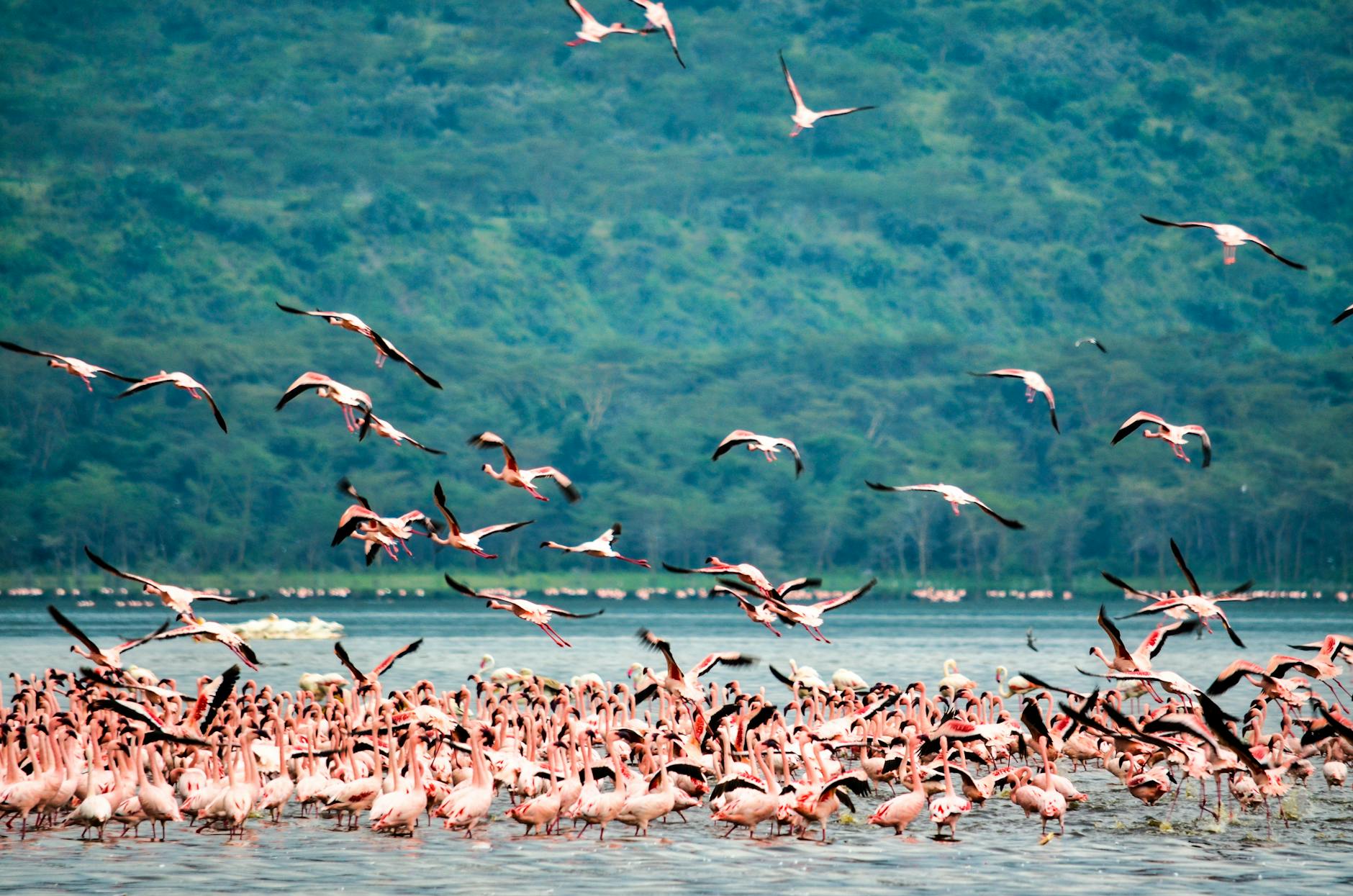
- Hundreds of bird species including flamingos (numbers vary)
- Rift Valley scenery: cliffs, escarpment viewpoints, and lake panoramas
What makes it different from the Masai Mara
- Compact, fenced, high-density wildlife viewing vs the Mara’s vast open ecosystem
- Rhinos + birding + forest habitats as headline features (Mara is more “plains + predators + herds”)
- More “efficient” game loops (excellent for short stays, families, and tight itineraries)
Where Lake Nakuru National Park Is Located
- Country: Kenya
- Region: Great Rift Valley
- Nearest town: Nakuru
- Distance from Nairobi: about 160 km (around 2.5–3.5 hours by road)
- Park size: about 188 km²
- Altitude: roughly 1,750–2,080 meters above sea level
The park is built around Lake Nakuru, a shallow alkaline (soda) lake, and is surrounded by:
- Rocky escarpments and hills
- Grasslands and open plains
- Acacia and euphorbia forests
- Seasonal rivers and marshy areas
- Scenic spots like Baboon Cliff, Lion Hill, and Makalia Falls
Because the park is relatively small, wildlife sightings are usually quick and reliable, even on a half-day visit.
Geography, Habitats, and What You’ll Actually See
Lake Nakuru National Park sits in the Great Rift Valley and wraps around a shallow alkaline lake. The park’s strength is habitat diversity in a small area:
Core habitats
- Alkaline lake shoreline and mudflats (waterbirds, feeding flamingos when conditions suit)
- Marshes and seasonal river mouths (birds, buffalo, waterbuck)
- Open grasslands (rhinos, zebra, buffalo)
- Acacia woodland + euphorbia forest (giraffes, leopard potential)
- Rocky escarpments and cliffs (raptors, viewpoints, dramatic landscapes)
Signature scenic nodes
- Baboon Cliff viewpoint (classic panoramic shot)
- Lion Hill / escarpment viewpoints (sunrise/sunset light)
- Makalia Falls (best after rains)
Why Lake Nakuru Is Important for Conservation
Lake Nakuru National Park is one of Kenya’s most important rhino sanctuaries.
- Gazetted as a park in 1968
- Part of the Kenya Lake System in the Great Rift Valley UNESCO World Heritage Site
- Protected by fencing to:
- Reduce human–wildlife conflict
- Protect endangered rhinos
- Plays a key role in:
- Black rhino and white rhino conservation
- Bird protection and wetland conservation
- Managing fragile Rift Valley ecosystems
This makes Lake Nakuru not just a safari park, but a major conservation stronghold in Kenya.
Wildlife You Can See in Lake Nakuru National Park
Main Mammals
Lake Nakuru is especially famous for rhinos, but there is much more to see:
- Black rhino (critically endangered)
- White rhino
- Lions
- Leopards (often seen in forested areas)
- Rothschild’s giraffe (introduced for conservation)
- Cape buffalo
- Plains zebra
- Waterbuck, impala, warthog
- Olive baboon and vervet monkey
- Spotted hyena
Important to know: There are no elephants in Lake Nakuru National Park.
Birds and Flamingos
Lake Nakuru is one of Kenya’s best birdwatching destinations.
- Over 400 bird species recorded
- Common sightings include:
- Flamingos (lesser and greater)
- Pelicans, cormorants, herons, storks
- African fish eagle and other birds of prey
- Raptors around cliffs and open areas
- Flamingo numbers change a lot depending on:
- Water levels
- Algae availability
- Conditions in other Rift Valley lakes like Bogoria and Elementeita
- Don’t plan a trip only around flamingos; plan for rhinos + birds + scenery, and treat flamingos as a bonus when conditions align.
A good way to think about it:
- Come for rhinos, big mammals, and scenery
- Treat flamingos as a bonus when conditions are right
Landscapes and Scenic Highlights
One of the strengths of Lake Nakuru National Park is how many different landscapes you see in a small area.
You’ll find:
- The alkaline lake and muddy shorelines
- Open grasslands for grazing animals
- Acacia woodland and dense euphorbia forest
- Rocky cliffs and escarpments
- Water features like Makalia Falls (best after rains)
Popular viewpoints and stops include:
- Baboon Cliff – classic panoramic lake views
- Out of Africa Viewpoint – named after the famous film scenery
- Lion Hill Viewpoint – great light for photos
- Makalia Falls – especially scenic in the wet season
Best Time to Visit Lake Nakuru National Park
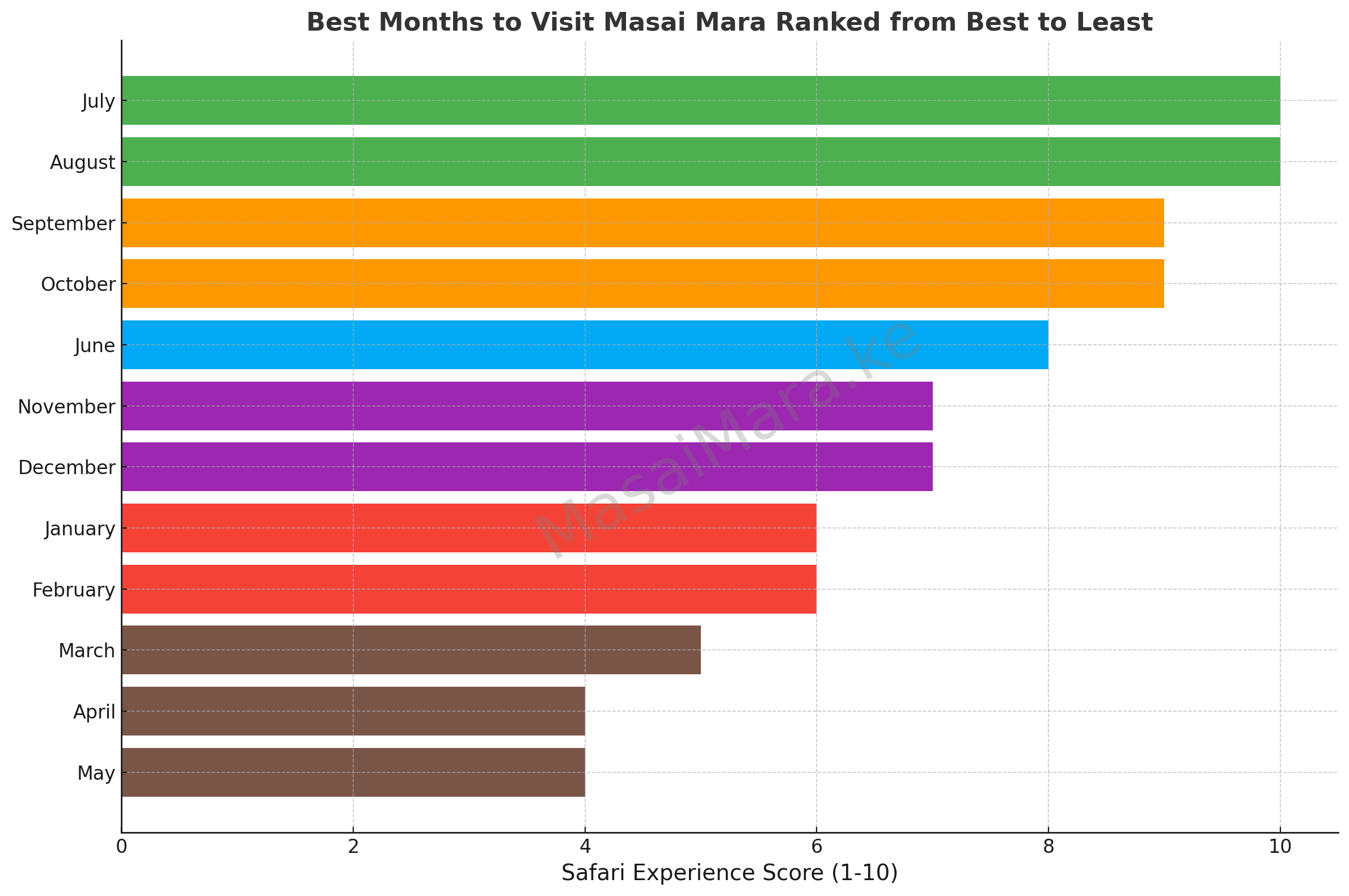
Dry Seasons (Best for General Safari)
- January to March
- July to October
- Easier driving
- Better wildlife visibility
- More predictable game viewing
Wet Seasons (Best for Green Scenery and Birds)
- April to June (long rains)
- November (short rains)
- Lush landscapes
- Excellent birdlife
- Some roads can be muddy
Flamingo viewing depends more on lake conditions than on the month, so it’s never guaranteed at any time of year.
What You Can Do in the Park
Lake Nakuru is primarily a game-drive and birding park—perfect for structured loops with viewpoint stops.
Typical activities
- Half-day game drive (efficient wildlife + lakeshore)
- Full-day safari (complete habitat coverage + viewpoints + Makalia Falls)
- Photography-focused day (birds + rhinos + landscapes)
How it differs from Mara-style safaris
- Less “long hunting sequences across plains,” more dense viewing + habitat switching.
- Great for visitors who want variety: shoreline → forest → grassland → cliffs in one day.
How to Get to Lake Nakuru National Park
By Road (Most Common Option)
- From Nairobi: about 2.5–3.5 hours
- Route: Nairobi – Naivasha – Nakuru (A104 highway)
- Good tarmac road most of the way, with gravel roads inside the park
By Air
- Nearest airstrips: Nakuru or Naishi (charter flights)
- Usually combined with other parks like:
- Masai Mara
- Amboseli
- Laikipia
Main Park Gates
- Main Gate (near Nakuru town)
- Lanet Gate (eastern side)
- Nderit Gate (southern side, useful from Naivasha direction)
Where to Stay
You can stay either inside the park or around Nakuru.
Inside or Overlooking the Park
- Sarova Lion Hill Game Lodge
- Lake Nakuru Lodge
- The Cliff (luxury, overlooking the park)
Around Nakuru
- Budget hotels and guesthouses
- Mid-range lodges
- Camps and eco-lodges
Accommodation options range from budget to luxury, making the park suitable for many types of travelers.
Park Fees and Practical Information
| Visitor Category | Adult (24 hrs) | Child (3–17 yrs) | Notes |
|---|---|---|---|
| East African Citizens (Kenya, Uganda, Tanzania, Rwanda, Burundi, South Sudan) | KES 1,500 | KES 750 | Valid ID/passport required. |
| Kenya Residents (Non-Citizen) | KES 2,025 | KES 1,050 | Valid work/residence permit required. |
| African Citizens (Non-EAC) | USD 50 | USD 25 | Applies to African nationals outside the EAC. |
| Non-Resident (International Visitors) | USD 90 | USD 45 | Standard international rate, flat all year. |
Basic park rules:
- Stay on designated roads
- Do not feed animals
- Do not litter
- Keep safe distances from wildlife
- Follow speed limits and ranger instructions
How Long to Spend in Lake Nakuru
Half-Day Safari (4–5 hours)
Good for:
- Rhino viewing
- Lakeshore birdlife
- One or two viewpoints
Full-Day Safari (6–10 hours)
Better for:
- Exploring all habitats
- Forest and grassland areas
- Multiple viewpoints and Makalia Falls
- Relaxed photography stops
How Lake Nakuru Fits into a Kenya Safari Circuit
Lake Nakuru is often combined with:
- Nairobi → Lake Nakuru → Masai Mara
- Nairobi → Lake Naivasha → Lake Nakuru
- Rift Valley circuit: Naivasha – Nakuru – Bogoria or Elementeita
Compared to other parks:
- Vs Masai Mara: Nakuru is smaller, more compact, and rhino-focused
- Vs Lake Naivasha/Hell’s Gate: Nakuru offers predators and a classic safari feel
- Vs Lake Bogoria: Nakuru has far more large mammals and a fuller safari experience
Photography Tips
- Best light: early morning and late afternoon
- Bring:
- A zoom or telephoto lens for wildlife and birds
- A wide-angle lens for landscapes and viewpoints
- Watch for:
- Reflections on the lake
- Storm clouds and dramatic Rift Valley skies
- Protect gear from dust in the dry season
Who Lake Nakuru Is Best For
- First-time safari visitors
- Travelers with limited time
- Birdwatchers and photographers
- Families and mixed-interest groups
- People who want reliable rhino sightings
- Anyone combining the park with the Masai Mara or Rift Valley lakes
Recommended Itineraries
A) Lake Nakuru as a “1-night high-impact stop”
- Day 1: Arrive by midday, do an afternoon game drive + viewpoint sunset
- Day 2: Early morning game drive, then depart onward (Naivasha / Nairobi / Mara)
B) Full-day Lake Nakuru “done properly”
- Early entry, complete habitat loop, multiple viewpoints, long birding stops, relaxed pace
C) Best practice when combining with Masai Mara
- 3 Nights in Masai Mara and One Night in Lake Nakuru(4 Days)
- Use Nakuru as the “specialist” stop: rhinos + birds + scenery
- Avoid trying to do both parks back-to-back without a buffer day if your group is sensitive to long drives
Quick Questions People Often Ask
- Is Lake Nakuru good for a day trip from Nairobi?
Yes, it’s one of the best parks for a day trip or one-night stay. - Are flamingos guaranteed?
No, their numbers change with lake conditions. - Can I see rhinos easily?
Yes, Lake Nakuru is one of the most reliable places in Kenya to see rhinos. - Are there elephants?
No, elephants are not present in this park. - Is the park fenced?
Yes, mainly to protect rhinos and reduce conflict with nearby communities.
Final Thoughts
Lake Nakuru National Park offers one of the best-value, most reliable, and most diverse short safari experiences in Kenya. With its strong rhino conservation focus, rich birdlife, beautiful scenery, and easy access from Nairobi, it fits perfectly into almost any Kenya safari itinerary—especially when combined with the Masai Mara or other Rift Valley lakes.
Conservation and Park Management Context
Lake Nakuru National Park is managed by the Kenya Wildlife Service, which oversees fencing, rhino protection, habitat management, and visitor regulation. This contrasts with the Masai Mara’s county-led management model and provides visitors with insight into two different conservation frameworks operating within Kenya.
Understanding both parks together offers a broader perspective on how Kenya balances tourism, conservation, and community interests across different ecosystems.
Quick Expert Tips: Combining Masai Mara + Lake Nakuru
1. Plan the route logically
- Best flow: Nairobi → Lake Nakuru → Masai Mara → Nairobi (or reverse).
- The Nakuru–Mara drive is long and slow (often 5–7 hours). Treat it as a travel day, not a game drive day.
2. Balance the experiences
- Masai Mara: Big cats, big herds, classic savannah, (seasonal) migration.
- Lake Nakuru: Rhinos, birds, scenic viewpoints, compact and efficient.
- Together, they avoid the “same landscapes, same animals” feeling.
3. Time allocation that works
- Spend more time in the Mara (2–3 nights if possible).
- 1 night / 1 full day is usually enough for Lake Nakuru.
- Don’t try to rush both in one or two days.
4. Use the right vehicle
- A 4×4 Land Cruiser (or similar) is strongly recommended, especially in rainy seasons.
- Roads into and out of the Mara can be rough; comfort and clearance matter.
5. Season matters—but differently
- July–October: Best overall game viewing in the Mara; drier roads.
- Jan–March: Great wildlife too, fewer crowds.
- Flamingos at Nakuru are not guaranteed—go for rhinos and bird diversity first.
6. Break long drives smartly
- If your schedule allows, break the journey with:
- Lake Naivasha (boat ride, scenery)
- Rift Valley viewpoints
- This reduces fatigue and adds variety.
7. Book accommodation strategically
- Stay close to park gates at Nakuru to save time.
- In the Mara, choose camps based on your priority (predators, migration areas, or quieter zones).
- Book early in high season.
8. Pack for two different parks
- Binoculars + camera: birds at Nakuru, big game in Mara.
- Warm layers for early mornings.
- Dust protection for gear in dry season.
9. What travelers often say on forums
- Don’t rush the Mara—it deserves more time.
- Nakuru works best as a short, focused stop.
- The combination is popular because it gives big game + rhinos + birds + scenery in one trip.
Bottom Line
Combining Masai Mara + Lake Nakuru works best when you:
- Accept one long transfer day,
- Give priority time to the Mara,
- Use Nakuru as a high-impact, short, scenic, rhino-focused stop,
- And travel in a proper 4×4.
The reward: a safari with far more ecological variety than staying in just one park.
Lake Nakuru National Park – FAQs
1. Is Lake Nakuru suitable for children and older travelers?
Yes. The park is compact, game viewing is efficient, and drives are relatively short, making it comfortable for families and older travelers.
2. Do I need a guide, or can I visit with just a driver?
While self-drive is possible, a knowledgeable driver-guide significantly improves wildlife spotting (especially leopards and rhinos) and bird identification.
3. How crowded does Lake Nakuru get?
It can be busy during weekends and high season, especially around rhino areas and viewpoints, but it’s usually quieter on weekdays and early mornings.
4. Are night game drives allowed in the park?
No. Lake Nakuru National Park does not offer night game drives under normal KWS regulations.
5. Is Lake Nakuru good for first-time birdwatchers?
Yes. The park is one of the best places in Kenya to start birding because species diversity is high and sightings are easy around the lake and forests.
6. Can I visit Lake Nakuru in a standard car?
In dry weather, some visitors manage with normal vehicles, but a 4×4 is strongly recommended, especially after rains and for full park coverage.
7. How long does it take to drive around the entire park?
A relaxed full circuit with stops usually takes 5–7 hours, depending on wildlife sightings and road conditions.
8. Are there picnic or rest areas inside the park?
Yes. There are designated picnic sites at viewpoints and scenic spots, but you should follow KWS rules and keep food secured from baboons and monkeys.
9. Is the lake safe to walk around?
No. Walking is restricted to designated areas only. The park is home to predators, buffalo, and rhinos, so exploration is primarily by vehicle.
10. Does Lake Nakuru ever dry up completely?
Water levels fluctuate significantly with rainfall cycles. While the lake can recede or expand, it does not usually disappear entirely, but conditions can change year to year.
11. Are there cultural or community visits linked to the park?
Yes, these are usually arranged outside the park in the Nakuru region or along the route, rather than inside the protected area itself.
12. Is Lake Nakuru good for photographers with limited time?
Absolutely. The combination of close-range rhinos, birds, scenic viewpoints, and varied habitats makes it one of the most time-efficient parks for photography in Kenya.
13. Can Lake Nakuru be visited year-round?
Yes. The park is open all year, though road conditions and flamingo presence vary with the seasons.
14. How does Lake Nakuru compare for repeat visitors?
It’s especially good for repeat visitors who want to focus on conservation success stories, birds, and landscape photography, rather than only big-game numbers.
15. Is Lake Nakuru more about scenery or wildlife?
It’s one of the few Kenyan parks that delivers both—strong, reliable wildlife sightings (especially rhinos) combined with some of the Rift Valley’s best scenery.