The Masai Mara Reserve is one of Kenya’s most important strongholds for rhinoceros conservation. Although rhinos occur at relatively low densities compared to elephants or buffalo, the Mara plays a strategic national role in safeguarding these critically threatened megaherbivores through intensive protection, habitat management, and coordinated anti-poaching efforts. This guide provides an expert, ecosystem-level overview of rhino species, distribution, ecology, threats, and conservation management in the Masai Mara.
Rhino Species Found in the Masai Mara
Black Rhino (Black rhinoceros)
The Masai Mara is home to the Eastern Black Rhino, a Critically Endangered subspecies and one of Kenya’s highest conservation priorities. Black rhinos are browsers, feeding primarily on shrubs, woody plants, and forbs. They are generally solitary, highly territorial, and prefer areas with dense bush cover, which provides both food and concealment.
In the Mara ecosystem, black rhinos are the only free-ranging rhino species regularly encountered outside enclosed sanctuaries. Their survival here is a direct result of sustained security operations and community-supported conservation.
White Rhino (White rhinoceros)
White rhinos are not naturally widespread in the open Masai Mara landscape but are present in closely managed sanctuaries and conservancies within the greater Mara ecosystem. Unlike black rhinos, white rhinos are grazers, relying on short grass plains and open savannah.
Their presence in the Mara region reflects active reintroduction and intensive protection, rather than historical abundance.
White Rhino Conservation in Ol Chorro Oirouwa Conservancy
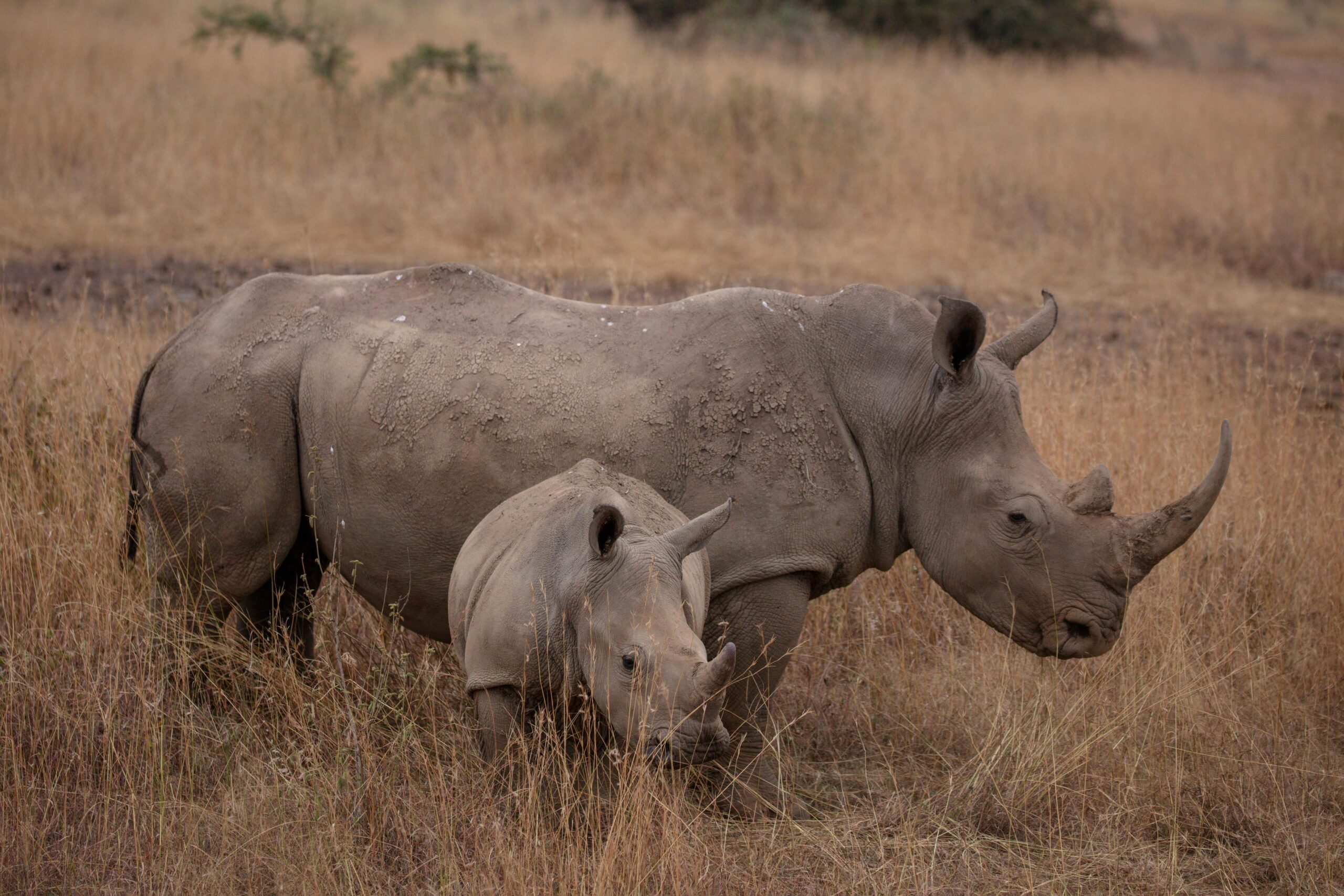
In the northern Masai Mara ecosystem, Ol Chorro Oirouwa Conservancy hosts the region’s primary white rhino conservation initiative, providing a highly controlled refuge for the Southern white rhinoceros. Established in 1991, the conservancy protects two founder individuals—Koffi Annan and Queen Elizabeth—under round-the-clock armed security, reflecting the elevated protection requirements of this species outside fenced national sanctuaries. The project emphasizes intensive protection, habitat suitability, and low-impact tourism, including guided on-foot viewing conducted under strict protocols.
While white rhinos are not free-ranging within the open Masai Mara National Reserve, this conservancy-based model plays a complementary role in the broader Mara conservation landscape by safeguarding genetic stock, supporting conservation awareness, and demonstrating best practice for species protection in community-adjacent areas.
Black Rhino vs White Rhino in Kenya: Expert Comparison
| Feature | Black Rhino | White Rhino |
|---|---|---|
| Species | Black rhinoceros | White rhinoceros |
| Subspecies in Kenya | Eastern black rhino (D. b. michaeli) | Southern white rhino (C. s. simum) |
| Conservation Status (IUCN) | Critically Endangered | Near Threatened (globally), Endangered in Kenya |
| Historical Origin in Kenya | Indigenous | Introduced (reintroduced from southern Africa) |
| Primary Diet | Browser – shrubs, bushes, woody plants | Grazer – short grasses |
| Lip Shape | Pointed, prehensile upper lip | Broad, square upper lip |
| Typical Habitat | Dense bushland, thickets, mixed woodland | Open grasslands, savannah plains |
| Social Behaviour | Mostly solitary | More social; small groups common |
| Temperament | More aggressive and unpredictable | Generally calmer |
| Average Adult Weight | 850–1,600 kg | 1,800–2,500 kg |
| Natural Predators | None (calves rarely taken by lions or hyenas) | None |
| Primary Threat | Poaching for horn | Poaching for horn |
| Conservation Model in Kenya | Intensive protection, often unfenced, some free-ranging | Highly managed, fenced sanctuaries |
| Typical Tourist Sightings | Rare and highly regulated | More predictable in sanctuarie |
Why the Difference Matters
Black rhinos are considered a higher conservation priority in Kenya due to their critically endangered status and indigenous heritage. White rhinos, while still threatened, function more as a population recovery success story when managed intensively. Understanding these differences helps explain why rhino sightings, protection levels, and tourism rules vary so widely across Kenya’s parks and conservancies.
Where Rhinos Are Found in the Masai Mara
Rhinos in the Masai Mara are not evenly distributed. They occur primarily in:
- High-security rhino zones under continuous ranger surveillance
- Areas with thick bushland, broken terrain, and limited tourist pressure
- Sections of the ecosystem where human access is tightly controlled
Because of security protocols, exact rhino locations are intentionally not publicized, a best practice aligned with international rhino protection standards.
Population Status and Conservation Significance
Historically, the Masai Mara supported hundreds of rhinos, but rampant poaching in the 1970s and 1980s caused catastrophic declines. Today, the Mara’s rhino population remains small but stable, making it ecologically and symbolically significant.
From a national perspective, the Mara complements Kenya’s broader rhino conservation network, which includes high-density sanctuaries elsewhere in the country. The Mara’s value lies in maintaining genetic diversity, landscape connectivity, and semi-wild ranging conditions.
Advanced Rhino Protection, Monitoring & Population Recovery in the Masai Mara
Historical Population Collapse and Recovery Trajectory
The Masai Mara once supported one of East Africa’s most significant Eastern black rhinoceros populations. In the early 1970s, the reserve held over 100 individuals, but intense commercial poaching during the late 1970s and early 1980s caused a catastrophic collapse. By 1984, fewer than 20 rhinos remained across the entire ecosystem, placing the population on the brink of local extinction.
Within the Mara Triangle, the situation was even more severe. When the Mara Conservancy assumed management in 2001, only one known black rhino—a highly aggressive and elusive female—remained in the Triangle. Following the introduction of regular armed patrols, intelligence-led enforcement, and sustained arrests of poachers, security improved rapidly. By 2002, male rhinos began naturally recolonising the area, leading to successful breeding and the gradual re-establishment of a resident population.
Today, the wider Masai Mara National Reserve supports an estimated 35–50 black rhinos, while the Mara Triangle holds a smaller but stable sub-population. Importantly, this is one of only two indigenous, free-ranging eastern black rhino populations in Kenya, meaning the animals are not products of translocation and retain natural ranging behaviour across the Mara–Serengeti landscape.
Why the Masai Mara Rhino Population Is Ecologically Unique
Unlike fenced sanctuaries elsewhere in Kenya, Masai Mara rhinos exist in a fully open ecosystem. They move freely across reserve boundaries, occasionally crossing into Serengeti National Park, making them a transboundary conservation population of exceptional scientific and genetic importance. This freedom enhances long-term resilience but also increases vulnerability—necessitating some of the most intensive rhino protection protocols in Africa.
Rhino Surveillance, Anti-Poaching & Ranger Units
To counter persistent poaching risk, dedicated Rhino Surveillance Units operate daily across the Mara. These units combine:
- Daily terrestrial patrols covering thousands of square kilometres
- GPS telemetry tracking of individually identified rhinos
- Rapid-response ranger teams stationed in high-risk zones
- Canine units, including tracker dogs and ivory detection dogs, to support intelligence and interdiction
These efforts have been instrumental in preventing a repeat of the 1980s population collapse, though the threat remains constant—as illustrated by isolated poaching incidents recorded as recently as the mid-2010s.
Ear-Notching, GPS Tagging & Individual Identification
Modern rhino conservation in the Masai Mara has entered a technology-driven phase. Through coordinated operations involving Narok County Government, Kenya Wildlife Service, Wildlife Research and Training Institute, and conservation partners, rhinos are now:
- Ear-notched using a standardized code system to allow visual identification
- Fitted with GPS ear tags providing hourly location data
- Genetically sampled for inclusion in national and international databases
Best-practice rhino monitoring recommends at least 60% of a population be individually identifiable, with re-notching every 2–3 years as populations grow. In the Mara, this process has already transformed the ability of rangers to track movements, identify threats, and understand rhino space use.
Conservation Technology & EarthRanger Integration
The Masai Mara is currently implementing EarthRanger, a cutting-edge real-time wildlife monitoring platform, supported by LoRa WAN (long-range wireless networks). This system integrates:
- GPS rhino data
- Ranger patrol movements
- Aerial surveillance inputs
- Incident reporting and alerts
For rhinos, this means near-real-time visibility of movements across the reserve—dramatically improving response times to potential threats and enabling smarter deployment of limited ranger resources across the vast Mara landscape.
Scientific Research & Long-Term Monitoring Legacy
The Masai Mara is one of the most extensively studied rhino landscapes in Africa, with research dating back over five decades. Foundational work by ecologists such as J.G. Mukinya, M.J. Walpole, Nigel Leader-Williams, and colleagues established baseline knowledge on:
- Rhino density and spatial distribution
- Feeding ecology and water dependence
- Social organisation and reproductive rates
- Factors limiting population recovery
These studies underpin modern management decisions and continue to inform Kenya’s Black Rhino Action Plan, which emphasises genetic integrity, standardized monitoring, and ecosystem-wide coordination.
Tourism Pressure, Habitat Change & Emerging Challenges
Despite improved security, rhino recovery in the Masai Mara remains constrained by non-poaching pressures, including:
- Decline of dense woodland browsing habitat
- Disturbance of breeding areas by uncontrolled tourism
- Fragmentation of movement corridors into community lands
Balancing the Mara’s role as a premier safari destination with the needs of a critically endangered species is now one of the reserve’s defining management challenges.
Why Rhino Conservation Matters to the Mara’s Future
Rhinos are more than a flagship species—they are indicators of governance quality, ecosystem integrity, and long-term conservation success. Their continued survival in the Masai Mara demonstrates that open, unfenced landscapes can support critically endangered megafauna when protection, technology, community participation, and science are aligned.
Rhino Ecology and Behavior in the Mara
Diet and Feeding
- Black rhinos feed on over 200 plant species, selectively browsing thorny shrubs and trees
- Their feeding behavior helps shape vegetation structure, preventing bush encroachment
- Rhinos require daily access to water and frequently use mud wallows for thermoregulation and parasite control
Territoriality and Movement
- Adult black rhinos maintain overlapping home ranges but avoid close contact
- Scent-marking via dung middens is a primary communication method
- Movement patterns are conservative, reducing exposure to risk
Predators and Natural Threats
Adult rhinos have no natural predators in the Masai Mara. However:
- Lion (African lion) and spotted hyena (Spotted hyena) may prey on newborn calves, though such events are rare
- Environmental stressors such as prolonged drought can impact calf survival
Poaching: The Primary Threat
Poaching for rhino horn remains the single greatest threat to rhinos in the Masai Mara. Rhino horn trafficking is driven by illegal international markets, making even small populations vulnerable.
To counter this, the Mara employs:
- 24/7 armed ranger patrols
- Intelligence-led anti-poaching units
- Aerial surveillance and tracking
- Rapid-response teams integrated with national security agencies
These measures have been instrumental in preventing local extinctions.
Rhino Conservation and Management Framework
Rhino conservation in the Masai Mara operates within a multi-layered governance structure involving:
- Reserve management authorities
- Specialized rhino monitoring units
- Community conservancies surrounding the reserve
- National-level wildlife policy and enforcement frameworks
Key management strategies include:
- Intensive protection zones
- Individual rhino identification and monitoring
- Habitat management to maintain browse availability
- Strong collaboration with local Maasai communities
Role of Community Conservancies
Community conservancies bordering the Masai Mara are increasingly important for rhino conservation. By aligning tourism revenue with wildlife protection, these conservancies:
- Reduce incentives for poaching
- Expand secure habitat buffers
- Create local ownership of conservation outcomes
This model is now widely recognized as one of the Mara ecosystem’s strongest conservation assets.
Tourism, Ethics, and Rhino Viewing
Seeing a rhino in the Masai Mara is rare and exceptional, and sightings are never guaranteed. Ethical guidelines include:
- Maintaining significant viewing distance
- Avoiding crowding or radio-calling rhino locations
- Respecting ranger instructions at all times
Responsible tourism plays a critical role by funding conservation without increasing risk.
Why Rhinos Matter to the Masai Mara Ecosystem
Rhinos are keystone megaherbivores whose ecological role includes:
- Shaping woody vegetation dynamics
- Creating habitat heterogeneity for smaller species
- Acting as flagship species that attract conservation funding
Their survival in the Masai Mara is a powerful indicator of ecosystem integrity and effective governance.
The Future of Rhinos in the Masai Mara
The future of rhinos in the Masai Mara depends on:
- Continued investment in security and monitoring
- Sustained community participation
- Regional cooperation across the greater Mara–Serengeti ecosystem
While numbers remain low, the Masai Mara stands as a conservation success story under constant vigilance, proving that rhinos can survive in open, unfenced landscapes when protection, policy, and people align.
How Easy Is It to See Rhinos on a Game Drive in the Masai Mara?
Seeing a rhino on a game drive in the MM National Reserve is difficult and relatively rare, even for experienced guides. The Mara’s rhino population consists almost entirely of Eastern black rhinoceros, a critically endangered subspecies that occurs at very low densities across a vast, open landscape. Unlike elephants, lions, or buffalo, rhinos are not widely distributed and are deliberately protected through restricted movement information and low-visibility management.
Black rhinos in the Mara are highly secretive, solitary, and strongly associated with dense bush and broken terrain, habitats that naturally limit visibility from safari vehicles. For security reasons, their locations are not shared over radio networks, and guides do not actively “track” rhinos for tourism purposes. As a result, sightings are largely opportunistic, depending on chance encounters rather than planned routes.
Seasonality and habitat conditions also play a role. During dry periods, rhinos may be slightly easier to spot near water sources or along traditional movement paths, while in the wet season, thick vegetation significantly reduces visibility. Even then, sightings are typically brief and at a distance, in keeping with strict viewing protocols designed to avoid stress or disturbance.
In practical terms, many visitors spend several days in the Masai Mara without seeing a rhino at all—and this is entirely normal. When a sighting does occur, it is considered exceptional, often remembered as a highlight precisely because of its rarity. From a conservation perspective, this low encounter rate is a positive indicator, reflecting effective protection, minimal disturbance, and the fact that rhinos in the Mara remain genuinely wild rather than habituated to vehicles.
For travelers whose primary goal is to reliably see rhinos, Kenya offers other destinations—typically fenced sanctuaries—where sightings are far more predictable. In contrast, a rhino sighting in the Masai Mara represents one of the most authentic and conservation-significant wildlife encounters possible on safari.
Read about other Masai Mara Wildlife
[chbs_booking_form booking_form_id="23598"]