A 5-day Masai Mara safari is the ideal choice for travelers who want more than a rushed wildlife snapshot—it’s the perfect length for a slow, immersive safari experience in Kenya’s most celebrated wilderness. With five full days in the Greater Mara ecosystem, you have the time to explore multiple game-viewing zones, from the core areas of Masai Mara National Reserve (MMNR) to selected community conservancies, follow big cats beyond the busiest circuits, and experience the landscape at different times of day when light, animal behavior, and predator activity change dramatically. This extended format allows for smarter routing, unhurried game drives, and a far richer understanding of how the Mara actually works as an ecosystem, not just a checklist of sightings.
Curated by MasaiMara.ke in partnership with carefully selected, top-rated camps and lodges, this 5-day safari is designed for travelers who want depth, flexibility, and consistently high-quality wildlife encounters. Beyond classic game drives, the itinerary allows you to layer in special experiences such as an optional hot air balloon safari, guided bush walks in conservancies, and Maasai village visits for cultural context—creating a balanced journey that combines world-class wildlife, community landscapes, and relaxed pacing. This is not a mass-market tour, but a thoughtfully structured, premium-value safari package built to deliver one of the most rewarding ways to experience the Masai Mara.
🐘 Safari Snapshot: 5-Day Masai Mara Safari
- Full-day game drives in Masai Mara National Reserve(MMNR) and the Mara Triangle
- A conservancy-style experience with fewer vehicles and a more relaxed pace
- Maasai cultural visit and Beads Museum experience (where available)
- Optional guided walking safari in a community conservancy (location depends on your accommodation)
- Optional night game drive, sundowner, and bush dinner in conservancy areas
- Optional hot air balloon safari over the Mara at sunrise
- Travel in a 4×4 Land Cruiser with pop-up roof for optimal game viewing
- A carefully paced itinerary that balances wildlife, landscape, and cultural context
Important Note About the Default Package:
By default, this 5-day Masai Mara safari is priced for budget to mid-range travelers and is based at Kambu Mara Camp, a highly rated, well-run camp located about 15 minutes from Sekenani Gate and strategically positioned between Nashulai and Naboisho Conservancies.
We chose this camp for its excellent value, reliable standards, and location on wildlife-rich land, where giraffes, zebras, and other plains game regularly graze right in front of the tents—an experience usually associated with much more expensive luxury conservancy camps. Crucially, you enjoy this level of immersion without paying conservancy or community fees. You only pay Masai Mara National Reserve entry fees on Days 2 and 3, when the itinerary focuses on full-day game drives inside the Reserve.
If you prefer a different level of comfort or a different location, this safari is fully customizable. You can upgrade to any of the alternative camps and lodges listed below—including mid-range, luxury, and conservancy-based options—while keeping the same expertly designed itinerary. Your choice of accommodation can also unlock additional experiences such as walking safaris or night game drives in conservancies, allowing you to tailor the safari to your budget, travel style, and priorities.
⏱️ 3 Days vs 4 Days vs 5 Days in the Masai Mara
3 Days Masai Mara Safari
- Good for: Tight schedules, budget trips, first taste of the Mara
- Reality: 1–2 full game drives, limited range, more driving than exploring
4 Days Masai Mara Safari
- Good for: A more relaxed pace, better wildlife coverage
- Reality: Still focused mainly on core areas, less flexibility to follow sightings far
5 Days Masai Mara Safari (This Trip)
- Best for: Depth, flexibility, and quality sightings
- What you gain:
- More time in different habitats (riverine, plains, escarpments)
- Ability to follow big cats instead of rushing between highlights
- Better chances for leopard, cheetah hunts, river crossings (seasonal)
- Time for conservancies or special activities
- Slower pace = better photography, less fatigue, richer experience
In short: 5 days turns the Mara from a checklist into a real safari experience.
What’s Unique with this 5-Day Masai Mara Tour:
This 5-day Masai Mara safari from Nairobi is designed for travelers who want more than a rushed game-drive experience. It combines classic Masai Mara National Reserve wildlife viewing with a laid-back conservancy-style safari that includes community visits, optional walking safaris, night game drives, and cultural experiences—depending on where you stay.
You’ll explore three distinct landscapes of the Greater Mara ecosystem:
- Masai Mara National Reserve (MMNR) – the core wildlife heartland
- Mara Triangle – wilder, less crowded, and scenically dramatic
- A community conservancy area (such as Nashulai or Siana, or another conservancy linked to your chosen camp) – for low-density, immersive experiences
This safari is ideal for guests who want excellent wildlife, fewer crowds, slower pacing, and deeper context—not just ticking off sightings.
🧭 Why Choose an Extended Masai Mara Safari?
- Wildlife doesn’t run on schedules: More days mean better odds of witnessing hunts, crossings, and rare behaviors.
- Explore beyond the crowded zones: You can reach quieter areas and stay longer with sightings.
- Different light, different Mara: Morning, afternoon, and golden-hour drives reveal completely different scenes.
- Reduced driving stress: Less rushing = better enjoyment and better photography.
- Optional upgrades: Balloon safari, conservancy drives, bush meals, or cultural visits fit naturally into a longer stay.
🗺️ 5 Days Masai Mara Itinerary
Day 1 – Nairobi → Masai Mara | Cultural Context & Arrival Day
6:30–7:00 AM – Pick-Up in Nairobi
Your journey begins with pick-up from your Nairobi hotel, residence, or airport.
Transfer by comfortable road vehicle.
- Standard transfer: Toyota Noah / Safari minivan for long-distance comfort
- Optional upgrade: 4×4 Land Cruiser for guests who want a full safari vehicle from Day 1
7:00–10:00 AM – Great Rift Valley Scenic Drive
Drive southwest through Kenya’s highlands toward the Rift Valley.
- Scheduled stop at the Great Rift Valley Viewpoint for photos
- Short briefing on the geology and ecology of the region
10:30–11:00 AM – Narok Town Stop (Optional)
Brief comfort stop as you transition from agricultural highlands into Maasai rangelands.
1:30–2:00 PM – Arrival in the Mara Region / Camp Check-In
Arrive at your selected camp or lodge.
- Check-in and lunch (if pre-arranged)
- Time to rest after the drive and settle into the savannah environment
4:00–6:00 PM – Optional Maasai Cultural Visit & Beads Experience
Visit a nearby Maasai community (or Beads Museum, depending on location and logistics).
- Learn about pastoral life, land stewardship, and cultural traditions
- Gain context for the landscapes and wildlife you’ll explore in the coming days
Evening – Campfire & Dinner
Relax at camp, enjoy dinner, and overnight in the Mara region.
🧭 Expert Design Note:
Day 1 intentionally avoids park entry so that your MMNR tickets are fully used on Days 2 and 3—maximizing value and keeping your first day relaxed and culturally grounded.
Day 2 – Full-Day Game Drive in Masai Mara National Reserve
Early Morning – Breakfast & Departure
Depart with picnic lunch for a full day inside Masai Mara National Reserve.
Morning to Afternoon – Classic Mara Game Drive
Explore prime wildlife areas such as:
- Open savannah plains
- Riverine forest zones
- Predator territories
Expect strong chances of seeing:
- Lions, cheetahs, leopards
- Elephants, buffalo, giraffes, zebras
- Hyenas, jackals, and abundant birdlife
Midday – Picnic Lunch in the Reserve
Afternoon – Continued Game Viewing
Follow wildlife movements based on real-time sightings rather than fixed routes.
Evening – Return to Camp for Dinner & Overnight
Day 3 – Full-Day Game Drive in the Mara Triangle
Early Morning – Breakfast & Departure
Head toward the Mara Triangle, known for:
- Fewer vehicles
- More rugged landscapes
- Excellent predator densities
- Key river crossing zones (seasonal: July–October)
Morning & Afternoon – Triangle Exploration
Focus on:
- River systems with hippos and crocodiles
- Open plains for big cats and large herbivore herds
- Scenic viewpoints and quieter tracks
Lunch – Picnic in a Scenic Area
Late Afternoon – Game Drive on Return Route
Return to your accommodation for dinner and overnight.
Day 4 – Conservancy Experience, Walking Safari & Optional Activities
Option 1: Hot Air Balloon Safari (Optional, Extra Cost)
- Pre-dawn transfer
- 1-hour balloon flight over the Mara
- Champagne bush breakfast after landing
- Rejoin your guide later in the morning
Late Morning / Afternoon – Conservancy Visit
Visit a community conservancy linked to your accommodation (e.g., Nashulai, Siana, or another conservancy depending on where you stay).
Here you may enjoy:
- Guided walking safari with Maasai guides and rangers
- Interpretation of tracks, plants, and smaller wildlife
- Insight into community-led conservation and land management
Optional Afternoon / Evening Activities (Location Dependent):
- Sundowner experience
- Night game drive (to see nocturnal species)
- Bush dinner under the stars
Return to camp for overnight.
🧭 Important Note:
The exact conservancy and activities available depend on your chosen accommodation, as not all camps have access to the same conservancy zones or night/foot safari permissions.
Day 5 – Morning at Leisure → Return to Nairobi
Morning – Breakfast & Check-Out
Optional short nature walk or rest at camp (time permitting).
Mid-Morning – Depart for Nairobi
Drive back to Nairobi, arriving in the afternoon for drop-off at your hotel or airport.
Customize Your Safari by Choosing Your Preferred Accommodation
This 5-day Masai Mara safari is fully customizable: you can select your preferred camp or lodge, and we’ll design the itinerary, game-drive routing, and conservancy experiences around that choice. Where you stay determines which parts of the ecosystem you explore, the crowd levels, and whether activities like walking safaris, night drives, and sundowners are available.
🏕️ Budget Options
- Kambu Mara Camp – A well-located, comfortable budget tented camp near the Mara, ideal for value-focused safaris with excellent access to core game-viewing areas.
- Greenwood Safari Camp – A practical, affordable camp offering simple comfort and reliable access to Masai Mara game-drive circuits.
- Miti Mingi Eco Camp – An eco-oriented budget camp close to the Reserve, suitable for travelers prioritizing location and affordability over luxury.
🏨 Mid-Range Options
- Mara Sopa Lodge – A spacious, classic safari lodge with good facilities and easy access to central Mara wildlife areas.
- Ashnil Mara Camp – A well-regarded tented camp near riverine zones, known for strong wildlife density and comfortable safari standards.
- Basecamp Explorer – A conservation-focused tented camp combining good comfort with access to both the Reserve and surrounding community areas.
🌿 Luxury & Conservancy Options
- Angama Mara – A world-class lodge on the Oloololo Escarpment offering exceptional views, high-end guiding, and access to both the Reserve and conservancy experiences.
- Mara Serena Safari Lodge – A premium lodge in a prime Reserve location, ideal for classic big-game viewing with strong infrastructure and service.
- Saruni Mara – An intimate luxury lodge in a private conservancy, known for off-road game drives, walking safaris, and low-vehicle-density experiences.
- Kandili Camp – A stylish, eco-conscious tented camp in a private conservancy, offering quieter wildlife viewing and a more exclusive safari atmosphere.
- Mahali Mzuri – A top-tier luxury camp in the Olare Motorogi Conservancy, renowned for superb guiding, big cat sightings, and low-crowd safari experiences.
- Cottar’s 1920s Safari Camp – A historic, high-end camp in a private conservancy, famous for exceptional guiding, walking safaris, and classic safari elegance.
- Entumoto Safari Camp – A luxury eco-camp in a community conservancy, offering panoramic views, conservation-focused experiences, and access to night and walking safaris.
📌 Important to know:
Your conservancy location, crowd levels, and optional activities (such as night game drives, walking safaris, and sundowners) depend on which accommodation you choose. Camps inside the Reserve focus on classic game drives, while conservancy camps unlock more flexible, low-density, and immersive safari experiences.
Your Tour Guide: The Difference Between Seeing Wildlife and Understanding It
Like other tour packages we offer here at MasaiMara.ke, we utilize KPSGA-certified guided by Kambu Campers who have been rated higgly for their exceptional quality of their guides.
Your driver-guide for this 5-day Mara tour are:
- Local and professionally trained (not just drivers, but qualified safari guides)
- Deeply familiar with the Mara’s landscapes, seasonal changes, and wildlife behavior
- Environmentally responsible, strictly respecting park rules, avoiding off-road driving, and prioritizing ethical wildlife viewing
- Strong communicators, able to explain animal behavior, ecology, and landscape context in a clear, engaging, and patient way
- Guest-focused and calm under pressure, which matters when sightings are busy or conditions change
In practice, this means your guide is not simply reacting to chance sightings. They are anticipating animal movement, choosing routes deliberately, managing time inside the Reserve intelligently, and interpreting what you are seeing—turning sightings into understanding rather than just photos.
How Your Full Game-Drive Days Are Expertly Structured
Rather than repeating the same circuits, your safari is deliberately designed so that each full game-drive day covers different ecological zones and wildlife concentrations, maximizing variety, minimizing backtracking, and making the best use of your time inside the ecosystem.
Day 2 – Central Mara, Talek & Mara River Circuit
- Early entry via Sekenani Gate to target the Sekenani–Talek Plains at first light for lions, cheetahs, and active predators
- Slow, methodical tracking along the Talek River for leopards, elephants, and rich riverine birdlife
- Transition through Paradise Plains and Lookout Hill for wide landscape views and ecological interpretation
- Extended time at the Mara River, focusing on hippos, crocodiles, riverine forests, and (seasonally) wildebeest migration routes
- A relaxed golden-hour return, when predators often become active again
Day 3 – Full-Day Game Drive in the Mara Triangle
- Early departure toward the Mara Triangle, a wilder and less crowded sector known for:
- Fewer vehicles and more open space
- More rugged, scenic landscapes
- Excellent predator densities
- Important river crossing zones during the Great Migration (approximately July–October)
- Morning and afternoon exploration focusing on:
- River systems with hippos and crocodiles
- Open plains for big cats and large herbivore herds
- Scenic viewpoints and quieter tracks rarely reached on standard day trips
- Picnic lunch in a scenic location inside the Triangle
- Late-afternoon game drive on the return route to your accommodation
Day 4 – Flexible Safari Day: Fill the Gaps or Go Conservancy
Day 4 is intentionally kept flexible and can be customized based on what you’ve already seen on Days 2 and 3:
A quieter, more immersive safari experience beyond the main Reservearter timing, fewer wasted hours, and a much higher chance of meaningful sightings rather than random driving.
Key Masai Mara Locations Covered Over 5 Days & 4 Nights
- Central Mara Plains (Sekenani–Talek sector): The core wildlife heartland with high densities of lions, cheetahs, elephants, buffalo, giraffes, and plains game, ideal for classic big-game viewing and predator action.
- Talek River, Musiara Marsh & Paradise Plains: Prime riverine and marsh habitats, especially strong for leopards, lions, hippos, buffalo, and rich birdlife, offering reliable predator sightings year-round.
- Mara River & Sand River systems: Ecological backbone of the Mara, home to hippos and large crocodiles, key leopard zones, and (seasonally) dramatic wildebeest and zebra river crossings.
- Mara Triangle (Western Mara): A wilder, less crowded area with excellent big cat and plains game densities, scenic landscapes, and important migration corridors.
- Siana & Eastern/Southern Plains: Quieter open plains favored by cheetahs and open-country species, ideal for wide-angle landscapes and lower-traffic game viewing.
- Community Conservancies (location depends on your camp): Low-density safari areas offering a different experience, including possibilities for walking safaris, night drives, and sundowners, while supporting community-led conservation.
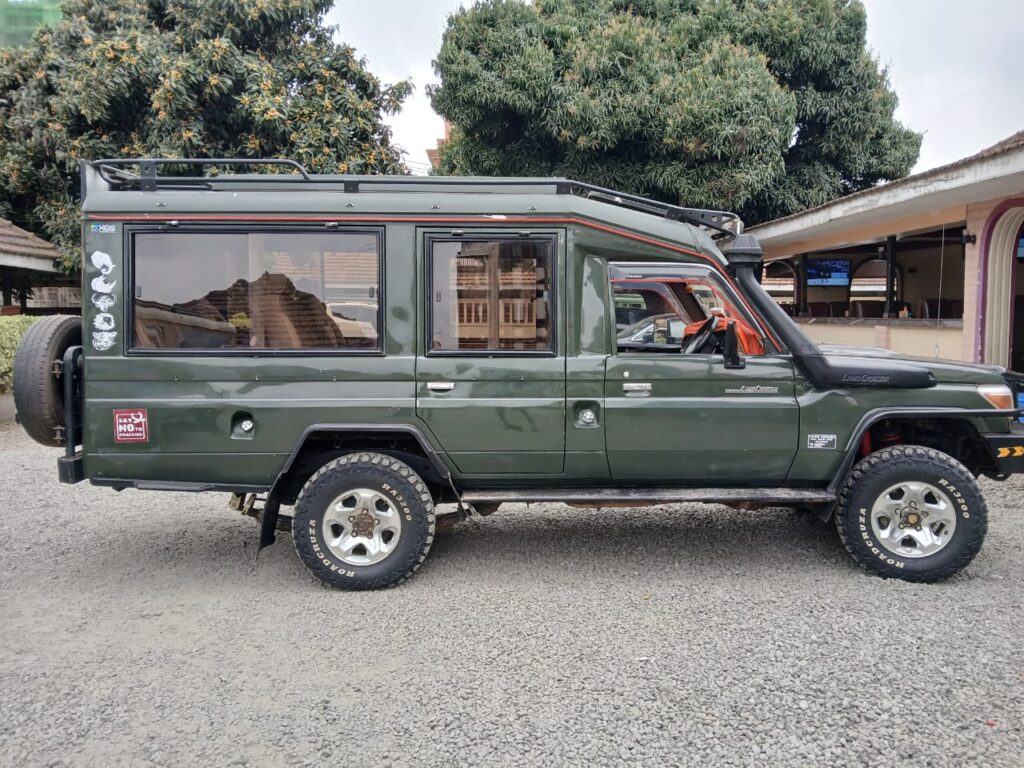
Your Safari Vehicle: Custom-Built 4×4 Land Cruiser for Extended Game Drives
Your safari is conducted in a proper 4×4 Toyota Land Cruiser, custom-prepared for the Masai Mara’s terrain and long days in the field. This is not a standard transfer vehicle—it is a dedicated game-viewing platform designed for comfort, safety, and photography.
Key features include:
- Pop-up roof for 360° wildlife viewing and safe, stable photography
- High ground clearance and 4×4 drivetrain for muddy tracks, riverine areas, and rough sections of the Reserve and Triangle
- Reinforced suspension for comfort over long game-drive days
- Individual window seats (where possible) for unobstructed viewing
- Power outlets / charging ports for cameras and phones
- Cooler box for drinks during long days in the park
- UHF/VHF radio communication for real-time coordination on sightings and road conditions
Just as importantly, these vehicles are maintained specifically for safari use, not general transport—reducing breakdown risk and ensuring reliability deep inside the Reserve and in the Mara Triangle.
What This Means for Your Safari Experience
The combination of a highly skilled, ethical guide and a properly equipped Land Cruiser is what turns an extended Masai Mara safari into a truly rewarding experience:
- Smarter routing and better timing = better wildlife encounters
- Ethical driving and viewing = less stress on animals and better behavior to observe
- Strong interpretation = you understand what you’re seeing, not just that you saw it
- Comfortable, capable vehicle = you stay focused and fresh over long safari days
In short, this is the difference between just doing game drives and having a genuinely well-guided Masai Mara safari.
🦁 Mammals You Can Expect to See (By Habitat & Zone)
Big Cats & Predators
- Lions – Widespread across the central plains, Musiara Marsh, Talek River area, and Mara Triangle; often seen hunting or resting near riverine thickets and open savannah.
- Leopards – Most reliably found along the Talek, Mara, and Sand Rivers, especially in riverine forest where they use trees for cover and caching prey.
- Cheetahs – Common in open grasslands of the eastern and central Mara and parts of the Mara Triangle, favoring flat plains for high-speed hunting.
- Spotted Hyenas – Abundant throughout the Reserve and Triangle, frequently encountered near kills, den sites, and on open plains at dawn and dusk.
- Black-backed & Side-striped Jackals – Regularly seen in open savannah and transitional bushland, especially in the Triangle and peripheral plains.
- Serval & African Wildcat (less common) – Occasionally encountered in grassland and marshy areas, particularly in quieter conservancy zones.
Large Herbivores & Iconic Plains Game
- African Elephants – Frequently seen in riverine corridors, woodlands, and along the Mara River and Talek River systems, moving between feeding areas.
- Cape Buffalo – Large herds common in Musiara Marsh, Mara Triangle floodplains, and riverine grasslands.
- Masai Giraffe – Widespread across acacia woodlands and open plains, especially in central and eastern Mara.
- Plains Zebra – Abundant in open grasslands throughout the Reserve and Triangle; major component of the Great Migration.
- Blue Wildebeest – Resident populations year-round, with massive migratory herds in July–October, especially near the Mara and Sand Rivers.
- Topi – Common on short-grass plains, particularly in the Mara Triangle and eastern Mara.
- Thomson’s & Grant’s Gazelles – Widespread in open plains, often seen alongside zebras and wildebeest.
- Eland – Scattered in wooded grasslands and quieter zones, more often encountered in the Triangle and conservancy areas.
- Impala – Common in woodland edges and riverine zones, especially along Talek and Mara Rivers.
- Waterbuck – Closely associated with permanent water sources, especially along the Mara River and larger streams.
River & Wetland Specialists
- Hippopotamus – Large pods in the Mara River, Talek River, and Sand River, best seen during midday when they rest in water.
- Nile Crocodile – Especially prominent in the Mara River and Sand River, including at seasonal wildebeest crossing points.
- Marsh Mongoose (occasional) – Found near wetlands and marshy areas, including Musiara Marsh.
Rare or Localized Species (Chance Sightings)
- Black Rhinoceros – Present but rare; mainly in protected zones of the Mara Triangle and select reserve sectors.
- Aardwolf, Bat-eared Fox – Occasionally seen in quieter areas and conservancies, usually at dusk or dawn.
- African Wild Dog (very rare, transient) – Sometimes recorded in the wider ecosystem, especially in low-pressure areas and conservancies.
🦅 Birds You Can Expect to See (By Habitat)
Birds of Prey (Raptors)
- African Fish Eagle – Along the Mara, Talek, and Sand Rivers, often seen perched in trees near water.
- Martial Eagle – Open savannah and woodland edges, especially in the Mara Triangle and central plains.
- Bateleur Eagle – Common soaring raptor over open plains throughout the Reserve.
- Secretary Bird – Frequently seen walking the open grasslands, especially in drier plains of the Triangle and eastern Mara.
- Augur Buzzard & Tawny Eagle – Widespread across plains and escarpment edges.
Savannah & Grassland Birds
- Lilac-breasted Roller – One of the most photographed birds, common in open woodland and roadside perches throughout the Mara.
- Crowned Crane – Found in marshy grasslands and wetlands, including Musiara Marsh and seasonal floodplains.
- Kori Bustard – The heaviest flying bird, seen in open plains, particularly in the Triangle and central Mara.
- Ostrich – Common in open savannah, often seen in small groups across the plains.
- Secretary Bird – Prefers wide open grasslands where it hunts snakes and small mammals on foot.
Riverine & Wetland Birds
- Saddle-billed Stork – Seen along rivers, marshes, and floodplains, especially in quieter stretches of the Mara River.
- Yellow-billed Stork & Open-billed Stork – Common in wetlands and seasonal pools.
- Hadada Ibis – Along riverbanks and damp grasslands, often vocal at dawn and dusk.
- Goliath Heron – Occasional but impressive sightings along larger river systems.
Colorful & Notable Species
- Superb Starling – Very common around camps, lodges, and open woodland.
- Grey-crowned & Black-crowned Cranes – In wet grasslands and marshy areas.
- Malachite & Pied Kingfishers – Along rivers and streams, frequently hovering over water.
- Bee-eaters (various species) – Often seen in open areas and riverbanks, especially during warmer months.
🧭 What This Means for Your 5-Day Safari
- MMNR core areas give you the best chances for big cats, elephants, and large herds.
- The Mara Triangle offers fewer vehicles, strong predator densities, and excellent plains game.
- River systems (Mara, Talek, Sand Rivers) are hotspots for leopards, hippos, crocodiles, and birdlife.
- Conservancy areas improve your chances for shy species, nocturnal animals (on night drives), and more relaxed wildlife encounters.
🚙 Transport & Safari Vehicles: How You Travel Matters
A 5-day Masai Mara safari is long enough that comfort, reliability, and visibility are not optional—they directly shape the quality of your experience.
Road Safari from Nairobi (Standard Option)
Most guests begin with a scenic road safari from Nairobi, descending the Great Rift Valley and crossing Maasai rangelands before reaching the Mara. This journey takes approximately 5–6 hours depending on road and weather conditions, with scheduled stops for viewpoints and refreshments.
- Transfer vehicle: By default, transfers are done in a well-maintained safari minivan (Toyota Noah) optimized for long-distance comfort and fuel efficiency.
- Upgrade option: Guests may upgrade to a 4×4 Land Cruiser for the transfer if they prefer a single vehicle for the entire journey or want added comfort and ground clearance on rough sections.
Fly-In Safari Option
For guests short on time or seeking maximum comfort, fly-in safaris can be arranged using scheduled or charter flights from Wilson Airport (Nairobi) to Mara airstrips such as:
- Keekorok Airstrip
- Ol Kiombo Airstrip
- Musiara Airstrip
- Mara Serena / Ngerende / Olare Orok (depending on camp location)
Flights take about 45–60 minutes, dramatically reducing travel time and allowing you to start game viewing the same day you arrive.
Game Drive Vehicle: The 4×4 Land Cruiser
Inside the reserve and conservancies, your safari is conducted in a custom-built 4×4 Land Cruiser designed specifically for wildlife viewing:
- Pop-up roof for 360° viewing and photography
- Individual window seats for clear sightlines
- High ground clearance for Mara tracks and seasonal mud
- UHF radio communication for sharing sightings ethically
- Power outlets & cooler box for long full-day drives
This is the same class of vehicle used by top-tier safari operators across Kenya—and it makes a measurable difference on long, full-day game drives.
🧑🏫 Your Guide & Safari Experience: The Difference Between Seeing and Understanding
MasaiMara.ke’s 5-day safari is led by professional driver-guides, not just drivers. These are locally based, formally trained guides who know the Mara as a living landscape, not just a map of tracks.
What Sets These Guides Apart
- Deep local knowledge: Many are Maasai or grew up in the Mara ecosystem, with an intuitive understanding of animal movement, seasons, and terrain.
- Wildlife tracking skills: Reading tracks, alarm calls, bird behavior, and landscape cues to anticipate sightings rather than driving randomly.
- Ethical game viewing: Strict adherence to park rules, no off-road driving, respectful distances, and minimal disturbance to animals.
- Interpretive guiding: You don’t just see animals—you learn about predator–prey dynamics, migration ecology, river systems, and conservation challenges.
- Photography-aware driving: Positioning the vehicle for light, angles, and background without blocking others or stressing wildlife.
In short, this is guided game viewing, not transport between sightings.
🏞️ Safari Activities & Experiences: More Than Just Game Drives
Core Safari Activities (Included)
- Morning game drives – Best light and peak predator activity
- Afternoon game drives – Different species, changing behavior patterns
- Full-day game drives – Covering large areas with picnic lunch in the bush
- Picnic lunch in scenic locations – Riverbanks, viewpoints, or open plains
- Sundowners (where offered by camp) – Relaxed end-of-day wilderness experience
Optional & Add-On Experiences (Location-Dependent)
Depending on your chosen accommodation and conservancy access, you may add:
- Hot air balloon safari – Sunrise flight over the Mara, champagne bush breakfast
- Walking safari (in conservancies) – Guided by Maasai rangers for tracking and ecology
- Night game drives (conservancies) – Explore nocturnal wildlife not seen during the day
- Bush dinner – Dining under the stars in a wilderness setting
- Maasai village visit – Cultural context, daily life, and traditions
- Beads museum / craft centers – Understanding Maasai beadwork and symbolism
These experiences are what transform a 5-day safari from a standard wildlife trip into a deeper, more layered Mara experience.
🌍 Conservancies & Community: The Human Landscape of the Mara
Your safari does not only take place in Masai Mara National Reserve (MMNR), but may also extend into community-owned conservancies within the Greater Mara ecosystem, such as:
- Nashulai Conservancy
- Siana Conservancy
- Naboisho Conservancy
- Olare Motorogi Conservancy
- Ol Kinyei Conservancy
- Mara North Conservancy
Why Conservancies Matter
- Land is owned by Maasai landowners and leased for conservation and tourism
- Low-density tourism means fewer vehicles and more exclusive sightings
- Enables walking safaris and night drives, not allowed in the main reserve
- Provides direct income to local communities through lease fees and jobs
- Protects wildlife corridors and grazing systems through the conservation leasing model
This is one of the most successful examples of community-based conservation in Africa, and your safari directly supports it.
🗓️ Itinerary & Planning: Why 5 Days Is the Sweet Spot
3 vs 4 vs 5 Days in the Masai Mara
- 3 days: Great introduction, but rushed—limited spatial coverage
- 4 days: Better balance, but still selective in areas visited
- 5 days: The optimal format—allows:
- Multiple ecological zones
- Full-day and half-day drives
- Conservancy experiences
- Recovery time between long drives
- A much higher chance of exceptional sightings
Safari Pacing & Coverage
- Day-by-day routing avoids repeating the same areas
- Mix of core reserve zones + Triangle + conservancies (depending on base)
- Travel time Nairobi–Mara: ~5–6 hours by road, ~1 hour by air
- Best time to visit:
- Dry season (July–October): Migration & predator action
- Green season (November–June): Fewer crowds, lush landscapes, great photography
Five days allows you to slow down, go deeper, and see more—not just tick boxes.
Pricing & Booking (Indicative)
- Budget: From $1,250 per person
- Mid-Range: From $2500 per person
- Luxury: From $4100 per person
How to Book:
- Contact us by email or WhatsApp
- 50% deposit to confirm
- Flexible cancellation policy available
✅ What’s Included in the 5 days Mara safari tour
- All ground transportation as per itinerary
- If opting for this 5-day Maasai Mara safari from Nairobi by road, this package includes Nairobi–Masai Mara–Nairobi road transfers in a safari minivan or upgraded 4×4 Land Cruiser (depending on selected option)
- All in-Mara transfers and game drives in a custom 4×4 Land Cruiser with pop-up roof
- Return flights from Nairobi to Masai Mara and back if opting for flying safari option for this extended Masai Mara safari.
- Professional safari guide / driver-guide services
- Fully trained, locally experienced guides
- Wildlife tracking, interpretation, and photography-aware positioning
- Strict adherence to park rules and ethical game-viewing standards
- Game drives and safari activities as per itinerary
- Morning and afternoon game drives
- Full-day game drives with picnic lunch
- Coverage of key Masai Mara zones and, where applicable, Mara Triangle and selected conservancies
- All guiding and vehicle costs during scheduled safari activities
- All park and conservancy entry fees (as specified in the itinerary)
- Masai Mara National Reserve entry fees
- Mara Triangle fees (if included in your route)
- Community conservancy fees (where your chosen accommodation or activities apply)
- Accommodation for 4 nights
- In your chosen budget, mid-range, or luxury camp/lodge
- Based on shared or single occupancy as booked
- Meals as specified by your accommodation
- Typically full board (breakfast, lunch, dinner)
- Picnic lunches during full-day game drives
- Drinking water during game drives
- Cultural and community experiences included in the itinerary
- Maasai village visit or community visit (where scheduled)
- Beads museum or cultural center visit (where included)
- Guided walking safari in conservancy areas (if part of your selected package)
- Safari logistics and support
- Safari planning and itinerary management by MasaiMara.ke
- 24/7 on-ground support during your safari
- All vehicle fuel, park vehicle fees, and guide allowances
❌ What’s Not Included
- Hot air balloon safari (optional add-on)
- Typically charged separately per person and payable directly to the balloon operator
- Optional conservancy activities not specified in your package
- Night game drives
- Sundowners
- Bush dinners
- Any extra walking safaris beyond what’s included in your itinerary
- Drinks and personal expenses
- Alcoholic and soft drinks at lodges/camps
- Laundry services
- Souvenirs, crafts, and personal shopping
- Tips and gratuities
- For driver-guides, camp staff, and community guides (entirely at your discretion)
- Travel insurance
- Strongly recommended for medical, trip cancellation, and baggage cover
- Visa / Kenya eTA fees
- Any immigration or entry requirements into Kenya
- International and domestic flights
- Unless you have specifically booked a fly-in safari package
- Anything not explicitly mentioned as included
- Any services, activities, or costs not listed in the “What’s Included” section
🧭 Important Notes for Guests
- Inclusions may vary slightly depending on the accommodation and conservancy you choose—your final quotation will clearly itemize what is included.
- Park and conservancy fees are subject to change by authorities; any changes after booking will be communicated transparently.
- Optional activities can usually be added before arrival or while at camp, subject to availability.
Why This 5-Day Safari Is Different
Unlike short, rushed itineraries, this package introduces a conservancy-style safari feel—quieter areas, walking options, night drives, and community interaction—while still delivering world-class wildlife viewing in the Masai Mara National Reserve and Mara Triangle.
It’s designed for travelers who want depth, context, and space to breathe in one of Africa’s greatest safari landscapes.
🗓️ Best Time to Go on a 5-Day Masai Mara Safari
The Masai Mara is a year-round safari destination, and a 5-day itinerary gives you enough time to enjoy excellent wildlife viewing in any season. The best time to go depends on what you want to see and how you prefer to travel.
🌞 July to October – Peak Season & Great Migration
This is the most famous safari period, when large herds of wildebeest and zebra move into the Mara and dramatic river crossings often occur. Wildlife visibility is excellent due to shorter grass and drier conditions. Expect great predator action, but also more visitors and higher demand for accommodation. A 5-day safari works especially well here because it allows time to explore quieter areas like the Mara Triangle and conservancies instead of rushing between crowded hotspots.
Best for: Migration sightings, classic safari scenes, first-time visitors.
🌿 November to March – Green Season & Fewer Crowds
The landscape turns lush and green, wildlife remains abundant, and big cats are very active. There are fewer tourists, better availability at camps, and excellent light for photography. While the main migration is mostly in the Serengeti, resident wildlife viewing in the Mara remains outstanding. Short rain showers may occur but rarely disrupt full safari days.
Best for: Photography, fewer crowds, relaxed safari atmosphere, better value.
🌧️ April to June – Shoulder / Value Season
This is the quietest period, with greener landscapes, dramatic skies, and very low visitor numbers. Some roads can be muddy, but wildlife is still present and birdlife is excellent. Camps often offer lower rates, making this a good-value time for a longer safari like 5 days.
Best for: Value-focused travelers, solitude, lush scenery, and a slower-paced safari.
🏆 Bottom Line
- Go July–October for the Great Migration and peak wildlife drama.
- Go November–March for fewer crowds, strong predator sightings, and great photography.
- Go April–June for value, quiet landscapes, and a more exclusive feel.
With five days in the Masai Mara, your guide can adapt routes and timing to the season—making this one of the most reliable safari lengths for a consistently rewarding experience at any time of year.
How to Book This 5-Day Masai Mara Safari
To book or request a quote, please email: Bookings@MasaiMara.ke with the following details:
- Preferred travel dates
- Your safari package code (for example: MMS05-5D-C2 for 2 people sharing a Comfort Tent on the 5-day safari)
- Your WhatsApp contact number
- Your pick-up and drop-off locations in Nairobi (if applicable)
- If you will be picked up from Jomo Kenyatta International Airport (JKIA), please include your flight number so the driver can track your arrival time and adjust for any delays if needed
If the package options shown on this page don’t fully match your needs—such as four guests requiring private tents, separate beds, or a different accommodation combination—please share your group details and we’ll prepare a tailored quotation with a clear, itemized cost breakdown to suit your preferences.
Customizing Your 5-Day Safari Package
This safari is fully flexible and customizable. You can:
- Request any package code and ask to exclude the transfer vehicle if you plan to self-drive or use public transport to reach the Mara
- Ask for a custom quote that removes specific components (for example, choosing to self-cater instead of using the standard full-board meal plan, where available)
- Request to add or modify activities, such as:
- Adding a game drive on Day 1
- Including a hot air balloon safari
- Prioritizing a conservancy stay for walking safaris or night drives
- Upgrading or changing accommodation (budget, mid-range, or luxury)
Simply describe what you’d like to change in your email, and we’ll get back to you with an updated quote reflecting your preferences.
Payments & Booking Confirmation
- A 50% deposit is required to confirm your booking.
- For the default package, payment is made directly to the accommodation (for example, Kambu Mara Camp or your selected alternative).
- Once the deposit is received, the camp (or chosen lodge) will issue a booking confirmation, and you will then communicate directly with them for all accommodation-related arrangements.
- Payment is made via a secure Pesapal payment link, using card or MPesa.
- The remaining 50% balance is payable on arrival at the camp using card or MPesa.
Once your accommodation confirms receipt of your deposit:
- Your booking is officially confirmed
- They will share the assigned transfer vehicle and driver-guide contact details for easy coordination on arrival
- If needed, they can also provide a booking confirmation document for your eTA application (we may request additional details to ensure it reflects all travelers correctly)
❌ Cancellation Policy
| Days Before Departure | Cancellation Fee |
|---|---|
| 120+ days | 5% |
| 119–90 days | 10% |
| 89–60 days | 20% |
| 59–31 days | 30% |
| 30–7 days | 50% |
| 6–0 days | 100% |
- Card fees and bank/wire charges are generally non-refundable.
- If your group size changes, per-person costs may be adjusted accordingly.
📧 Email: Bookings@MasaiMara.ke to receive a detailed quote or to make a booking
FAQs on 5 Days Masai Mara Safari:
❓ Is a 5-day Masai Mara safari suitable for families with children?
Answer: Yes. A 5-day safari works well for families because the pace is more relaxed, drive times can be managed, and there’s flexibility to balance game drives with rest. Some camps also offer family tents and child-friendly meal options. For younger children, we recommend discussing age-appropriate activities and drive durations in advance.
❓ How physically demanding is a 5-day Masai Mara safari?
Answer: A safari is not physically demanding. Most activities involve driving and short walks around camp. The only mildly active options are walking safaris (in conservancies), which are optional and guided. The rest of the experience is suitable for travelers of all fitness levels.
❓ Will I see the Big Five on a 5-day safari?
Answer: The Masai Mara is one of the best places in Africa to see the Big Five (lion, leopard, elephant, buffalo, rhino). While wildlife sightings are never guaranteed, a 5-day itinerary significantly increases your chances because you cover multiple habitats and spend more time in productive areas.
❓ How many hours per day are spent on game drives?
Answer: This varies by day and season, but typically ranges from 4 to 8 hours per day. Full-day game drives include a picnic lunch and longer coverage, while other days focus on morning and afternoon drives with rest time at camp in between.
❓ What is the group size on this safari?
Answer: Most 5-day Masai Mara safaris are run as private or small-group safaris. Group size depends on your booking type and vehicle choice, but the experience is designed to remain personal, flexible, and comfortable rather than mass-market.
❓ Is this safari suitable for photographers?
Answer: Yes. The itinerary, vehicle type (4×4 Land Cruiser with pop-up roof), and guide style are well suited for photography. You’ll have time for morning and late-afternoon light, flexible positioning at sightings, and access to varied landscapes and wildlife subjects over multiple days.
❓ What kind of weather should I expect?
Answer: The Masai Mara has a mild, pleasant climate year-round. Days are generally warm, mornings and evenings can be cool, and rain is possible during the green seasons. Packing light layers, a rain jacket, and sun protection is recommended.
❓ Are there charging facilities for cameras and phones?
Answer: Yes. Most safari vehicles and camps provide charging points or solar power for cameras and phones. Power availability may be limited at some camps, so bringing spare batteries or a power bank is a good idea for photographers.
❓ Is the safari safe?
Answer: Yes. The safari is conducted with professional guides, in well-maintained vehicles, and within regulated areas. Camps follow safety protocols, and guides are trained in wildlife behavior and guest safety. As with all safaris, guests are expected to follow guide instructions at all times.
❓ Do I need special vaccinations or medications?
Answer: You should consult your doctor or a travel clinic before traveling. Common recommendations include routine travel vaccines and malaria prophylaxis. This is medical advice and depends on your personal health and travel history.
❓ Can dietary requirements be accommodated?
Answer: Yes. Most camps can accommodate vegetarian, vegan, gluten-free, and other special diets with advance notice. It’s important to share any dietary requirements when booking so arrangements can be made in time.
❓ What happens if a road or area is closed due to weather or park rules?
Answer: Your guide will adjust the route and daily plan to focus on the best accessible areas at that time. One of the advantages of a 5-day safari is flexibility—there is enough time to adapt without losing the overall quality of the experience.
❓ Is Wi-Fi or mobile network available?
Answer: Mobile network coverage is available in many parts of the Mara, but it can be intermittent. Some camps offer Wi-Fi in common areas, though speeds are usually limited. A safari is best approached as a chance to disconnect and focus on the experience.
❓ Can I combine this safari with other destinations in Kenya?
Answer: Yes. The 5-day Masai Mara safari can be extended or combined with destinations such as Lake Nakuru, Amboseli, or Nairobi National Park. This can be arranged as a custom itinerary before or after your Mara stay.
❓ How far in advance should I book?
Answer: For peak season (July–October), booking 3–6 months in advance is recommended due to high demand. For other times of year, shorter lead times are often possible, but early booking still offers better accommodation choice.
❓ Is tipping expected on safari?
Answer: Tipping is customary but not mandatory. It is a way to show appreciation for good service from your guide and camp staff. Your booking team can advise on typical tipping ranges if you’re unsure.