
The Maasai of the Masai Mara
The Masai Mara National Reserve carries the name of the people who live around it. This is who the Maasai of the Greater Mara are — their language, their age-sets, their homesteads, their herds — and why the land Maasai families hold outside the Reserve boundary now decides what happens to the wildlife inside it.
The Maasai are an Eastern Nilotic people who speak Maa and keep cattle across southern Kenya and northern Tanzania; the 1.19 million Maasai counted in Kenya’s 2019 census include the families of Narok County, whose land surrounds the Masai Mara National Reserve on every side except the Tanzanian border.1 They are not visitors to this landscape and not a feature of it. They are its landowners.
Most guides to the Maasai describe the shuka, the jumping dance and the diet of milk and blood. Those things are real, and each has its own page below. But they are not the fact that decides the future of the Masai Mara.
That fact is tenure. The Reserve is roughly 1,510 km² of county-managed land. The ecosystem that fills it with wildlife is several times larger, and almost all of the rest is owned by Maasai families — first as communal group ranches, now, overwhelmingly, as individual title deeds. What each of those title-holders decides to do with a few hundred acres — lease it to a conservancy, fence it for grazing, plough it for wheat, or sell it — adds up to the answer to a much bigger question: whether the wildebeest, elephant and lion that people fly across the world to see still have room to move.
This page is the hub for that story. It defines the entity, gives you the vocabulary and the structures that organise Maasai life, sets out honestly what was taken and what is being defended, and links down into each subject in depth.
How are the Maasai connected to the Masai Mara?
The Maasai are connected to the Masai Mara National Reserve by name, by ownership, by grazing, by history and by law — and each of those connections changes something practical for a visitor. Read this table as a set of relationships rather than a list of facts.
| Entity | Relationship | Connected to | What it means on the ground |
|---|---|---|---|
| The Maasai people | gave their name to | the Masai Mara National Reserve | The Reserve is named for the people and for mara, a Maa word describing the spotted look of the plains — see the meaning of the name. |
| Maasai landowners | own and lease | ~450,000 acres of conservancy land ringing the Reserve | The low-vehicle, night-drive, walking-safari experience sold as “the conservancies” happens on private Maasai title deeds. |
| Maasai herders | share grazing with | wildebeest, zebra, gazelle and elephant | Wildlife persists outside the Reserve mainly where land stays open, unfenced and unploughed. |
| Narok County government | manages | the Reserve itself (~1,510 km²) | Your entry fee goes to the county — not to the landowners next door. Conservancy fees are the payment that does. |
| The 1904 and 1911 agreements | removed the Maasai from | the central Rift Valley and Laikipia | Today’s rush to fence and title land is a direct descendant of a century of insecure tenure.6 |
| MMWCA | coordinates | 24 conservancies and their tourism partners | The lease payment is the mechanism that makes keeping land open pay better than subdividing it.5 |
| Maasai guides and rangers | staff | camps, conservancy patrols and research teams | Employment is the second income stream after leases — and the reason conservation has local defenders. |
Conservancy totals move as new conservancies join and leases are renegotiated; see the data-confidence note further down.
What this guide covers
- Where the Maasai live, and how many
- The Maa language
- How Maasai society is organised
- Manyatta, enkang and enkaji
- Dress, beadwork and diet
- Who owns the land around the Reserve
- How the land was lost and held
- Why fences are the question of this decade
- What a conservancy lease actually pays
- Meeting Maasai people respectfully
- Frequently asked questions
Where do the Maasai live, and how many are there?
The Maasai live across a broad belt of southern Kenya and northern Tanzania, and the 2019 Kenyan census counted 1,189,522 Maasai in Kenya — more than three times the 377,089 recorded in 1989.1 Adding Tanzania, most estimates put the total at roughly two million.
In Kenya, Maasailand runs from Kajiado County in the east through Narok County in the west. Narok County is the Mara’s county: 1,157,873 people at the 2019 census, Maasai-majority, with the Reserve occupying its south-western corner. That growth figure matters more than it looks. A pastoral system built on moving herds across large, open country is now supporting a population several times the size it carried two generations ago, on land that has been divided into private parcels — which is the pressure behind almost everything else on this page.
The Maasai are not one undifferentiated group. They are organised into sections (iloshon) with their own territories and identities — the Purko, Siria, Loita and others are all present in and around the Greater Mara, and the Loita Maasai of the forested hills east of the Reserve are closely tied to the smaller Loita wildebeest migration that moves through the conservancies.
Maasai history & origins
The Nilotic migration south, the sections, and how Maasailand took its present shape.
Read →Where the Mara is
The Reserve’s position in Narok County and in the wider ecosystem.
Read →Sectors of the Reserve
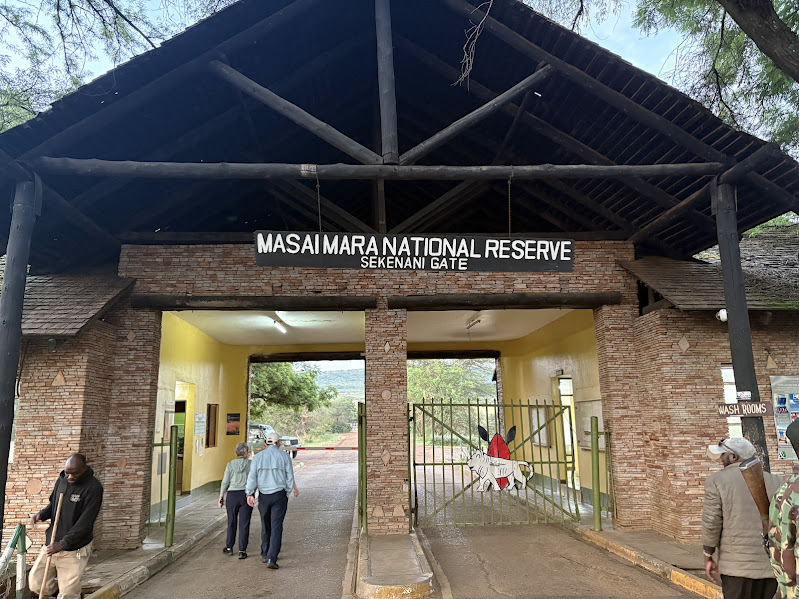
Talek, Sekenani, Musiara, the Triangle — and the communities at each gate.
Read →What language do the Maasai speak?
The Maasai speak Maa, an Eastern Nilotic language of the Nilo-Saharan family, related to the languages of the Samburu and Ilchamus and more distantly to Dinka, Nuer and the Kalenjin languages.1 Most Maasai in Kenya today also speak Swahili and English; in the Mara, guides routinely work in all three in a single game drive.
Maa is worth a traveller’s attention for a practical reason: the map is written in it. Mara (spotted), Sekenani, Talek, Oloololo, Naboisho (coming together), Olare, Enkare (water) — the names of gates, rivers, ridges and conservancies are Maa words that usually describe what is there. Learning ten of them changes how legible the landscape is.
Greeting is the other reason. Maa greetings are not interchangeable pleasantries; the correct form depends on the age and gender of the person you are addressing, and using the right one is a genuine courtesy rather than a party trick.
How is Maasai society organised?
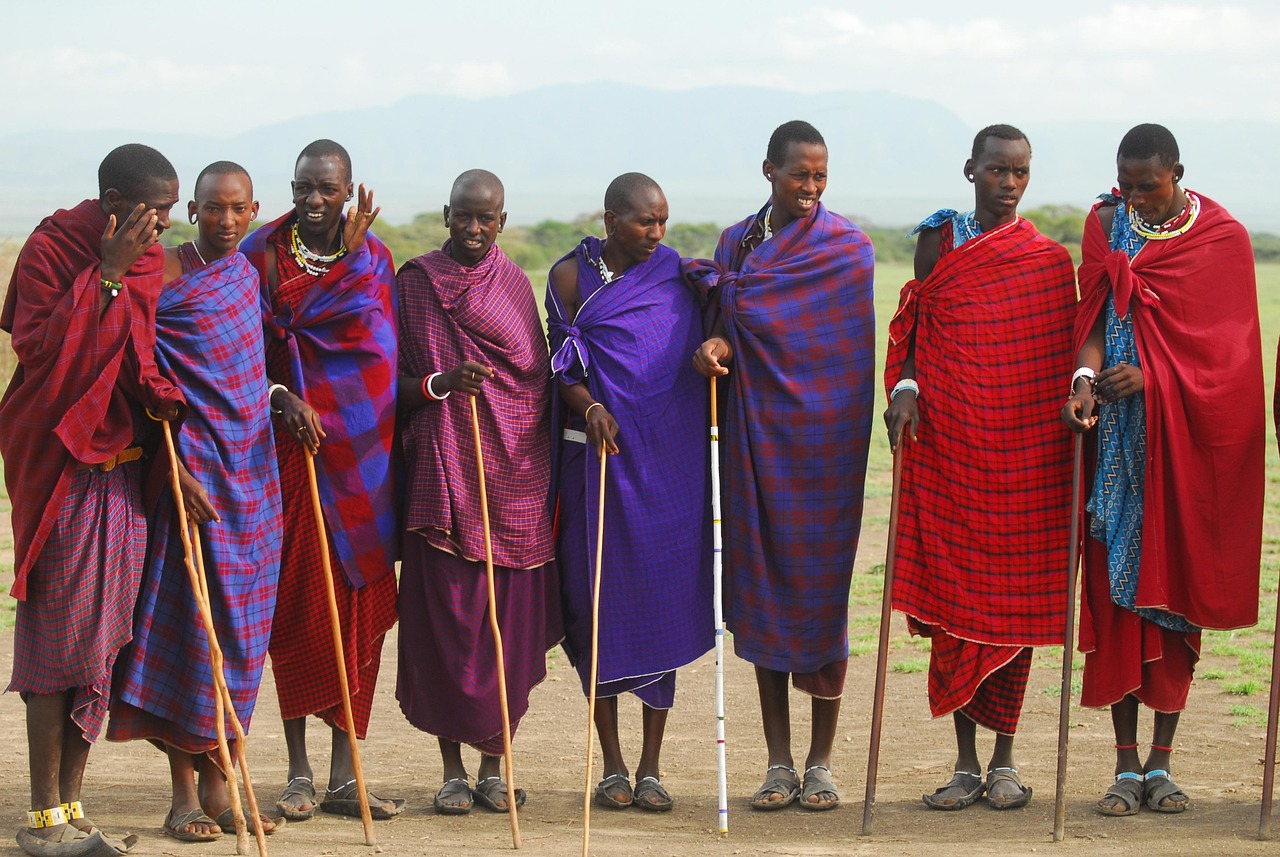
Maasai society is organised by age-set — a cohort of men initiated together who move through life as a group — rather than by rank or wealth alone. Roughly every fifteen years a new named generation is initiated, and that cohort passes together from boyhood herding through warriorhood (ilmurran, singular ol murrani, usually rendered “moran”) into junior and then senior elderhood, where political authority sits.
The consequence is that authority is distributed by stage of life rather than concentrated in one office. Decisions about grazing, disputes and — today — land are made by elders in discussion, which is why conservancy agreements in the Mara are negotiated slowly and in public meetings rather than signed in a room.
The warrior stage is the one visitors have heard of, and it is the one that has changed most. The lion hunt that once marked bravery is prohibited under Kenyan wildlife law and no longer part of the path to seniority; schooling now overlaps with the years a moran would once have spent entirely with the herds. Women are not organised into age-sets of their own, but their position is frequently misread: a woman builds her own house and it remains hers.
- Enkipaata — the ceremony that opens a new age-set and marks boys for initiation.
- Eunoto — the shaving ceremony that graduates warriors towards elderhood; days of singing and dance.
- Olng’esherr — the meat-eating ceremony marking the passage into junior elderhood.
- Adumu — the jumping dance performed at these gatherings, and the single most photographed and least explained thing in Maasai culture.
Culture & traditions
Age-sets, ceremonies, rites of passage and the role of elders, in depth.
Read →Maasai dance (adumu)
What the jumping dance is for, who performs it, and when.
Read →Maasai village visits
The paid cultural visit — how it works and how to choose one well.
Read →What is a manyatta, and why is the word usually used wrongly?
A manyatta is properly a warriors’ camp — a settlement built for a cohort of ilmurran during their warrior years. The ordinary family homestead is an enkang, and the individual house inside it is an enkaji (plural inkajijik). Almost every safari brochure that says “visit a manyatta” means “visit an enkang.”
This is not pedantry, and it is not an accusation — the loose usage is now so widespread in Kenyan tourism that Maasai guides use it too, because it is the word visitors arrive with. But the distinction tells you something the brochure doesn’t: Maasai settlement has different forms for different stages of life, and the one you are shown on a village visit is a family home, not a warrior camp.
The enkang is a circle of houses inside a thorn-branch fence, with a livestock enclosure at the centre so that cattle, sheep and goats are ringed by the houses at night. The design is a predator-defence system, and it is the direct ancestor of the reinforced bomas that conservancy programmes now build to stop lions taking stock — the single most effective piece of human–wildlife-conflict work in the Mara.
The enkaji is small — on the order of three by five metres — with a frame of branches plastered in a mix of mud, grass, dung and ash that insulates against both heat and cold. Women build the houses. Frame, plaster, layout and repair are women’s work, and a house belongs to the woman who built it.
What do the Maasai wear and eat?
Maasai dress centres on the shuka — the wrapped cotton cloth, most often red and checked — worn with beadwork whose colours and patterns carry meaning about age, marital status and occasion rather than decoration alone. Red dominates for a practical reason as much as a symbolic one: it is visible at distance across grass and it is associated with the cattle-keeping life the cloth is worn for.
The traditional diet is built on the herd: milk, meat and, on ceremonial occasions, blood drawn from a living animal without killing it. That is the version in every guidebook. The version on the ground in Narok County today includes maize meal, tea, sugar, beans and vegetables bought in Talek, Sekenani or Aitong, because herds alone no longer feed a household on a subdivided parcel. Saying so is not a loss of authenticity; it is what a working pastoral economy under pressure actually looks like.
Who owns the land around the Masai Mara National Reserve?
Maasai families own it. The Masai Mara National Reserve itself — about 1,510 km² — is public land managed by Narok County, with the Mara Triangle run on the county’s behalf by the Mara Conservancy. Beyond the boundary in every direction except the Tanzanian border, the land is privately titled and Maasai-held. In the Greater Mara as mapped by researchers — about 668,500 hectares in total — the Reserve accounts for under a quarter of the land.2
That ownership is recent in its present form. Through the 1970s and 1980s the rangelands around the Mara were held as group ranches — communal titles held by a registered membership. Group ranches were then subdivided into individual parcels, and by the 2000s subdivision across the Mara rangelands was far advanced. Each household ended up with a defined plot, typically too small to run a herd through a drought the way the open system had.
Subdivision created three options for a Maasai landowner, and the whole conservation argument in the Mara turns on which one pays:
- Lease it to a conservancy — guaranteed monthly income, no fencing, limited grazing, wildlife stays.
- Fence and intensify — secure the title, exclude neighbours’ stock and wildlife, keep grass for your own herd.
- Plough or sell it — wheat and maize on the better-watered edges, or an outright sale, which usually ends wildlife use permanently.
Maasai land & conservation
Group ranches, subdivision, leases and corridors — the full land story.
Read →The Mara conservancies
How the lease model works, and which conservancy suits which traveller.
Read →Reserve vs conservancies
Rules, crowding, cost and who your money reaches in each.
Read →How did the Maasai lose — and hold on to — their land?
The Maasai lost the largest share of their land to two colonial agreements, in 1904 and 1911, which moved them out of the central Rift Valley and then out of Laikipia into a southern reserve — the country that is now Narok and Kajiado. Estimates of the loss commonly range from about half to around seventy per cent of Maasai grazing land.6 A legal challenge in 1913 failed without the facts being tried.
Everything that follows on this page — the subdivision, the title deeds, the fences — is downstream of that. When people ask why Maasai landowners fence land that wildlife needs, the honest answer starts here: a community whose land was taken twice under written guarantees has good reason to make its ownership physically visible.
| Date | What happened | Effect on Maasai land |
|---|---|---|
| 1904 | The first Maasai Agreement creates a northern reserve in Laikipia and a southern reserve, in exchange for the central Rift Valley. | Rift Valley grazing lost; the community is split in two. |
| 1911 | The second agreement removes the Laikipia reserve and concentrates the Maasai in the south. | The northern reserve is lost despite a guarantee of permanence.6 |
| 1913 | The Maasai case (Ole Njogo and others) challenges the removal. | Dismissed on jurisdiction; no ruling on the merits. |
| 1948–1961 | A wildlife sanctuary is declared in the Mara and later expanded into a game reserve. | Grazing land becomes protected area; the Reserve’s core is created. |
| 1974 | National Reserve status; some land returned to the community. | The Reserve settles towards its present ~1,510 km².8 |
| 1970s–2000s | Group ranches are registered, then subdivided into individual titles. | Communal rangeland becomes thousands of private parcels. |
| 2005 onwards | Landowners pool parcels and lease them to tourism partners; conservancies spread. | Around 450,000 acres brought back under open, wildlife-compatible use.5 |
Founding dates for the sanctuary and reserve differ between sources; see the Reserve’s own history for the range and the reasons.
Why are fences the Maasai land question of this decade?
Because a fence is a title deed you can see — and because the Greater Mara is now filling with them. Satellite mapping by Løvschal and colleagues found that fenced land in the Greater Mara rose from about 35,067 hectares in 1985 to 130,277 hectares by 2020: roughly 19% of the whole landscape, with a 170% increase in the decade from 2010 alone.2
The mechanism is not mysterious, and it is not carelessness. Smallholders fence to establish and defend private title, to hold grass for their own stock, and to keep out neighbours’ herds — pressures that grow as parcels shrink and droughts deepen. The earlier study in the same series warned that the trend was heading for a threshold beyond which it becomes self-reinforcing, incompatible with both the wildebeest migration and traditional Maasai herding.3 The 2022 follow-up put it plainly: boundaries breed more boundaries.2
Read that chart as a governance result rather than a landscape one. Inside the Reserve, where settlement is not permitted, fencing is effectively absent — under 0.1%. Inside the conservancies, where landowners are paid not to fence, it crept from about 1% to 4% over thirty-five years. On formally unprotected community land, where nobody is paid anything, it went from about 9% to 31%.2 Where the lease exists, the fence largely doesn’t.
In the Ol Kinyei area, fenced land rose from 3,678 ha to 27,283 ha in four years — a 740% increase — while the neighbouring Pardamat conservation area went from almost no fencing to about a third of its 23,400 ha enclosed, before management and landowners began removing fence lines again.2
It is easy, and wrong, to read this as Maasai landowners damaging their own ecosystem. The fencing is a rational response to insecure tenure with a colonial root, and it costs herders their own mobility too. The policy question is not how to stop people fencing; it is what makes keeping land open worth more than closing it.
This is also the mechanism behind the number the wildlife pages keep citing: resident wildlife in the Mara region fell sharply from the late 1970s onwards — resident wildebeest by around 97% — driven by land-use change, settlement and fencing outside the Reserve rather than by anything happening inside it.4 The animals a visitor comes to see are, in the most literal sense, borrowing space from Maasai households.
What does a conservancy lease actually pay a Maasai landowner?
A conservancy lease pays a fixed, guaranteed amount per unit of land, every month, whether or not tourists come — and that guarantee, more than the size of the payment, is what makes it competitive with fencing or farming. Across the Mara network, lease payments to landowners are reported at roughly US$4.8–4.9 million a year.5
| Figure | Reported value | Source & vintage |
|---|---|---|
| Conservancies in the network | 24, at varying stages of development | MMWCA, current5 |
| Land under conservancy lease | ~450,000 acres (~182,000 ha) | MMWCA / 2026 reporting5 |
| Landowners receiving payments | 17,000+ (an earlier count gave 14,528 across 15 conservancies) | MMWCA, two vintages5 |
| Total annual lease payments | > US$4.8 million | MMWCA / 2026 reporting5 |
| Published per-area rate | KES 11,800 per hectare per year | Lemek Conservancy, published rate7 |
| Typical lease term | 15 years (some 25) | Conservancy agreements5 |
| Share of the ecosystem under some form of conservation | Rose from about a third to roughly two-thirds since MMWCA formed | MMWCA5 |
Per-acre lease figures circulating online vary by more than an order of magnitude, because some quote monthly and some annual rates, some are per parcel and some per hectare, and rates differ by conservancy and lease round. Treat any single number cautiously; the published per-hectare rate above and the network totals are the two most defensible anchors, and both should be re-checked against the conservancy you are actually booking.
The lease is not uncontested, and this site does not pretend otherwise. Critics within Maasai communities argue that leasing transfers practical control of land to tourism operators, that grazing restrictions bite hardest in drought, and that benefits are unevenly spread between larger and smaller title-holders. Those are legitimate arguments, and the honest position is that the conservancy model is the best-performing option currently available — not that it is uncomplicated.
Mara North Conservancy
Member camps, landowner numbers and how one conservancy’s lease works.
Read →Conservancy camps
Staying on leased Maasai land — what the nightly rate is paying for.
Read →Fees explained
Reserve entry, conservancy fees, and which body receives which payment.
Read →How should visitors meet Maasai people respectfully?
Treat a village visit as a paid, negotiated engagement between adults, not as access to a living exhibit — and the rest follows. A cultural visit in the Mara is a commercial arrangement: a fee is agreed, it is shared according to a village’s own rules, and the household receiving you has consented to the visit. Knowing that changes how you behave inside it.
- Agree the fee before you arrive, through your guide or camp, and ask how it is split. Vague arrangements are where exploitation happens.
- Ask before photographing anyone, every time, including children. A wide shot of a homestead is not consent to photograph a face.
- Buy directly from the person who made the beadwork if you buy at all, and don’t haggle a craft item down to nothing to prove a point.
- Ask questions about now — schooling, the price of a cow, this year’s rains, the lease — not only about warriors and lions. You will get a far better conversation.
- Meet Maasai people outside the village visit too. Your driver-guide, the camp manager, the conservancy ranger and the researcher counting lions are very often Maasai; the cultural exchange doesn’t have to be staged to be real.
And the largest respectful act available to a traveller is a booking decision: where you sleep determines whether your money reaches landowners at all. A night inside the Reserve pays the county; a night in a conservancy pays into the lease that keeps a family’s parcel unfenced.
Frequently asked questions about the Maasai
Is it “Masai” or “Maasai”?
Maasai is the spelling preferred by the people themselves and by most scholarship; Masai is the older colonial-era rendering that survives in official names like the Masai Mara National Reserve. Both refer to the same people. The name explained →
Do the Maasai own the Masai Mara National Reserve?
No — the Reserve itself is public land managed by Narok County. Maasai families own the privately titled land surrounding it, much of which is leased into conservancies. Land & conservation →
How many Maasai are there?
Kenya’s 2019 census counted 1,189,522 Maasai, with roughly a million more in northern Tanzania. Narok County, which contains the Mara, had 1,157,873 people in 2019 and is Maasai-majority.
What language do the Maasai speak?
Maa, an Eastern Nilotic language related to Samburu and Ilchamus. Most Maasai in Kenya also speak Swahili and English. Maa language →
What is the difference between a manyatta and an enkang?
A manyatta is properly a warriors’ camp; the enkang is the family homestead — a thorn-fenced circle of houses around a livestock enclosure. Tourism uses “manyatta” for both. Maasai houses →
Do Maasai still drink blood?
Blood drawn from a living animal is ceremonial and occasional, not daily food. Everyday diets in Narok County now include maize meal, tea, beans and vegetables alongside milk and meat. The Maasai diet →
Why do Maasai landowners fence land that wildlife needs?
Fencing secures private title, holds grass for a household’s own stock and keeps neighbours’ herds out — pressures created by land subdivision and a history of dispossession. Fenced land in the Greater Mara reached 19% by 2020. Conservation →
How much does a conservancy lease pay?
Rates vary by conservancy; one published rate is KES 11,800 per hectare per year, and network-wide payments exceed US$4.8 million annually to 17,000+ landowners. Payments are guaranteed regardless of tourist numbers. The conservancies →
Are Maasai village visits ethical?
They can be. Agree the fee in advance, ask how it is shared, seek permission before photographs, and buy crafts directly. The format matters more than the fact of visiting. Village visits →
Can I meet Maasai people without booking a village tour?
Yes — most driver-guides, conservancy rangers and camp staff in the Mara are Maasai, and conservancy walking safaris are usually led by Maasai guides who explain the landscape in their own terms. Conservancies →
See the Mara with Maasai guides
Our guides are from the communities this page describes. Travel with us and the money reaches the households whose land keeps the ecosystem open.
To start planning, use the quick booking form below. ↓
Book your Masai Mara safari
Tell us your dates and interests and we’ll tailor a conservation-minded itinerary.
In WordPress, add a separate Shortcode block below with [chbs_booking_form booking_form_id=”23598″].
Where to go deeper
Maasai history & origins
Nilotic origins, the migration south, the sections, and the colonial agreements.
Read →Culture & traditions
Age-sets, ceremonies, elders and rites of passage.
Read →Maa language & proverbs
How Maa works, what the place names mean, and the proverbs elders use.
Read →Shuka & beadwork
Cloth, colour and the meanings carried in beadwork.
Read →Maasai dance (adumu)
The jumping dance — what it is for and when it is performed.
Read →The Maasai diet
Milk, meat and blood — and what households eat today.
Read →Maasai houses (enkaji)
How a homestead is built, by whom, and how it is changing.
Read →Maasai greetings
The right greeting for the right person, and the reply.
Read →Maasai land & conservation
Group ranches, subdivision, leases, corridors and the fencing question.
Read →